

Business Operation · 2025
In this section24 topics
- Corporate Information4 items
- Dividend Policy2 items
- Major Shareholders2 items
- Business Strategies Overview5 items
- Material Changes & Developments1 item
- Use of Proceeds from Securities Offerings2 items
- Commitments Made in the Registration Statement1 item
- Group Operating-Structure Policy1 item
- Companies Where the Company Holds ≥10%1 item
- Shareholders with Potential Conflict of Interest1 item
- Relationships Among Major Shareholders1 item
- Shareholders' Agreement2 items
- Shareholding Diagram (Group Structure)3 items
- Income Structure3 items
- Product / Service Characteristics2 items
- Research & Development6 items
- Assets Used in the Business6 items
- Marketing Policy & Competition3 items
- Procurement of Products & Services5 items
- Product Information — Overview1 item
- Projects Under Construction7 items
- Issuance of Other Securities1 item
- Debentures & Bills of Exchange1 item
- Convertible Securities1 item
Corporate Information
Company Name
TBN Corporation Public Company Limited
Telephone
0-2258-5841
Website
www.tbn.co.th
ir@tbn.co.th
Dividend Policy
Dividend Policy
The Company has a policy to pay dividends at a rate of no less than 40% of its net profit based on the Company's separate financial statements, after the deduction of corporate income tax and all legally required reserves. Such payments are subject to the condition that there are no other compelling reasons to withhold them, and that the dividend distribution does not significantly impact the Group's normal business operations.
The Board of Directors will determine dividend payments by primarily considering the best interests of the shareholders. Furthermore, the dividend payout ratio may be subject to change depending on the Company's operating performance, financial position, liquidity, business expansion plans, future capital requirements, and other relevant management factors.
Historical Dividend Payments
| This Year | Last Year | 2 Years Ago | 3 Years Ago | 4 Years Ago | Metric | Description | Remark |
|---|---|---|---|---|---|---|---|
| 0.21 | 0.2 | 0.9 | 0.7 | 1.35 | Net profit per share (Baht : Share) | Net profit per share (baht : share) | |
| 0.21 | 0.19 | 0.58 | 0.38 | 0.62 | Dividend per share (Baht : Share) | Dividend per share (baht : share) | |
| 0 | 0 | 0 | 0 | 0 | Dividend stock ratio (Number of original shares: dividend shares) | Ratio of stock dividend payment (existing share : stock dividend) | During the past period, the Company has not paid stock dividends. |
| 0 | 0 | 0 | 0 | 0 | Dividend share value per share (Baht : Share) | Value of stock dividend per share (baht : share) | |
| 21 | 19 | 58 | 37.7 | 62 | Total dividend payment value (Baht : Share) | Total dividend payment (baht : share) | |
| 100 | 97 | 73 | 73 | 94 | Dividend payout ratio to net profit (%) | Dividend payout ratio compared to net profit (%) |
Business Strategies Overview
Chairman's Message
Dear Shareholders, Customers, Business Partners, and all Stakeholders,
In 2025, extending into early 2026, the global and Thai economies continue to face challenges from an uneven recovery, coupled with geopolitical uncertainties, conflicts and wars in several regions, as well as financial and political stability risks. Concurrently, the Southeast Asian region also confronts issues of
cross-border cybercrime and online scam networks (Scammers), which impact the confidence in the digital economy system, data security, and business continuity. This environment highlights the necessity for businesses to meticulously manage risks while strategically adapting amidst rapid and complex changes.
Amidst these crises and volatilities, the technology industry remains a key driver of the global economy, particularly through the application of AI, Automation, Cloud, Cybersecurity, and Data Analytics technologies, which play a crucial role in enhancing organizational efficiency and competitiveness. However, technological growth must be accompanied by appropriate governance, personal data protection, and systematic cyber risk management.
Recognizing the opportunities and crucial role of technology amidst these changing trends, TBN Corporation Public Company Limited (“the Company” or “TBN”) remains committed to operating its business in accordance with its vision of being a leader in providing innovative Digital Solutions to organizations in Southeast Asia. This is achieved by leveraging its expertise in Low-code, High-code, Cybersecurity, Cloud, and AI-driven Solutions, as well as offering technology consulting, to support clients in enhancing efficiency, reducing costs, and strengthening operational agility, while also aiming to generate stable and continuous long-term revenue.
Regarding Corporate Governance and Sustainability (Corporate Governance & Environmental, Social and Governance: CG & ESG), The Company's Board of Directors places great importance on conducting business based on transparency, accountability, and comprehensive risk management. The Company has continuously developed and enhanced its corporate governance practices, alongside its environmental, social, and human resource development initiatives, to align with international standards and stakeholder expectations.
The Company's achievements in CG & ESG reflect its commitment to fostering quality growth, building
long-term trust, and enhancing sustainable competitiveness.
Finally, on behalf of the Board of Directors, I would like to thank all shareholders, customers, business partners, employees, and stakeholders for their trust and support to the Company consistently.
The Board of Directors and management will continue to perform their duties with prudence, transparency, and social responsibility, to drive the organization towards stable and sustainable growth, while delivering long-term value to shareholders and society.
-Soontorn Dentham-
(Mr. Soontorn Dentham)
Chairman of the Board
s
ss
s
Vision
To be a leader in providing innovative and empowering digital solutions for organizations in Asia-Pacific.
Objectives
The Company provides comprehensive digital solutions to efficiently support the digital transformation of corporate clients. This is achieved by focusing on developing and applying appropriate technologies, such as Low-code, High-code, and advanced digital technologies, to create added business value, expand growth opportunities domestically and in the Asia-Pacific region, along with personnel development, the creation of sustainable solutions, and conducting business under good corporate governance principles.
Goals
TBN sets its business objectives to achieve long-term sustainable growth while enhancing the organization's competitive capabilities through the development of reliable, intelligent digital solutions that address the specific needs of corporate clients. The key objectives are as follows:
1. Striving to be a long-term trusted intelligent digital solutions partner for corporate clients:
Focusing on operating as a strategic partner for corporate clients, leveraging extensive experience and expertise in digital solution development to support a systematic, stable digital transformation that aligns with clients' long-term business goals.
2. Becoming a leader in providing end-to-end digital solutions in the Asia-Pacific region:
The Company aims to elevate its role to become an end-to-end digital solutions provider in the Asia-Pacific region, focusing on developing and offering comprehensive solutions that cover both technology and business applications to align with the specific needs of clients in various industries. The Company is committed to providing end-to-end digital solutions—from consulting, design, development, and system implementation to maintenance—by integrating
Low-code and High-code technologies appropriately for each project's nature and the client's business context, thereby creating added value and supporting clients' long-term competitiveness.
g
3. Strengthening Low-code leadership and expanding the Mendix platform business:
The Company aims to expand the services of the Mendix Low-code Development Platform, covering both license sales and the development of solutions built upon the platform. By leveraging a team of Low-code experts in the Asia-Pacific region, TBN seeks to enhance system development efficiency, reduce
time-to-market, and increase flexibility in adapting systems to business requirements.
4. Developing AI-Driven Innovation solutions:
The Company prioritizes the application of artificial intelligence technology in both software development processes (AI-Assisted Development) and business solution development, such as Generative AI for Enterprises, to enhance system efficiency, intelligence, and the decision-making capabilities of corporate clients in the digital era.
5. Development of business solutions tailored to specific industries:
The Company focuses on developing customized solutions tailored to the context and challenges of each industry, utilizing existing knowledge, experience, and technology to create Business Solutions such as the End-to-End Lending Platform and debt management solutions, thereby generating clear business value and enabling long-term scalability.
6. Advancing Cyber Security solutions and services:
The Company aims to elevate cybersecurity services, encompassing proactive defense and the development of Cyber Security solutions for information systems and mobile applications, to meet the security requirements of corporate clients.
7. Expanding Cloud and Cloud Managed Services:
The Company aims to develop Cloud services and Cloud system management to be more efficient and stable, supporting client operations and increasing opportunities for continuous revenue generation from long-term services.
8. Strengthening business sustainability through a recurring income structure:
The Company emphasizes generating continuous and stable revenue through the sale of software, platforms, and licenses, as well as providing system maintenance and support services, with a focus on service quality that builds trust and long-term relationships with clients.
9. Developing the organization and human resources to support long-term growth:
The Company continuously focuses on organizational and personnel development, leveraging a team of technology experts with knowledge and capabilities in both Low-code and High-code services to support large and complex projects, while also enhancing internal work processes to improve business efficiency and agility.
Business Strategies
1. Driving corporate growth through the “Trusted Partner + End-to-End” strategy:
The Company aims to be a strategic partner for corporate clients by delivering comprehensive end-to-end digital solutions—from consulting, design, and development to implementation and maintenance—to foster trust, stability, and long-term relationships.
2. Enhancing competitive advantage with a “Low-code as Core” approach integrated with High-code:
Utilizing the Mendix Low-code platform as the core development engine to accelerate processes and significantly reduce time-to-market. This is seamlessly integrated with High-code to efficiently support complex, specialized tasks and extensive system integrations.
f
f
f
3. Creating a Growth Engine through industry-specific Business Solutions:
Leveraging accumulated knowledge and experience from real-world projects to develop comprehensive business solutions (e.g., the End-to-End Lending Platform and Debt Management systems). This approach creates clear business value, eliminates the need to develop systems from scratch, and enhances long-term scalability.
4. Accelerating innovation with practical AI in both development processes and end solutions:
Applying AI technology to optimize software development efficiency (AI-Assisted Development) while continuously developing enterprise-level AI solutions (e.g., Generative AI for Enterprises). This elevates overall system intelligence and effectively supports customers' decision-making capabilities.
5. Strengthening comprehensive offerings with Cyber Security and Cloud Managed Services:
Elevating proactive cybersecurity services for both information systems and mobile applications, alongside developing highly stable Cloud and Cloud Managed Services. These enhancements are designed to robustly support real-world customer usage and maximize operational efficiency.
6. Ensuring business sustainability by expanding recurring revenue:
Focusing on expanding the proportion of recurring revenue generated from software licenses, subscriptions, Cloud services, system maintenance, and continuous support services. This strategic focus solidifies revenue structure stability and secures a loyal, long-term customer base.
7. Elevating the organization and workforce to support growth and large-scale projects:
Continuously developing the expertise of both Low-code and High-code professional teams, alongside optimizing internal work processes. This dual focus maximizes operational efficiency, business agility, and the overall quality of project delivery to clients.
Material Changes & Developments
Material Changes & Developments
| Year | Description |
|---|---|
| 2,025 |
f f f |
| 2,024 | - Developed proprietary technology and digital products in the form of White Label or Templatize solutions. - Signed an academic cooperation agreement with King Mongkut's University of Technology North Bangkok to promote collaboration in research and development of innovation and technology. - Co-organized “Mendix Day Thailand by TBN” with Mendix for the first time in Southeast Asia, to reflect the company's potential as an information technology service provider with over 15 years of experience. - Received the 5th Investors’ Choice Award for 2024 from the Shareholder Meeting Quality Assessment Project, by scoring a perfect 100 points in its first year of listing on the stock exchange, organized by the Thai Investors Association. - Established a joint venture, Zero One Co., Ltd. (“ZerOne”), to develop and provide ready-to-use software for various industrial sectors. - Received a 5-star "Excellent" CGR rating for 2024. - Received an award from Siemens at the event Asia Pacific Executive Partner Forum (APEPF) 2025 Comprising 3 awards:
d |
| 2,023 | - Received regional awards from Mendix, namely:
- The company's shares began trading on the mai stock exchange (First Trading Day) on June 19, 2023. - Signed a Memorandum of Understanding (with the Digital Economy Promotion Agency) to promote and support human resource development in the digital industry and enhance the country's digital skills. d |
| 2,022 | - Prepared for the initial public offering (IPO) and conversion into a public limited company, along with changing the name to TBN Corporation Public Company Limited - Establish TBN Mendix Academy to develop personnel in Low-Code technology and support the creation of digital personnel in the country. d d |
| 2,019 | Established BOP Co., Ltd. (“BOP”) as a subsidiary to support High-Code software development and enhance flexibility in providing technology services to customers. d d |
| 2,008 | Established a company under the name TBN Software Co., Ltd. to provide software development services, with a focus on utilizing the Mendix (Low-code) platform, and commenced expanding its customer base to include both government and private sectors. d d |
Use of Proceeds from Securities Offerings
Is There Money Raised from a Securities Offering Still to Report On?
Yes
Offerings
| Type of Securities | Amount Raised Given As | Amount Raised (Million Baht) | Uses of the Money | Used as Declared? | Progress / Reasons and Measures if Not Used as Declared | Related Link |
|---|---|---|---|---|---|---|
| Equity Instruments | 2873 | 411.74 | 2025-12 · Objective: To be used as working capital for business expansion, including the enhancement of potential and competitiveness. · Period type: 2871 · Start period: 2025-12 · Spent amount type: 2873 · Start spent amount: 79.26 · Expected amount type: 2873 · Start expected amount range: 411.74 | N | The Company offered its ordinary shares to the public for the first time (Initial Public Offering: IPO) between June 12–14, 2023, for a maximum of 25,000,000 shares, representing 25% of the total issued and paid-up ordinary shares after the offering, at an offering price of 17.00 Baht per share. From the aforementioned offering of ordinary shares, the Company received net proceeds, after deducting underwriting and distribution fees, as well as other related expenses, totaling 411.74 million Baht. The progress report on the utilization of proceeds from the ordinary share offering is in line with the objectives stated in the prospectus, with the primary purpose being to serve as working capital for business expansion and to enhance the Company's potential and competitiveness. The details are summarized as follows:
| https://www.set.or.th/en/market/news-and-alert/newsdetails?id=100699600&symbol=TBN |
Commitments Made in the Registration Statement
Are There Commitments or Conditions from an Offering or Listing?
No
Group Operating-Structure Policy
Description
The Company has established a policy regarding the segregation of business operations within the Group. Currently, the Company holds investments in one subsidiary and one joint venture, with their respective business operations clearly delineated as follows:
1. Subsidiary: BOP Company Limited
Nature of Business: Software design and development, including consultancy services for traditional software development (High-code).
2. Joint Venture: Zero One Company Limited
Nature of Business: Provision of packaged software solutions (excluding gaming software) tailored for the manufacturing sector and various other industries.
Companies Where the Company Holds ≥10%
Companies (≥10% Holding)
| Company Name | Address | Province | Zip Code | Telephone | Fax | Business Type | Security Type | Shares | Paid-up Shares |
|---|---|---|---|---|---|---|---|---|---|
| BOP Company Limited | 54 B.B.Building, Fl.18, Room No.1803-1805, Sukhumvit 21 (Asoke) rd., Khlong Toei Nuea, Watthana, | Bangkok | 10110 | 022585841 | 022585842 | Software design and development, including consulting on traditional software development (High-code) | Common shares | 100,300 | 100,300 |
| BOP Company Limited | 54 B.B.Building, Fl.18, Room No.1803-1805, Sukhumvit 21 (Asoke) rd., Khlong Toei Nuea, Watthana, | Bangkok | 10110 | 022585841 | 022585842 | Software design and development, including consulting on traditional software development (High-code) | Preferred shares | 700 | 700 |
| Zero One Company Limited | 219/34 Sukhumvit 21 (Asoke) Road, Khlong Toei Nuea, Watthana, | Bangkok | 10110 | 022585841 | 022585842 | Engaging in the business of developing ready-made software (excluding gaming software) for use in manufacturing and various other industries. | Common shares | 500,000 | 500,000 |
Income Structure
Product / Service Income
| Category | Description | This Year | This Year % | Last Year | Last Year % | 2 Years Ago | 2 Years Ago % |
|---|---|---|---|---|---|---|---|
| Total revenue from operations | Total revenue from operations | 375,924.97 | 100 | 339,490.78 | 100 | 438,451.71 | 100 |
| Digital Solution and Technical Consultancy Services | 128,333.51 | 34.14 | 121,111.13 | 35.67 | 190,372.51 | 43.42 | |
| Technical Maintenance, Licensing and Cloud Services | 209,934.36 | 55.84 | 210,849.45 | 62.11 | 240,674.81 | 54.89 | |
| Other | Other | 37,657.1 | 10.02 | 7,530.2 | 2.22 | 7,404.39 | 1.69 |
Export Income
| Category | Description | This Year | This Year % | Last Year | Last Year % | 2 Years Ago | 2 Years Ago % |
|---|---|---|---|---|---|---|---|
| Total revenue | Total revenue from operations | 375,924.97 | 100 | 339,490.78 | 100 | 438,451.71 | 100 |
| Domestic | Domestic | 371,335.23 | 98.78 | 336,973.3 | 99.26 | 434,498.22 | 99.1 |
| International | International | 4,589.74 | 1.22 | 2,517.48 | 0.74 | 3,953.49 | 0.9 |
Other Income
| Operating Other Income | Non-Operating Other Income | Share of Profit |
|---|---|---|
| 1710 · As of year: 6691.45 · Description: Total other income · As of yesteryear: 9808.59 · As of year before yesteryear: 4032.32 · 1711 · As of year: 0.0 · Description: Other income from operations · As of yesteryear: 0.0 · As of year before yesteryear: 0.0 | 1712 · As of year: 6691.45 · Description: Other income not from operations · As of yesteryear: 9808.59 · As of year before yesteryear: 4032.32 | 1713 · As of year: -964.23 · Description: Share of profit · As of yesteryear: 0.0 · As of year before yesteryear: 0.0 |
Product / Service Characteristics
Business Type
3114
Business Groups
| Business Group | Description |
|---|---|
| 1. Digital Solution and Technical Consultancy | The Company provides comprehensive digital system design and development services, coupled with technology consulting. The focus is on developing flexible systems that can adapt to business contexts and support future organizational growth, encompassing the following key services:
The Company provides customized digital solution development services tailored to client needs, utilizing the MENDIX Low-code Development Platform as its core. This approach accelerates system development, reduces software architecture complexity, and enhances delivery efficiency. The operational process covers business requirements analysis, system architecture design, system development and testing, system go-live, and post-implementation support.
The Company provides consulting services for the development, improvement, and enhancement of digital systems, ensuring that systems align with clients' business strategies, seamlessly integrate with existing systems, and facilitate the appropriate adoption of new technologies.
The Company has leveraged its expertise in digital system development to create an End-to-End Lending solution designed to meet the needs of financial institutions, leasing businesses, digital banks, and non-bank credit providers. This solution covers the entire lending lifecycle, including loan application intake, data verification, credit assessment, loan approval, contract preparation, loan disbursement, and post-lending monitoring and management. This solution integrates the MENDIX Low-code platform with Cloud Services and an extensible system design, enabling clients to rapidly adapt their lending processes, compete effectively in the market, and build sustainable growth capabilities. System Development Process up to Client Handover: f Utilizing the MENDIX Low-code platform enables the Company to develop systems rapidly, minimize development errors, flexibly adapt systems to client needs, and facilitate quick and efficient troubleshooting. Furthermore, the platform supports the seamless integration of Artificial Intelligence (AI) technology to enhance development efficiency and operational precision. Above all, every system developed by the Company strictly prioritizes data security and adaptability to rapidly changing technologies, empowering clients to compete effectively and achieve their business objectives with maximum efficiency. |
| 2. High-code Service Provision | In 2025, TBN will continue to provide comprehensive software development services. In addition to offering services through the Mendix Low-code platform—which remains its primary service—the Company seamlessly integrates High-code services (traditional coding) to enhance the completeness and efficiency of the developed software. The Company's High-code services focus on customizing and elevating software built on Low-code to be highly flexible and precisely meet clients' specific operational requirements. 1. User Interface (UI) Customization: Enhancing the aesthetics and interactive features of the software to suit specific use cases and deliver an exceptional user experience (UX). 3. Expanding the Customer Base through High-code Services: Offering High-code services enables the Company to comprehensively address the diverse needs of clients across various industries, thereby facilitating expansion into new business sectors, such as:
f |
| 3. MENDIX License | The Company has been officially appointed by Siemens as an authorized MENDIX license reseller (Official Reseller). This enables the Company to leverage its deep expertise in the MENDIX Low-code platform to efficiently meet customer needs. With a variety of MENDIX License packages tailored to the number of software applications to be developed and the total number of users, customers are assured of receiving the most cost-effective and highly suitable solutions. These services are categorized into two main models: 1. System Development utilizing MENDIX Low-code: 2. Licensing and Training for In-house Development Teams: In both scenarios, as clients develop and deploy a higher volume of software within their organizations, the per-unit software development cost significantly decreases (Economies of Scale). This occurs because the Mendix License cost per user and per developed application reduces as usage increases. Furthermore, the Company provides dedicated technical support for the Mendix platform to customers throughout their contract period. Should any issues arise directly from the software, the Company will promptly conduct an initial diagnosis and expedite the resolution process, ensuring customers can resume operations swiftly. f |
| 4. Cloud Services | The Company provides Cloud Services serving as scalable data storage and computing solutions for clients, utilizing world-leading cloud platforms such as Amazon Web Services (AWS) and Huawei Cloud. The Company is responsible for designing cloud infrastructure tailored to the anticipated number of users, handling system configuration, and providing post-installation managed and maintenance services to ensure the cloud environment operates at peak efficiency at all times. Cloud service fees are structured based on the client's storage size and usage volume. The Company proactively oversees, maintains, and troubleshoots the systems, which includes upgrading or expanding cloud storage capacity to accommodate future business growth, thereby delivering comprehensive and seamless services to its clients. f f f f |
| 5. Technical Support and Maintenance | The Company prioritizes system maintenance services, recognizing their critical role in ensuring the continuous and seamless operation of our clients' businesses. Therefore, the Company is committed to continuously elevating its maintenance services to ensure that clients' systems consistently remain in a state of high availability and readiness. The Company's system support and maintenance services instill confidence in clients by ensuring that any issues are resolved rapidly and efficiently, thereby preventing business disruptions. Clients can select a Service Level Agreement (SLA) tailored to their specific needs, which is clearly outlined in the Maintenance Service Agreement (MA). Typically, the duration of these support and maintenance agreements ranges from 1 to 5 years. Furthermore, for clients who prefer to support and manage their systems internally, the Company offers supplementary support models that can be utilized as needed: 1. Technical Consultation: 2. Training and Skill Development for Client Teams: 3. On-Demand Support Services:
|
Research & Development
Has R&D Policy (Y/N)
Yes
Introduction
The Company operates a business providing comprehensive digital system design and development services. The Company serves as a Digital Transformation consultant and efficiently develops technology solutions tailored to client needs. Furthermore, the Company is the first authorized distributor of Mendix software licenses in Thailand, a Low-Code Development Platform that enables rapid, flexible, and secure development of applications and digital solutions.
The Company recognizes that the development of technology and innovation is crucial for driving the organization towards sustainability. Innovation is not merely a mechanism for creating business competitiveness but also a tool for generating shared value for clients, partners, employees, society, and the environment. Therefore, the Company has established this policy to define the direction for the development, promotion, and application of innovation ethically, covering all dimensions of business operations.
Guidelines
1. Mandate the Company's Board of Directors to oversee, support, and promote the development and creation of innovations that generate added value for the business, shareholders, and stakeholders, concurrently with creating benefits for society and the environment. This demonstrates the organization's commitment to innovation development at the highest level of its management structure.
2. Mandate that the development and improvement of innovation be an integral part of the organization's strategic planning across all dimensions: economic, social, and environmental, with periodic performance monitoring.
3. Support and promote continuous development in products, services, work processes, and internal supporting technology systems to serve as tools for efficient and transparent management of personnel and internal organizational data, reducing resource consumption and environmental impact, such as documents and energy. The aim is to concretely transition towards the organization's Green Digital Transformation.
4. The Company will regularly review its internal operational processes to assess and prevent potential risks and negative impacts on society, the environment, and stakeholders. Concurrently, it will establish corrective and improvement measures or develop new innovations to enhance efficiency and mitigate such impacts. This process will be linked to Enterprise Risk Management to ensure that all innovation projects align with sustainable and socially responsible practices.
5. Promote collaboration with partners, clients, and business allies in co-developing technology and innovation to create shared value and elevate business operational standards in line with sustainability principles.
6. Support and promote domestic educational development for personnel through initiatives or academic cooperation agreements with universities and educational institutions. The focus is on collaborative research and development to transfer digital technology and innovation knowledge to students via training, lectures, internships, or joint projects, thereby enhancing the potential of the new generation to meet the future needs of society, the economy, and the nation.
7. Support the dissemination of information and sharing of knowledge in socially and environmentally responsible technology and innovation with stakeholders, such as Small and Medium-sized Enterprises (SMEs), local communities, startups, and relevant agencies. This aims to enable them to leverage such knowledge, enhance business competitiveness, and create opportunities for sustainable economic and social growth together.
8. Promoting an Innovation Culture within the organization by fostering an organizational culture open to creativity, supporting employees at all levels to participate in proposing new ideas under the Sustainability Strategy Management Committee, which is a key driver for organizational innovation development.
9. The Company will oversee that the development of organizational innovation is legally compliant, does not infringe upon human rights, intellectual property rights, or any other relevant regulations, especially laws related to innovation. Furthermore, the Company will promote knowledge, understanding, and awareness of legal and ethical responsibilities among employees at all levels to ensure that innovation activities are conducted correctly, transparently, and with social responsibility.
f
f
f
f
f
Research and Development of Innovation and Technology
The Company places continuous emphasis on Research and Development (R&D) in innovation and technology to support its goal of becoming a leader in Digital Transformation and developing digital solutions that meet the needs of enterprise clients, while simultaneously creating long-term business, social, and environmental value. The core focus is on utilizing the Mendix Low-code Development Platform (Low-code) in conjunction with Artificial Intelligence (AI) technology as the primary drivers for developing innovations that address business requirements rapidly and efficiently.
Setting Research and Development Goals
For 2024-2025, the Company's Research and Development (R&D) goals are not merely focused on coding, but on creating a "Digital Accelerator" to address the complexities of large enterprises. There are 5 main objectives as follows:
1. Productization Goal: Elevating projects to become software products
Previously, the Company provided services on a project-based approach. The Company has now shifted its research and development direction towards creating Business Solution Sales in the form of
semi-productized solutions to enhance business scalability and generate sustainable revenue, such as:
End-to-End Lending Platform: Research and development of a lending system that covers core workflows, from Loan Origination System (LOS), Loan Management System (LMS), debt tracking system, and Non-Performing Loan (NPL) management, enabling immediate implementation by organizations in the Banking, Financial Services, and Insurance (BFSI) sector.
Main Goals: Reduce time-to-market for system development and delivery, and create a repeatable revenue model.
2. Enterprise Generative AI Goal under the ReN3 Platform
The Company prioritizes the security and confidentiality of data for large organizations, focusing on developing Generative AI technology under the concept of "Intelligence with Security," including:
On-Premise Generative AI: Development of the ReN3 platform capable of operating in an air-gapped manner without external internet connection, enabling organizations such as banks and hospitals to use AI for internal document management without risking data leakage to public AI systems.
AI-Driven Knowledge Management: Development of a knowledge management system capable of transforming internal organizational databases into an interactive knowledge base, enabling personnel to accurately and precisely inquire about technical or legal information.
3. AI-Driven Low-Code Goal to Enhance Development Efficiency (Efficiency R&D)
The Company conducts research to enhance the efficiency of its core Low-Code business on the Mendix platform, aiming to significantly improve system development efficiency, including:
AI-Assisted Development: Development of AI-powered tools to assist in code drafting, validation, and error reduction in development, addressing the shortage of IT personnel in client organizations.
Smarter Manufacturing Solutions: Development of solutions in collaboration with affiliated companies (e.g., Zero One) to apply Low-Code technology to automated factory systems that process large volumes of data from IoT devices.
4. Trust & Proactive Security Goal
The Company focuses on research and development of information system security solutions, prioritizing system reliability, such as:
Watch Tower (CART): Proactive development of a cyber-attack simulation system (Hacking Simulation) to identify vulnerabilities and strengthen systems before actual attacks occur.
Mobile Security (SecIron): Research and development of technology to prevent application tampering for financial applications requiring high security standards.
5. Ecosystem and Human Resources Development Goal (TBN Academy)
The Company's research and development also encompasses enhancing personnel capabilities and the technology ecosystem, focusing on:
Standardization & Best Practices: Establishing standards to enable enterprise clients' IT teams to develop and extend systems independently in the long term, reducing reliance on external service providers and enhancing system sustainability.
Future Goals (2026)
By 2026, the Company's R&D goal will focus on shifting its role from a project-based system development service provider to a developer and owner of Intellectual Property (IP). This strategic shift will help increase profit margins, generate sustainable revenue, and strengthen long-term relationships with large enterprise clients.
Research for innovation development in conjunction with AI technology
Under its vision and goal of being a leader in Digital Transformation and developing digital systems tailored to client needs using Mendix's Low-Code platform, the Company recognizes the increasing role of Artificial Intelligence (AI) in enhancing the efficiency and speed of digital system development, as well as elevating the overall user experience.
Consequently, the Company has undertaken studies, research, and adaptations to integrate AI technology with software development on the Low-Code platform. This approach aims to enhance efficiency, reduce development timeframes, and optimally support business needs. In the past year, the Company began exploring various AI applications, initially implementing them within internal organizational solutions to serve as prototypes for future innovation and digital solution development.
In 2025, the Company initiated research and experimental projects to apply AI technology in conjunction with the Mendix Low-Code platform, encompassing both AI-Assisted Development and the creation of AI Business Solutions.
This initiative commenced as an Internal Pilot project, with plans to expand and develop comprehensive solutions for clients in subsequent phases.
Development and extension of the Company's proprietary digital products
The Company has successfully developed proprietary digital products in White Label / Template formats, specifically a Loan Management System, to meet the needs of clients providing financial or credit services. The innovation is targeted for initial use in late 2024, with a plan for full implementation by the first quarter of 2025. This development aligns with the set goals, with actual deployment for one client in 2025 and plans for additional functional enhancements in 2026.
Drawing on extensive experience in continuously developing diverse systems for clients, the Company has clearly identified product groups and areas with high potential that are suitable for strategic focus. Over the past year, the Company has heavily invested in developing a comprehensive Lending Solution, comprising 4 key modules:
1. Loan Origination System (LOS): A system for loan applications, covering workflow processes ranging from KYC and risk assessment to credit scoring.
2. Loan Management System (LMS): A post-approval loan management system serving as the Core Loan System for managing loan data and processes.
3. Debt Collection System (Volare): A system supporting end-to-end debt tracking and collection processes, encompassing Telephony systems, Predictive Dialer, Collection Scoring, and Collection Strategy.
4. Bad Debt Management System: A comprehensive system for managing non-performing loans, covering both Non-Performing Loans (NPLs) and Non-Performing Assets (NPAs) end-to-end.
Development of Digital Solutions for Society and Environment
The Company applies knowledge from developing solutions in Artificial Intelligence (AI) technology, Cyber Security, and Cloud Infrastructure to enhance resource utilization efficiency for clients. Examples include using digital systems to replace paper-based processes, utilizing Cloud Infrastructure to reduce energy consumption of internal data centers, and employing automation to minimize unnecessary travel and resource usage.
Furthermore, in the research and development of innovation and technology for society and the environment, the Company continuously emphasizes Research and Development (R&D) to enhance internal operational efficiency while simultaneously creating long-term value for society and the environment. The focus is on utilizing digital technology to improve work processes, reduce resource consumption, and strengthen internal corporate governance.
One of the key R&D projects for sustainability is the development of the TBN PM system, an internal management platform developed by the Company itself to support business operations in an efficient, transparent, and socially and environmentally responsible manner.
(1) Development of the TBN PM System.
The Company began developing the TBN PM system in early 2021 and first implemented it in late 2021. Since then, the Company has continuously developed and improved the system to align with changes in policies, authorization manuals, and the Company's operational guidelines.
The TBN PM system is designed to serve as an integrated central hub for managing internal organizational data and workflows, covering key operations to enhance project management and internal operations efficiency, as follows:
Recording and tracking of revenue, expenses, and budget data.
Sales and Project Management.
Issuance of business and internal documents.
Expense claims, leave requests, and time sheet recording.
Internal organizational communication, such as regulations, announcements, policies, and the organizational code of conduct.
The design and development of the TBN PM system are conducted under the Company's internal guidelines and policies, including the Delegation of Authority (DOA) manual, to ensure that work processes are accurate, transparent, and auditable at every step. The system is designed to support the definition of authorization levels, audit trails, and appropriate internal controls in accordance with corporate governance principles.
(2) Example: Measurement of Results from the TBN PM System Development Project
The development of the TBN PM system exemplifies the application of technological innovation to create business value alongside social and environmental responsibility. Its objectives are to enhance operational efficiency, reduce costs and process redundancies, mitigate environmental impacts, and foster transparency, as well as support responsible and secure digital technology usage (Responsible Digitalization). This aligns with the Company's long-term Sustainable Development goals and ESG direction.
f
f
f
f
f
f
f
f
f
(3) Results and Benefits from Using the TBN PM System
Business Value Creation. | Goals. | Benefit Details. From development. | Results |
Business Aspects. | Cost Reduction. | Reduce document and administrative costs by using digital systems instead of traditional processes. | In 2025, the Company's paper consumption and document-related costs decreased by 10.68% compared to 2024. |
Process Efficiency. | Reduce steps and time for data preparation, verification, and approval of internal documents. | Operational time reduced from 1-2 weeks to 1-3 days. | |
Project and Budget Management. | Enhance the ability to track project status, revenue, expenses, and budget in real-time. | 100% of projects have complete status and budget records. | |
Risk Control and Internal Audit. | Reduce risks from operational errors and non-compliance (Compliance Risk). | Reduced number of errors, non-compliance issues, and internal audit findings. | |
Environmental Aspects. | Resource Reduction. | Reduce paper document usage by transitioning to digital systems. | In 2025, paper consumption decreased from 78,323 sheets (2024) to 69,958 sheets (a reduction of 8,365 sheets or 10.68%). |
Efficient energy consumption. | Reduce energy and resource consumption related to document management processes. | Reducing physical documents helps decrease energy consumption from office equipment, storage space, and indirectly contributes to reduced energy usage in office space management. | |
Greenhouse Gas Emission Reduction. | Support the reduction of greenhouse gas emissions from internal operational processes. | Reduce Operational Carbon Footprint (for more details, refer to Appendix 9: Organizational Greenhouse Gas Emissions and Removals Report for 2025.) | |
Social and Governance Aspects. | Organizational Culture. | Promote a transparent, fair, and auditable work culture. | Increased transparency and reliability in work processes. |
Data Access. | Increase employee access to organizational policy, regulation, and code of conduct information. | 100% of employees can access information through the central system. | |
Corporate Governance. | Support adherence to good corporate governance principles. | Increased level of regulatory compliance and traceability. |
f
f
f
f
f
Operational Summary
The Company implemented the TBN PM system with the objective of enhancing operational efficiency and eliminating process redundancies, thereby promoting resource conservation through Digital Transformation. These initiatives have yielded tangible results; notably, in 2025, the Company successfully reduced paper consumption by 10.68% compared to the year 2024.
The Company remains committed to continuously developing and expanding the adoption of digital systems to optimize operational efficiency, promote cost-effective resource utilization, support environmentally responsible business practices, and align with the organization's long-term sustainable development guidelines.
Innovation and Technology Development Process
To achieve strategic goals in innovation and technology research and development, the Company has established a Structured Innovation Process. This encompasses everything from problem definition and experimentation to actual implementation and commercial scaling. The key steps are as follows:
1. Defining innovation challenges based on business needs and social/environmental impacts
The Company initiates its innovation development process by analyzing enterprise clients' business pain points, opportunities to enhance efficiency, reduce costs, and minimize resource consumption, as well as opportunities to create positive social and environmental impacts. Innovation challenges are jointly considered by the management, technology, and project departments to ensure that developed innovations deliver measurable value.
2. Research, Experimentation, and Prototype Development
Once the challenges are defined, the Company will proceed to study suitable technologies such as
Low-Code, AI, Cloud, and Cyber Security, and develop prototypes (Prototype / Proof of Concept: PoC).
This begins with internal pilot testing to assess technical feasibility, process efficiency, and system security and stability.
3. Quantitative Evaluation & Business Justification
Innovation prototypes will be evaluated using clear metrics such as reduced development time, cost per project, personnel productivity, and reduction of unnecessary resources or steps, to assess business value and suitability for commercial development.
4. Product Development and Real-World Deployment (Productization & Deployment)
Innovations that have been evaluated will be developed as Template / Semi-productized Solutions or Proprietary Products, such as Lending Platform and AI Solutions, to enable efficient real-world application for clients, reduce greenfield development, and enhance reusability.
5. Scaling & Commercialization
The Company aims to scale developed innovations to clients across various industries through License, Subscription, and Managed Services models to generate recurring income and enhance the stability of its revenue structure in the long term.
6. Monitoring & Continuous Improvement
Following implementation, the Company will continuously monitor actual usage results from clients and stakeholders to refine functions, enhance performance, and address social and environmental impacts, thereby aligning with sustainability goals.
R&D Cost — Description
Investment and Performance Measurement in Research and Development (R&D)
The Company ensures that its investments in Research and Development (R&D) not only drive business growth and revenue generation but also support the organization's sustainability goals across all Environmental, Social, and Governance (ESG) dimensions. The Company continuously monitors and evaluates the outcomes of its R&D initiatives, assessing both the economic value created and the positive impacts generated for stakeholders and the environment.
Summary of Financial Information on Research and Development (Past 3 years: 2023 - 2025)
Details | 2023* | 2024 | 2025 | Note |
R&D Expenses (Million Baht) | - | 2.06 | 2.86 | Tangible investments in R&D projects commenced in 2024. |
Proportion to Total Revenue (%) | - | 0.59 | 0.75 | |
Proportion to Net Profit (%) | - | 9.36 | 14.45 |
Note: *There were no formal R&D expenses recorded in 2023, as the Company primarily focused its investments on human capital and working capital management.
Overview of R&D Operations
The Company’s vision is to become a leader in Digital Transformation by leveraging its deep expertise in Mendix’s Low-Code Development Platform to elevate the competitive capabilities of its enterprise clients amidst a rapidly evolving digital landscape.
The Board of Directors places high priority on budget approval and the close monitoring of R&D performance to secure long-term competitiveness. A key strategy is the execution of a Business Transformation—shifting from a project-based software development service model, where intellectual property rights are retained by clients, toward researching and developing the Company’s proprietary products. By offering White Label, Template-based, and Semi-Productized Solutions, the Company aims to significantly reduce Time-to-Market and establish a sustainable, Repeatable Revenue Model.
Investment and R&D Progress (2023 - 2025)
2023: Laying the Foundation for Human Capital and Product Development
In its first year as a listed company on the stock exchange, the Company did not plan for major fixed-asset investments or construction. Instead, it focused on managing working capital to support an increasing volume of software development projects. The primary investment focus was on "Human Resources," recognized as the most critical growth engine.
(1) Personnel: The Company maintained a workforce of 154 employees and initiated a strategic workforce expansion plan targeting key technology roles, including Technology Consultants, Project Managers, Developers, and Cloud Engineers.
(2) Products: Initiated a roadmap for developing proprietary software applications, with the preliminary goal of creating a Loan Management System tailored to support future clients in the financial sector.f
f
f
f
f
2024: Commencement of R&D Operations and Successful Innovation Delivery
The Company began allocating a dedicated R&D budget, incurring 2.06 million Baht in R&D expenses, which yielded clear and tangible achievements:
(1) Product Success: The Company successfully developed a template-based Loan Management software application. The system was delivered to clients in late 2024, with a scheduled Go-Live in the first quarter of 2025. Additionally, the Company developed further system templates to be marketed to a broader client base.
(2) Personnel: Expanded the workforce to 180 employees (an increase of 24 personnel from the previous year) to accommodate the growing volume of R&D projects and the rapid expansion of the Digital Transformation business.2025: Advancing to Semi-Productized Solutions and Advanced Technologies
The Company significantly scaled its R&D investments, with expenses reaching 2.86 million Baht. This represents a robust 39.24% year-over-year growth, accounting for 0.75% of total revenue—a figure comparable to industry standards. The primary investment direction focused on the development of an End-to-End Lending Platform.
This initiative extended the existing loan management system to comprehensively cover core operational workflows, ranging from the Loan Origination System (LOS) and Loan Management System (LMS) to Non-Performing Loan (NPL) tracking and management. This comprehensive solution targets clients in the Banking, Financial Services, and Insurance (BFSI) sectors, offering them a highly efficient, ready-to-deploy system.
R&D Cost — Label
Research and development (R&D) expenses over the past 3 years (Million Baht)
R&D Cost — This Year
2861893.54
R&D Cost — Last Year
2055308.0
Assets Used in the Business
Permanent Assets — Description
As of December 31, 2025, the Group's head office is located in Bangkok. The principal fixed assets utilized in the Group's business operations comprise building improvements, office equipment and furnishings, computers and computer equipment, and assets under construction. The details are as follows:
Permanent Assets — Appraisal
| Asset | Ownership | Obligation | Appraisal Value |
|---|---|---|---|
| Building Improvement | Group Company Ownership | None | 3,442,914 |
| Furniture and Office Equipment | Group Company Ownership | None | 1,000,391 |
| Computers and Computers Equipment | Group Company Ownership | None | 1,950,273 |
| Right-of-use assets | Under a lease agreement | None | 24,184,952 |
Intangible Assets — Description
As of December 31, 2025, the Group's intangible assets consist of computer software licenses utilized for general business operations. These comprise accounting system software, sales management software, and other general operational programs, with details as follows:
Intangible Assets — Appraisal
| Asset | Type | Appraisal Value |
|---|---|---|
| Computer program | Software | 8,123,658 |
Has Subsidiaries Investment Policy (Y/N)
Yes
Subsidiaries Investment Policy — Description
The Company has a policy to invest in companies whose business objectives are similar to its core business or in similar ventures. This includes businesses that support the Company's operations, ultimately driving enhanced performance and profitability. Furthermore, the Company may invest in businesses that create synergy, thereby making its core operations more comprehensive and strengthening its competitive advantage.
However, the Board of Directors may consider investing in businesses outside the Company's core operations if it deems those businesses to have high potential and the investment to be beneficial to the Company and its shareholders as a whole. Such investments must align with prevailing business conditions, as well as the Company’s policies, goals, growth direction, and strategic plans.
In doing so, the Company will carefully evaluate the investment proportion, expected returns, potential risks, and its own financial position. This involves conducting appropriate investment analyses prior to making any project decisions. Moreover, such investment decisions must be approved by the Board of Directors' meeting or the Shareholders' meeting (as the case may be). Any request for investment approval must fully comply with the regulations and notifications of the Capital Market Supervisory Board, the Securities and Exchange Commission (SEC), and the Stock Exchange of Thailand (SET).
Investment Policy and Operational Oversight in Subsidiaries and Associates: https://drive.google.com/file/d/15W2F2yCyEZoAy6zyrmdLwbfcPZoQ2_sy/view
Marketing Policy & Competition
Reporting Mode
3117
Marketing Policy (Overall)
Marketing and Competition
In 2025, the competitive landscape within the software and digital services industry remained highly intense, driven by economic, technological, and regulatory factors. Both public and private organizations prioritized technology investments that must “deliver clear business outcomes,” alongside stringent data risk management and cybersecurity measures. Consequently, software service providers are compelled to compete across multiple dimensions, including pricing, development speed, delivery quality, and Service Continuity.
Key Competitive Factors
1. Pricing Pressure and Value for Money
Competition from both international and domestic service providers has intensified. Clients increasingly evaluate providers based on their capability to deliver within budget constraints, as well as long-term cost-effectiveness, such as the Total Cost of Ownership (TCO) and post-implementation system maintenance expenses.2. Demand for Agile Systems and Seamless Integration (Agility & Integration)
Numerous organizations operate with legacy systems and utilize multiple platforms simultaneously.
As a result, the solutions under consideration must support seamless System Integration and offer the agility to rapidly adapt operational processes in response to evolving business policies and market dynamics.3. Stringent Data Governance and Security (Governance, Risk & Compliance)
Trends surrounding personal data protection, cybersecurity, and Audit Trails have led organizations to prioritize providers that adhere to standardized system development frameworks. Key criteria include robust user access control, comprehensive activity logging, and a Security-by-Design architecture.f
f
f
4. Shift in Procurement Models Towards Continuous Services (Subscription / Managed Services)
Clients are increasingly shifting towards procurement models that minimize upfront capital expenditure, focusing instead on continuous usage frameworks such as Subscription or Managed Services. Evaluations typically emphasize the provider's readiness regarding Service Level Agreements (SLAs), Incident Response capabilities, system performance monitoring, and continuous upgrades.5. The Role of Technology in Accelerating Digital Transformation
Technologies such as Cloud Computing, Low-code Development Platforms, and AI/Automation are being increasingly adopted to accelerate development timelines and reduce Time-to-Market. However, deploying these technologies at an enterprise level requires careful consideration of data governance, security, and legacy system integration, which remain critical factors in the clients' decision-making processes.
Product and Service Expansion Strategy
For the period of 2025 extending into 2026, the Company has formulated a product and service expansion strategy with a primary focus on the lending business sector. This is executed through the development of End-to-End Lending digital solutions tailored for clients in the Leasing, Digital Bank, and Non-bank
sectors—segments that exhibit robust demand for rapid credit approval, high data quality, effective risk management, and efficient debt collection capabilities.
Drawing upon extensive experience in consistently developing digital systems for clients across diverse industries, the Company has clearly identified product areas with high potential that align with its strategic focus. Over the past year, the Company has invested significantly in the development of a comprehensive Lending Solution, which comprises four core modules:
1. Loan Origination System (LOS): A system for loan applications, covering workflow processes ranging from KYC and risk assessment to credit scoring.
2. Loan Management System (LMS): A post-approval loan management system serving as the Core Loan System for managing loan data and processes.
3. Debt Collection System (Volare): A system supporting end-to-end debt tracking and collection processes, encompassing Telephony systems, Predictive Dialer, Collection Scoring, and Collection Strategy.
4. Bad Debt Management System: A comprehensive system for managing bad debts, covering both
Non-Performing Loans (NPL) and Non-Performing Assets (NPA) end-to-end.
In 2025, the Company successfully launched products and closed sales for the Loan Management System and Debt Collection System modules, which are currently being delivered to customers. Meanwhile, the Loan Origination System module is undergoing productization development, and the Bad Debt Management System module is under development to enhance the overall commercial readiness (Ready to Market) of the products.
Strategically, the development of this Lending Solution builds upon the Company's existing strengths as a technology-led organization with core expertise in Low-code. The Company has shifted its approach from merely offering technology to "Business-led Sales," which starts with understanding customers' business challenges and designing digital solutions to directly address them. This results in a clear sales process, tangible assessments of business value and return on investment, reduced sales cycles, and increased sales closure efficiency.
In the long term, this approach supports the evolution toward a Scalable Business Model, shifting from a focus on ad-hoc projects to offering Pre-defined Solutions with clear Best Practices. This significantly reduces the level of system customization, shortens delivery times, and enhances project management efficiency.
The Company prioritizes developing solutions that support customers' core processes to ensure long-term usability without the need for frequent core system overhauls, aligning perfectly with the concept of
long-term business partnerships.
For the initial target market, the Company is focusing on financial institutions and Non-bank groups,
with certain modules expandable to the banking sector. This market covers businesses such as Leasing,
Hire Purchase, Nano Finance, and Asset Management Companies (AMC), of which there are more than 80 in Thailand, showing a continuous growth trend. Additionally, some modules, such as the Debt Collection System, can be expanded to other industries like telecommunications and insurance, reflecting its potential to create a new Growth Engine for the Company.
The Company's Operational Approach in 2026
In 2026, the Company will focus on providing End-to-End Digital Solutions by integrating its expertise in digital system development, Low-code platforms, cloud services, and system maintenance. This supports corporate clients in operating efficiently within budget, timeline, and relevant regulatory frameworks.
The Company emphasizes delivering Implementation-ready solutions capable of supporting future system expansion, backed by continuous maintenance services in accordance with Service Level Agreements (SLA) to ensure long-term usability for corporate clients. This is coupled with a Business Value-driven Approach, prioritizing a deep understanding of customers' business goals, expected outcomes, and return on investment. Consequently, the developed digital solutions generate tangible results in terms of efficiency, revenue, and sustainable competitiveness.
1. Focus on Offering End-to-End Solutions
The offering of End-to-End Solutions remains the Company's main theme for 2026. Currently, the Company has closed 2–3 projects and possesses a robust pipeline with a total value exceeding 200 million baht.
The Company is confident that the value of this pipeline will continue to increase, aligning with economic conditions and the growing demand for lending solutions, as well as debt management and collection systems in the corporate market.
2. Development of Business Solutions under the TBN Brand
The Company plans to develop proprietary TBN Business Solutions by leveraging existing knowledge, experience, and technology to create business-oriented solutions specifically for the financial services sector (BFSI). This approach will reduce reliance on external technology platforms, minimize project-specific customization, and enhance the ability to offer Repeatable Products, thereby strengthening opportunities for long-term revenue generation and business sustainability.
3. Internal Process Improvement
The Company continuously prioritizes Internal Process Improvement. Since its listing on the stock exchange, the Company has initiated organizational restructuring and workflow adjustments to address inefficiencies and elevate operational excellence. These actions commenced in Q2 2025 and represent an ongoing process. The Company has identified three key areas of focus to be completed by 2026.
Industry & Competition (Overall)
Industry Overview
During the period of 2024 continuing into 2025, the digital industry sector operated amidst global economic volatility. Consequently, the business sector shifted its technology investment approach from expansion-oriented strategies toward investments prioritizing operational efficiency enhancement, cost control, and the strengthening of organizational resilience.
This prevailing trend has prompted organizations to adopt practical digital solutions characterized by high flexibility and the capability to seamlessly integrate with existing legacy systems. This is particularly evident in highly competitive and strictly regulated industries, such as the financial, banking, lending, leasing, and Non-bank sectors. These sectors require robust systems capable of accommodating high transaction volumes while simultaneously ensuring effective risk management and strict regulatory compliance.
f
Global Economic Conditions and Impacts on the Digital Industry in 2025
In 2025, the global economy continued to face uncertainty stemming from geopolitical factors, trade tensions, sustained high interest rates in several countries, and the monetary policy directions of major economies. Consequently, private sector investment decisions became increasingly cautious, with most organizations prioritizing risk management and investments capable of generating clear and measurable returns.
Within this context, the digital industry continued to play a crucial role as a catalyst for organizational adaptation. Technology investments focused on systems that enhance operational efficiency, reduce costs, and elevate competitiveness, such as Low-code platforms, Artificial Intelligence (AI), Cloud computing, and cybersecurity solutions.
Simultaneously, advancements in AI, particularly Generative AI, played a pivotal role in transforming both operational workflows and digital system development. This prompted organizations to prioritize AI adoption within the robust frameworks of data security and AI Governance, ensuring maximum technological benefits while remaining fully compliant with regulatory requirements.
Although the digital industry faced various environmental challenges in 2025, it continued to experience qualitative growth. The focus was on adopting flexible, highly practical technologies that enhance long-term business efficiency. The demand for software and information systems continued to expand, particularly for solutions that accelerate operations, eliminate process redundancies, and support Data-driven Decisions. However, competition within the software market intensified as both international providers and domestic entrepreneurs leveraged new technologies to build their competitive advantages.
Technological Growth
In 2025, technology remained a key driver of transformation across global businesses and industries. The trajectory of technological growth focused on utilizing digital technologies to optimize operational efficiency, enhance user experiences, and strengthen competitiveness amidst a highly uncertain economic environment.
A prominent trend was the widespread adoption of Artificial Intelligence (AI), specifically Generative AI, which was extensively applied in application development processes, data analysis for decision support, and the elevation of customer service quality. AI's role transcended mere speed enhancement or automation; it empowered systems to continuously learn and adapt to evolving data and shifting behavioral patterns.
Concurrently, Low-code/No-code development platforms gained significant traction. These platforms enable organizations to develop systems more rapidly and at a lower cost, reducing reliance on deep-programming personnel and effectively addressing the tech-talent shortage faced by many organizations.
Furthermore, Cloud Computing adoption and expansion continued steadily. Organizations migrated systems and data to the cloud to accommodate increasing workloads, enable real-time data access, and achieve system Scalability. This was coupled with the elevation of Cybersecurity solutions as a fundamental, built-in component of system design, especially in response to increasingly complex and frequent cyber threats.
Market Share and Market Positioning
In 2025, the Company successfully maintained its leadership position in the Low-code Development Platform (LCDP) market in Thailand. This was significantly driven by its role as the official distributor and service provider of the Mendix Low-code Platform, which has played a vital part in supporting the growth of the domestic enterprise software market. The Company is the first Mendix Low-code software distributor in Thailand, appointed by Siemens, the parent company of Mendix. This partnership has established the Company's profound expertise in technology and Low-code application development continuously since 2008, spanning over 17 years to the present.
Regarding market positioning, the Company stands out as a premier provider of solutions and services that drive Digital Transformation for large enterprises across various industries, including banking and finance, insurance, retail, and manufacturing. The strategic focus on leveraging Low-code technology to accelerate application development, reduce operational timelines, and enhance internal organizational efficiency is a key factor in continuously earning the trust of leading corporate clients.
Additionally, regional awards and recognition clearly reflect the Company's strong market position. In 2025, the Company received three prestigious awards from Siemens at the Asia Pacific Executive Partner Forum (APEPF) 2025:
(1) 2024 Top New SaaS Business Partner (Asia Pacific)
(2) 2024 Top New SaaS Business Partner (Southeast Asia)
(3) 2024 Top SaaS Target Achievement (Thailand)
These accolades reflect the Company's strong potential in business operations, service delivery, and driving the growth of the Mendix platform in the Asia-Pacific region. They also reaffirm the Company's role as a strategic partner with outstanding performance in both sales execution and user network development.
Furthermore, in 2025, the Company elevated its market positioning by leveraging its continuous, diverse system development experience for clients. Over the past year, the Company invested significantly in developing a comprehensive Lending Solution, focusing on offering End-to-End Solutions that possess high potential and clearly align with its strategic business focus.
In terms of market share, the Company maintains a prominent position among Enterprise Low-code Application Platform (LCAP) providers in Thailand. This is particularly attributable to the strategic partnership with Siemens in utilizing the Mendix Low-code Platform to efficiently develop and deliver cutting-edge solutions to corporate clients.
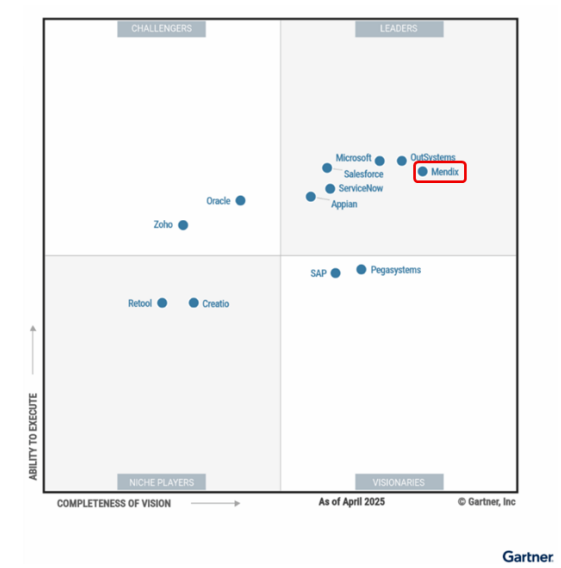
Although official public data regarding the revenue market share of the Low-code market in Thailand is not yet available, a report by Gartner, a leading global research and advisory firm, positioned Mendix in the “Leader” quadrant of the 2025 Gartner Magic Quadrant for Enterprise Low-code Application Platforms.
This prestigious evaluation is based on completeness of vision and ability to execute, reflecting the platform's technological robustness, system stability, and enterprise-grade practical readiness.
Mendix's continuous recognition as a global leader for the 9th consecutive year demonstrates the platform's world-class capabilities. It serves as a crucial factor enabling the Company to strengthen client confidence while sustainably maintaining its competitive edge and market leadership.
Source:
Furthermore, the business's strength is reflected in the trend of Recurring Income generated from large corporate clients (such as companies listed in the SET50/SET100 indices). This serves as evidence demonstrating clients' long-term confidence in utilizing TBN's services and solutions. The continuous growth of this major revenue proportion is a clear indicator of business stability and the Company's capability to successfully retain its customer base within the large corporate market.
1. Competitive Trends in the Software and Low-code Industry
The software and Low-code development platform industry exhibits a trend of continuously intensifying competition. This aligns with rapid market growth, the integration of AI technology into software systems, the corporate demand to reduce development time and costs, as well as the market entry of new domestic and international players. These factors reflect a competitive shift towards innovation-driven approaches, practical usability, and the development of solutions tailored to meet the specific needs of each industry.
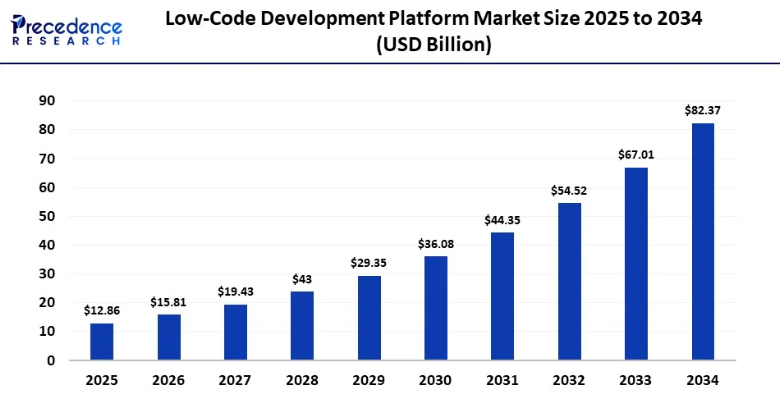
Notably, the global Low-code development platform market was valued at approximately USD 10.46 billion in 2024 and is projected to expand to approximately USD 82.37 billion by 2034, registering a Compound Annual Growth Rate (CAGR) of 22.92 percent during the period from 2025 to 2034. The primary growth drivers for this expansion stem from the escalating demand for Rapid Application Development and the widespread implementation of Digital Transformation initiatives across various industries.
Source: https://www.precedenceresearch.com/low-code-development-platform-market?utm_source=chatgpt.com
2. Growth Trends of Digital Technology in the Enterprise Market
The growth of digital technology in 2025 reflects a qualitative shift in corporate demand, emphasizing the adoption of highly flexible, rapidly adaptable technologies that effectively address practical business requirements. Consequently, overall investment in digital technology continued to expand steadily, despite the volatility of the global economic environment.
Key technologies playing a pivotal role include Cloud Computing, Artificial Intelligence (AI), Automation, and Low-code development platforms. These serve as critical mechanisms driving the digital transformation of organizations across all industries. Concurrently, enterprises are placing heightened emphasis on data security, system governance, and Auditability to ensure sustainable, enterprise-grade utilization.
verview of the Digital Industry Sentiment Index
The overview of the Digital Industry Sentiment Index in 2025, as reported by the Digital Economy Promotion Agency (depa), reflects an industry navigating volatility and multidimensional pressures stemming from macroeconomic factors and the broader business environment. Consequently, the index experienced fluctuations in response to situational changes throughout the year.
f
f
f
f
In early 2025, the Sentiment Index was bolstered by positive expectations surrounding economic stimulus measures. However, by mid-year, the index declined due to macroeconomic pressures, rising operational costs, and investment uncertainties, before exhibiting a slight recovery towards the year's end. Overall, the index remained below the 50-point threshold for the entirety of the year, indicating lingering concerns among digital entrepreneurs regarding business operational trends.
For the fourth quarter of 2025, the Sentiment Index stood at 48.6, an increase from 46.9 in the preceding quarter. This improvement was supported by positive developments in business performance, production volumes, purchase orders, and optimized operational costs. Conversely, factors related to employment and capital investment continued to demonstrate a decelerating trend.
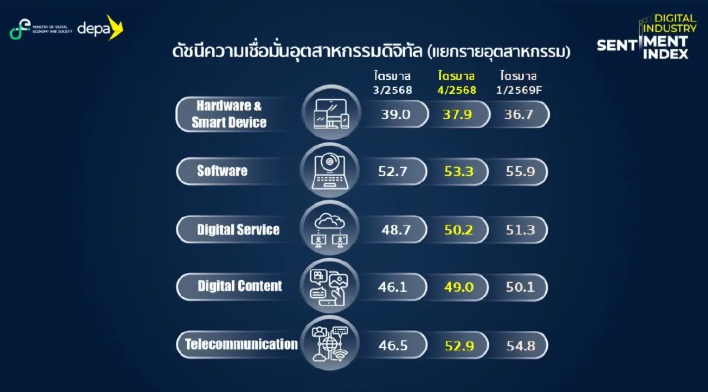
When analyzing the data across five distinct digital industry sub-sectors—namely, (1) Hardware and Smart Devices, (2) Software, (3) Digital Services, (4) Digital Content, and (5) Telecommunications—the findings indicate that in the fourth quarter of 2025, three sub-sectors recorded a Sentiment Index above the 50-point mark. These were:
(1) The Software Industry at the level of 53.3;
(2) The Digital Services Industry at the level of 50.2; and
(3) The Telecommunications Industry at the level of 52.9.
Source: Digital Economy Promotion Agency (DEPA)
f
These trends indicate that despite the overarching challenges anticipated for the digital industry landscape in 2025, the software, digital services, and telecommunications sectors sustain a higher confidence index relative to other industries. Furthermore, they continue to play a pivotal role in propelling the nation's digital economy.
Looking ahead to 2026, the majority of digital operators anticipate proactive government measures to accelerate the adoption of domestic digital solutions within public sector agencies. This must be pursued in tandem with digital workforce development to mitigate the shortage of highly skilled tech talents, the provision of joint public-private funding for research and innovation, and the establishment of platforms to facilitate international trade. Ultimately, these initiatives aim to optimize operational costs and unlock opportunities for Thai digital products and services to significantly enhance their competitiveness on the global stage.
f
f
f
f
Target Customer Segments
The Company focuses on serving large enterprise clients across diverse industries seeking to systematically accelerate their digital transformation. The Company provides comprehensive end-to-end digital solutions, encompassing system development via the Mendix Low-code platform, consulting services, the development of Vertical Solutions, the application of Artificial Intelligence (AI) technology, cybersecurity solutions, and cloud services. These offerings are strategically designed to enhance operational efficiency, reduce costs, and generate clearly measurable Returns on Investment (ROI).
1. Banking, Finance, Leasing, and Non-bank Sector
Targeting organizations that require comprehensive digital systems capable of supporting stringent regulatory compliance and extensive system integrations. This encompasses Loan Origination/Management Systems (LOS/LMS), Debt Collection Systems, Back-office operations, and Contact Center Automation.
2. Insurance Sector
Covering life and non-life insurance companies aiming to elevate their sales processes and customer services. Solutions include Agent/Broker Platforms, Customer Self-service Portals, and Underwriting & Claim systems, with a strong emphasis on highly flexible and rapidly adaptable architectures.
3. Retail Sector
Targeting large-scale retail organizations seeking to optimize front-end and back-office operations. Solutions include Supplier Portals, Customer/Supplier Onboarding systems, eCommerce platforms, Stock Transfer management, and Workflow Automation to systematically manage data and operational processes.
4. Manufacturing Sector
Covering factories and manufacturing enterprises looking to enhance operational efficiency. Solutions include MES Automation, BOM Management, Quality Inspection, Sales Order processing, and new product development support systems, all designed for seamless integration with existing legacy systems.
5. Healthcare Sector
Targeting healthcare institutions that require highly stable and secure digital systems capable of handling sensitive data. These systems can be further extended with enterprise-grade AI platforms to support internal data and knowledge management.
6. Energy Sector
Covering energy organizations requiring complex operational data management and reporting systems. The focus is on Implementation-ready solutions that can be seamlessly augmented with Cloud Infrastructure and Managed Services.
7. Organizations Prioritizing AI and Cybersecurity (Cross-industry: Enterprise AI & Cybersecurity)
Covering organizations managing sensitive data or facing high security risks. The Company offers enterprise-grade AI platforms (ReN3) and Cybersecurity solutions, such as Automatic Red Teaming and Mobile Security, to reinforce system stability and digital trust.
In 2025, the Company remains committed to expanding its large enterprise customer base across multiple industries. The strategic focus is on delivering End-to-End Digital Solutions that are highly practical, flexible, scalable for future expansion, and fully compliant with industry-specific regulations. These solutions are designed to optimize operational efficiency, establish competitive advantages, and support the long-term sustainable growth of the clients.
f
f
f
f
f
f
Competitive Strengths and Advantages
The Company possesses several key competitive strengths and advantages that drive its growth and differentiate it within the highly competitive software and digital solutions industry. The details are as follows:
f
1. Enterprise Low-code Leader in Thailand and the Asia-Pacific Region
The Company is a premier provider of digital solutions for large enterprise clients, possessing profound expertise in the Mendix Low-code platform. The capability to efficiently develop and deploy large-scale, complex systems for practical enterprise use is a core strength that decisively distinguishes the Company from general market providers.
The Company has been the first Mendix License provider in Thailand since 2008, accumulating over 17 years of Low-code experience. By consistently delivering solutions to large enterprises across diverse industries, the Company has developed deep insights into both technical execution and business value creation.
Furthermore, as the official authorized distributor of the Mendix Low-code Platform for Siemens in Thailand, the Company reinforces its credibility regarding service standards and reflects its exceptional capability to sustainably deliver world-class solutions to corporate clients.
f
2. In-depth Experience and Comprehensive End-to-End Digital Solutions
The Company specializes in providing comprehensive digital solutions, encompassing application development through a hybrid Low-code and High-code approach, Digital Transformation consulting, cloud services, and robust cybersecurity management. This enables the Company to holistically address the multifaceted needs of enterprise clients and ensures that project executions strictly adhere to designated timelines, budgets, and regulatory frameworks.
f
3. Application of AI to Enhance Efficiency and Business Value
The Company strategically integrates Artificial Intelligence (AI) technology into both its software development processes (AI-Assisted Development) and its business solutions. This integration tangibly enhances the intelligence, operational efficiency, and overall value of the systems delivered to enterprise clients.
f
4. Differentiation from Traditional System Integrators (SIs)
The Company focuses on a Software & Consulting-driven approach to systematically support the Digital Transformation of corporate clients. By leveraging a Low-code framework as the core mechanism, the Company significantly reduces development time, enhances agility, and elevates overall project execution efficiency compared to traditional development methods.
The Company possesses the capability to develop hybrid solutions that seamlessly integrate Low-code and High-code, prudently selecting technologies tailored to the client's business context, budget, and Return on Investment (Business Value & Business Justification). Utilizing the Mendix Low-code platform—a globally recognized enterprise-grade platform—enables the highly efficient design, development, and modification of complex Business Processes and Workflows. This capability accommodates rapid business fluctuations and strengthens long-term competitive advantages.
f
f
f
f
f
f
f
5. Development of Industry-Specific Business Solutions and Forging Long-Term Client Partnerships
A key strength of the Company lies in developing industry-specific business solutions, particularly the End-to-End Lending Platform tailored for the financial sector. This platform comprehensively covers the entire credit lifecycle from upstream to downstream, tangibly reflecting the Company’s ability to develop practical, commercially viable platforms. Furthermore, the Company offers a diverse portfolio of solutions and platforms, including Debt Collection systems, Generative AI technologies, and Cybersecurity solutions. These offerings effectively support clients' Digital Transformation journeys, optimize costs, and foster long-term business collaborations.
f
6. Cross-Industry Experience Coupled with Deep Vertical Focus
The Company possesses extensive experience in providing digital solutions across diverse industries, with particularly profound expertise in the Banking, Finance, and Insurance (BFI) sector—an industry characterized by high operational complexity and strict regulatory frameworks. Accordingly, the Company strategically focuses on developing Industry-Specific Solutions (Vertical Solutions) to create distinct market differentiation, enhance competitive capabilities, and support sustainable, long-term growth.
f
7. Cost Optimization and Reduction of Reliance on Human Resources
Supported by a team of over 150 technology experts proficient in both Low-code and High-code development, the Company is exceptionally well-equipped to handle highly complex, enterprise-grade projects that demand superior quality. A core competitive advantage is the Company's ability to develop and deliver digital solutions that optimize operational costs and reduce reliance on human resources. By integrating Low-code platforms with Artificial Intelligence (AI) and Automation, system development is expedited, resource utilization is highly efficient, and project timelines are significantly shortened compared to traditional methods.
Additionally, the utilization of Graphical User Interfaces (GUIs), pre-built components, and Reusable/Repeatable Solutions significantly alleviates IT workloads, reduces long-term operational costs, and enhances project quality and cost control. This clearly reflects the Company's capability to continuously generate sustainable business value for corporate clients.
f
Earning the Trust of Large Enterprise Clients
The Company has consistently built solid trust among large enterprise clients, who constitute its primary customer base. Developing software for these enterprises involves high complexity regarding operational workflows, rapidly evolving business requirements, stringent data security standards, and expectations for accelerated development timelines. The Company's proven track record of developing and delivering systems on time and exactly to specified quality standards has fostered deep client confidence. This results in strong repeat business and continuous referrals to new clients. Such success has further expanded the foundation of trust across diverse business sectors seeking flexible software capable of being precisely customized to their specific organizational needs.
Furthermore, the Company remains steadfast in its commitment to maintaining the highest standards of service excellence while continuously upgrading the competencies of its workforce. This ensures the capability to comprehensively address client requirements, swiftly adapt to market dynamics, and deliver superior-quality outcomes within stipulated timelines and appropriate budgets, ultimately achieving maximum satisfaction for corporate clients across all industries.
f
f
f
f
f
Examples of Trusted Corporate Clients:
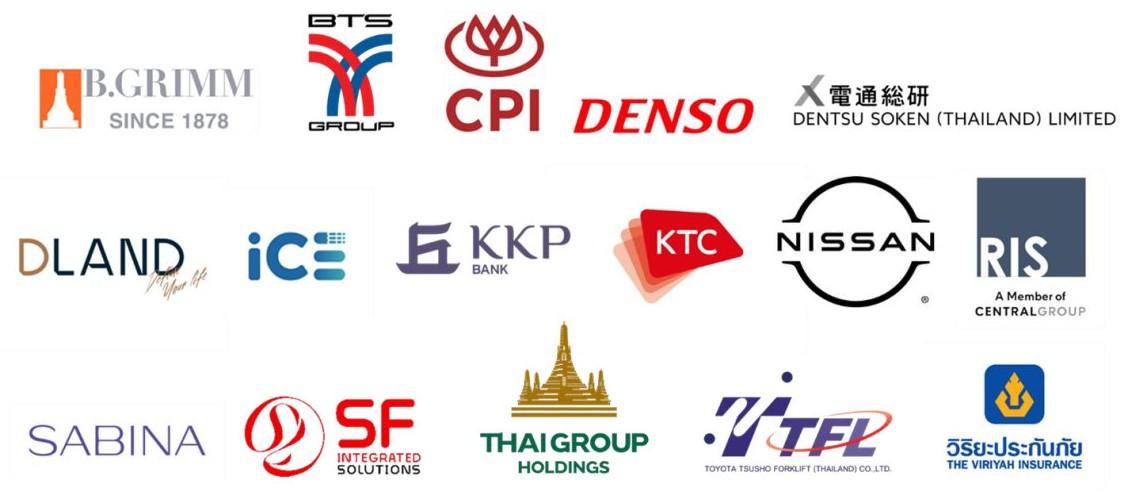 Note: The above examples represent only some of the Company’s clients who use the Company’s services. The Company has obtained permission to use the clients’ logos for publication.
f
Competitive Strategies
In 2025, continuing into 2026, amidst intense competition and rapid technological advancements, the Company formulated competitive strategies aimed at elevating its role from a technology provider to a “Trusted Intelligent Digital Solutions Partner” for corporate clients. This is achieved through the integration of Low-code, High-code, Artificial Intelligence (AI) technologies, and robust business solutions to create tangibly measurable business value and support sustainable long-term growth.
1. Expanding Low-code Services into Business Solutions with a Focus on End-to-End Lending
The Company focuses on expanding its customer base into high-potential industries that demand highly complex digital systems, particularly the financial, lending, leasing, Digital Bank, and Non-bank sectors. These industries require flexible systems capable of rapidly adapting to changing business rules and regulatory landscapes, as well as facilitating swift system development and enhancement.
To effectively serve these sectors, the Company developed and introduced a comprehensive End-to-End Lending Solution. This encompasses the entire process: from loan application intake, credit consideration and approval, contract management, and debt collection, through to portfolio management. This solution is built upon the Company's extensive system development experience and proven track record, allowing for customizable service levels tailored to the specific requirements of each client's project.
The Company provides a One-Stop Service model, covering business process design consulting, system development utilizing both Low-code and High-code technologies, and post-implementation system maintenance. This is executed by a team of highly proficient professionals with a profound understanding of specific industry contexts.
Furthermore, the Company employs a “Land and Expand” strategy. This involves initiating projects with clearly defined scopes that yield rapid, tangible results, subsequently expanding services to other systems or projects within the same client organization. This strategy strongly aligns with the Company's revenue structure, which demonstrates a consistent proportion of recurring revenue from existing corporate clients.
Data from annual reports and financial statements publicly disclosed via the Stock Exchange of Thailand reflect the Company's capability to consistently retain its corporate customer base and successfully up-sell services, even during periods when total revenue fluctuates due to broader economic and industry conditions. This underscores the Company's strong potential in cultivating sustainable, long-term relationships with enterprise clients.
f
2. Elevating to an AI-Driven Low-code Platform and Business Solution Sales
The Company strategically shifted its positioning from a Low-code provider to an Intelligent Digital Platform Provider by integrating AI as a core component in both the development processes and the business solutions themselves. This includes:
AI-Assisted Development: To accelerate development speed, optimize costs, and enhance overall Productivity.
Generative AI for Enterprise: To support internal corporate knowledge and data management.
AI-Driven Communications: To elevate Contact Center operations and Customer Engagement.
Concurrently, the Company transitioned its sales model from Tech-driven Sales to Business Solution Sales, emphasizing Business Value & Investment Justification. This approach clarifies the sales process, reduces the Sales Cycle, and significantly enhances the potential for long-term commercial scalability.
d
3. Selective Vertical Focus Strategy and Building a Growth Engine
The Company strategically focuses on industries where it possesses high expertise to mitigate risks and increase project success rates. The Banking, Financial Services, and Insurance (BFSI) sector remains the primary revenue base. Simultaneously, the Company is expanding into the Healthcare and Energy sectors to achieve strategic risk diversification.
The End-to-End Lending Platform is designated as a crucial Growth Engine, particularly the Debt Collection and Loan Management modules, which exhibit clear market demand. These modules can generate revenue through License and Subscription models, thereby increasing the proportion of Recurring Income and supporting a highly Scalable Business Model.
f
4. Technological Integration and Strategic Partnerships
The Company prioritizes the selection and integration of cutting-edge technologies to maintain competitiveness in the digital era, particularly in AI, Cybersecurity, and Omnichannel Customer Engagement solutions. These can be flexibly and seamlessly integrated with both Low-code and High-code systems.
Furthermore, the Company maintains vital strategic partnerships, including with Siemens, the proprietor of the Mendix platform, as well as global technology partners such as SAP and Amazon Web Services (AWS). These collaborations significantly support customer base expansion, solution development, and the strengthening of the technological ecosystem both domestically and within the Asia-Pacific region.
f
5. Human Capital Development and Operational Excellence
The Company places immense importance on human capital development through the TBN Mendix Academy, aiming to continuously build a robust foundation of Low-code experts and enhance their knowledge of financial and lending business systems. This is pursued in tandem with the elevation of internal operational processes to increase Productivity, optimize costs, and reduce reliance on specific key personnel.
In the long term, the Company aims to increase the proportion of recurring revenue and enhance operational efficiency to support sustainable growth in both the short and long term.
f
f
f
f
f
f
f
ff
f
f
6. Cultivating MENDIX Low-code Personnel and Enhancing Brand Awareness via TBN MENDIX Academy
The Company remains steadfastly committed to continuously building and developing a highly efficient workforce to drive the widespread recognition and utilization of the MENDIX platform. Since 2022, the Company established the TBN Mendix Academy as the primary mechanism for developing Low-code technological capabilities for both internal and external personnel. The objective is to generate a sufficient workforce skilled in Mendix to meet the continuously rising demand for software utilization. Furthermore, the Company collaborates with the Digital Economy Promotion Agency (depa) to expand workforce development outcomes at the industry level.
In 2025, the Company successfully conducted training for a total of 439 internal and external personnel. The primary objective was to elevate the capabilities of personnel with foundational Mendix knowledge toward advanced expertise through a specialized curriculum, "Keeping Pace with Mendix for Developers." This included activities such as TECHDAY, Mendix Version Updates Reviews, and TBN Cafe, all designed to develop deep technical skills and update knowledge bases in alignment with ongoing technological advancements.
Number of Attendees in the TBN Mendix Academy Program
(Unit: Persons)
Training Period | Course | 2023 | 2024 | 2025 |
Quarter 1 | Mendix Basic (Rapid) | 68 | 42 | 20 |
Mendix Intermediate | 10 | 33 | 23 | |
Mendix Advanced | - | - | 14 | |
Mendix Developer Update | - | - | 59 | |
Total | 78 | 75 | 116 | |
Quarter 2 | Mendix Basic (Rapid) | - | 100 | 37 |
Mendix Intermediate | 20 | 79 | 34 | |
Mendix Developer Update | - | - | 71 | |
Total | 20 | 179 | 142 | |
Quarter 3 | Mendix Basic (Rapid) | 135 | 47 | 19 |
Mendix Intermediate | 34 | 51 | 5 | |
Mendix Developer Update | - | 42 | 70 | |
Total | 169 | 140 | 94 | |
Quarter 4 | Mendix Basic (Rapid) | 34 | 28 | 6 |
Mendix Intermediate | - | 24 | 12 | |
Mendix Developer Update | 1 | 1 | 69 | |
Total | 34 | 53 | 87 | |
Total Attendees for the Year | 301 | 446 | 439 |
f
f
f
In 2025, to uniformly establish foundational knowledge standards for Mendix—despite the Company's overarching goal of driving widespread recognition and utilization of the platform—a strong emphasis remained on the quality of knowledge imparted to trainees. Performance outcomes from the TBN Mendix Academy’s foundational course (Rapid) revealed that 81 out of 82 total participants successfully passed the course assessment*, representing an exceptional pass rate of 98.8 percent. This figure underscores the project's success in achieving its objectives and serves as a strong testament to the rigorous quality standards of the training program, detailed as follows:
Comparison of Personnel Passing the TBN Mendix Academy Course Assessments
(Unit: Persons)
Training Period | Course | 2023 | 2024 | 2025 |
Quarter 1 | Mendix Basic (Rapid) | 198 | 15 | 20 |
Mendix Intermediate | 1 | 3 | - | |
Total | 199 | 18 | 20 | |
Quarter 2 | Mendix Basic (Rapid) | 36 | 66 | 36 |
Mendix Intermediate | 5 | 5 | - | |
Mendix Advanced | 1 | - | - | |
Total | 42 | 71 | 36 | |
Quarter 3 | Mendix Basic (Rapid) | 124 | 32 | 19 |
Mendix Intermediate | - | 3 | - | |
Mendix Advanced | - | 4 | - | |
Total | 124 | 39 | 19 | |
Quarter 4 | Mendix Basic (Rapid) | 38 | 21 | 6 |
Mendix Intermediate | 1 | - | - | |
Total | 39 | 21 | 6 | |
Total Annual Passing Participants | 404 | 149 | 81 |
Note: Out of the 82 total participants, 81 successfully passed the assessment. The remaining 1 participant is an external client; despite follow-up efforts by the project team to facilitate the examination, the client has not yet been available to participate, resulting in an incomplete assessment status.
f
Based on the data summarized above, although the overall number of trainees in 2025 demonstrated a declining trend compared to the preceding year, the interest in Mendix-related courses tailored for developers exhibited an upward trajectory. This reflects a shift in learning behaviors, with personnel increasingly focusing on the development of specialized skills and demonstrating a strong desire to stay abreast of Mendix software advancements. The continuous updates in features and capabilities have consequently driven the creation of novel learning content formats that more effectively address practical, real-world operational requirements.
Regarding the TBN Mendix Academy project over the past year in 2025, the Company remained resolutely committed to expanding its trainee base, encompassing both internal and external personnel. This was pursued in tandem with
the introduction of the "Keeping Pace with Mendix for Developers" curriculum, which strategically emphasizes the cultivation of skills that precisely align with the evolving demands of the Low-code labor market.
Target Number of Attendees for the TBN Mendix Academy Program in 2026
(Unit: Persons)
Training Period | Course | 2025 | 2026 |
Quarter 1 | Mendix Basic (Rapid) | 50 | 50 |
Mendix Intermediate | 40 | 40 | |
Mendix Developer Update | - | 50 | |
Total | 90 | 140 | |
Quarter 2 | Mendix Basic (Rapid) | 50 | 50 |
Mendix Intermediate | 40 | 40 | |
Mendix Developer Update | - | 50 | |
Total | 90 | 140 | |
Quarter 3 | Mendix Basic (Rapid) | 50 | 50 |
Mendix Intermediate | 40 | 40 | |
Mendix Developer Update | - | 50 | |
Total | 90 | 140 | |
Quarter 4 | Mendix Basic (Rapid) | 50 | 50 |
Mendix Intermediate | 40 | 40 | |
Mendix Developer Update | - | 50 | |
Total | 90 | 140 |
f
Marketing and Promotional Activities
Throughout 2025–2026, the Company executed marketing and promotional activities strategically aimed at solidifying its corporate image as an “Intelligent Digital Solution Provider.” This was achieved through a marketing strategy that seamlessly integrated innovation showcases with educational initiatives to penetrate the large enterprise segment, enhance brand awareness, and foster confidence among clients and investors alike.
The Company prioritized the promotion of its core solutions encompassing critical technologies, namely the Low-code platform (Mendix), Artificial Intelligence (AI) technology, Omnichannel customer communication management solutions, and cybersecurity technologies, to comprehensively support the digital transformation of enterprise organizations.
f
1. Innovation and Technology Exhibitions (Events & Showcases)
The Company utilized technology events and practical workshops as a proactive strategy to address the specific needs and pain points of corporate clients. The Company presented practical, implementable digital solutions by integrating the Mendix Low-code platform with the ReN3 (Generative AI Framework) infrastructure. This aimed to build confidence in the Company's technological capabilities and enterprise-level application methodologies. Key events included:
TBN Techday 2026: “Accelerating Digital Agility with AI & Low-code”
The Company's annual technology exhibition demonstrating the application of ReN3 as an enterprise AI infrastructure, coupled with the utilization of Low-code for system integration and development, with a strong emphasis on data security and Data Governance.f
f
DX Day 2026 (Digital Transformation Day)
Participation in a national-level technology exhibition to showcase the potential of Hyper-automation solutions and business process optimization through the integration of AI and Low-code, effectively supporting executive decision-making.
2. Target Audience Engagement and Long-Term Relationship Strategies
Beyond large-scale events, the Company organized in-depth activities to cultivate trust among executives and enterprise-level users. These included:
Executive Roundtables: A forum for exchanging strategic perspectives on the appropriate and secure application of AI and digital solutions in a business context.
Solution Demonstrations & Technical Workshops: Live demonstrations of solutions and technical consulting provided by experts to support clients' decision-making processes and practical system implementations.
3. Online Marketing and Education
The Company executed advertising and public relations campaigns through online channels such as its corporate website, Facebook, and LinkedIn to reach target audiences in both the public and private sectors. The focus was on delivering educational content regarding Low-code, AI, and Digital Transformation via articles, infographics, videos, and webinars to drive engagement and foster a deeper understanding of the Company's products and services.
Furthermore, the Company supported online training and educational activities to develop Low-code skills for public sector personnel and interested individuals. This initiative significantly expands the user base and reinforces long-term confidence in the Company's technology.
4. Building Confidence through Investor Relations (IR) Activities
As a listed technology company, the Company places great importance on consistent communication with investors. This is achieved through participation in "Opportunity Day" events to report on operating results, business plans, and growth trajectories, with a particular focus on strategies to increase the proportion of recurring income and the utilization of Artificial Intelligence (AI) as a long-term growth driver.
Additionally, the Company participated in the "mai Growth Lab," a platform for exchanging knowledge and experiences regarding the application of AI to support business growth. This reflects the Company's role as a technology leader in the capital market and helps bolster confidence among investors and stakeholders.
Concurrently, the Company prioritizes good corporate governance and sustainable business operations. The Company has been certified as a member of the Thai Private Sector Collective Action Against Corruption (CAC), received a 5-star Corporate Governance Report (CGR) rating, and was awarded an "A" level SET ESG Rating for the year 2025. These achievements reflect an unwavering commitment to transparent business practices, social responsibility, and the cultivation of long-term trust with investors and business partners.
5. Partnership and Ecosystem Marketing
The Company conducted marketing activities through collaborations with technology partners and user communities, particularly by actively participating in the Mendix Ecosystem to reaffirm its leadership and status as the authorized Mendix distributor in Thailand.
Furthermore, the Company signed Memorandums of Understanding (MOUs) with leading educational institutions to develop Low-code personnel. This strategic move helps build a long-term user base, enhances academic brand awareness, and supports the nation's digital ecosystem.
6. The Role of Online Media as a Trust Signal
Beyond direct marketing activities, the Company emphasizes its presence in online media and various business publications, including business news, capital market updates, and online investment platforms. These appearances serve as vital "Trust Signals," continuously reflecting the Company's corporate image, credibility, and business direction to the public, investors, and all stakeholders.
f
Marketing Support Activities
In 2025, the Company strategically realigned its marketing initiatives to align with its overarching business direction by placing a strong emphasis on Industry-Focused Events. This targeted approach enables the Company to effectively reach customer segments with distinct requirements and present tailored digital solutions specifically designed to address the unique challenges of each respective industry.
The core objectives of the Company's marketing activities and plans during the year included elevating brand and product awareness within the market, cultivating and retaining strong relationships with existing clients, and successfully expanding the new customer base within target industries.
Furthermore, the Company placed significant emphasis on empowering users to effectively and efficiently apply Low-code technology. This initiative was pursued in tandem with the development and active support of a User Community. This community serves as a vital platform for sharing practical experiences, facilitating knowledge transfer, and fostering collaborative networks among users. Ultimately, these strategic efforts are designed to forge robust, sustainable, and long-term relationships with the users.
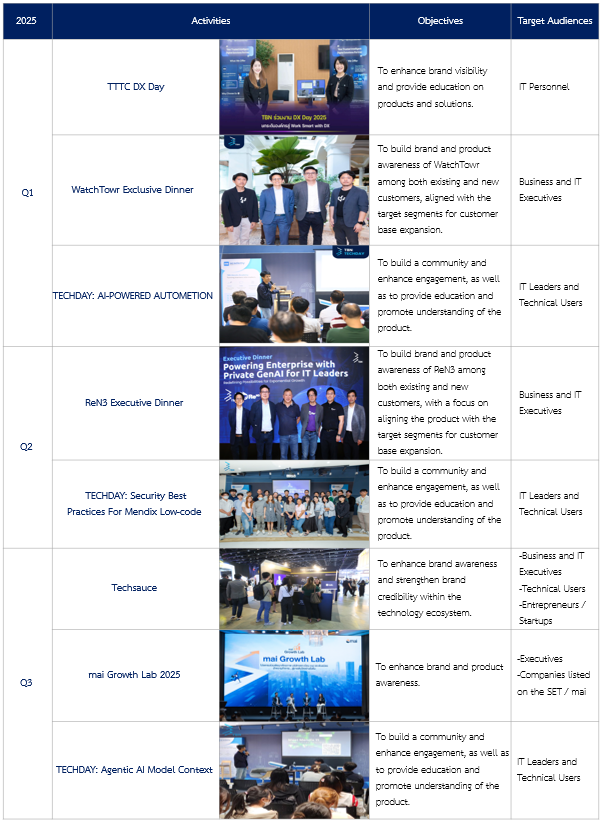
f
Marketing Plans and Activities for 2026
In 2026, the Company remains focused on executing marketing plans and promotional activities that closely align with prevailing economic conditions and current market trends. The primary emphasis is placed on generating profound brand and product awareness among target customer segments while actively driving the growth of the Company's core business solutions.
1. Market Validation and Product Development for the Lending Platform
The Company has initiated Market Validation for the End-to-End Lending Platform. Preliminary assessment results indicate the following:
The Debt Collection module has rapidly validated its market potential, consistently generating a steady stream of prospective leads.
The Loan Management module is beginning to demonstrate clear market demand, particularly within the Non-Banking sector and among Asset Management Companies (AMCs).
The Loan Origination and NPL / NPA Management modules are currently undergoing further study and data collection to comprehensively gauge broader market demand.
To support these strategic initiatives, the Company plans to fortify its workforce with Subject Matter Experts (SMEs), particularly in the field of Debt Collection. This specialized domain knowledge is highly pivotal for effective solution development and sustainable long-term business expansion.
2. Product Launch Plan and Pricing Strategy
The Company aims to officially launch the End-to-End Lending Platform within the year 2026. Currently, several business deals have already been successfully closed, reflecting a highly positive market response.
Regarding the pricing strategy, the Company is in the process of evaluating appropriate Pricing Models by carefully considering key factors, including:
Customer Switching Costs
Customer Willingness to Pay
Investment Justification
Furthermore, because these solutions are the Company's proprietary intellectual property, the Company possesses significant flexibility in formulating pricing strategies. Notably, the Debt Collection module can be offered under both Subscription and Perpetual License models. This flexibility significantly enhances the Company's competitive advantage in the market.
3. Marketing Plans and Promotional Activities in 2026
The Company remains committed to organizing diverse marketing campaigns and activities to continuously fortify brand and product awareness, guided by the following core approaches:
Event Marketing: Organizing events focused on showcasing Business Solutions, specifically prioritizing the End-to-End Lending Platform and Cybersecurity solutions. These represent the key product categories the Company is emphasizing this year, which directly align with enterprise market demands.
Low-code Solutions Promotion: For the Low-code Solutions portfolio, the Company will continuously execute promotional marketing activities. The strategic focus will shift towards cultivating a robust Ecosystem, empowering the Company to address and resolve clients' business challenges in a more highly targeted and comprehensive manner.
Activity | Objectives | Target Audience | Schedule |
Solutions-Focused Events |
|
| Quarters 2 - 3 |
Other Seminars |
|
| Quarters 3 - 4 |
4. Building Customer Relationships and Expanding the Market Base
The Company prioritizes retaining strong relationships with existing clients alongside expanding its new customer base within target industries to build robust and continuous long-term business relationships. Marketing activities in 2026 will focus on presenting comprehensive end-to-end solutions that deliver maximum value and satisfaction to all target customer segments.
Pricing Policy
1. Digital System Development and Consulting Services
The Company establishes its pricing policy for digital system development and consulting services based on the Scope of Work, the number of required personnel, their level of expertise, and the project duration to calculate the appropriate Man-Days for each project.
The number of Man-Days and the corresponding service rates are evaluated based on system complexity, usage objectives, implemented technologies, and the level of system customization required by the client. The rate per Man-Day adheres strictly to internal corporate policies, formulated under the principles of cost control, project risk management, and the maintenance of an appropriate profit margin, ensuring efficient and sustainable project execution.
2. System Maintenance and Technology Support Services
For system maintenance and technology support services, the Company determines selling prices by considering the service cost structure, which encompasses personnel, technology, and infrastructure expenses, augmented by an appropriate gross profit margin (Cost-Plus pricing). This pricing is evaluated in conjunction with the specified Service Level Agreement (SLA) and industry competitive conditions.
This approach ensures competitive pricing that accurately reflects service quality and sustainably supports the generation of the Company's Recurring Revenue over the long term.
Distribution Channels
1. Word of Mouth and Client Referrals
The Company boasts a proven track record of successfully developing digital systems for large enterprises across multiple industries, particularly within the financial and insurance sectors, and businesses involving highly complex systems and stringent regulations. Delivering standardized work, executing systematic project management, and providing continuous after-sales services have earned the Company profound trust from its clients. This consistently leads to positive referrals to other prospective clients, serving as a vital channel for customer base expansion without significantly incurring additional marketing costs.
2. Direct Sales
The Company maintains expert Sales and Pre-Sales teams highly proficient in analyzing the specific needs of enterprise clients. They present tailored solutions that align precisely with the business nature and constraints of each individual client by meticulously evaluating business data, the scope of system utilization, and the intended number of users. This thorough approach ensures that presentations are highly effective and congruent with the client's strategic objectives.
For existing clients, the Company implements a proactive Account Management approach. Clients can coordinate directly with their respective Project Leaders to assess requirements for further system development and to seamlessly up-sell services for long-term engagement.
3. Sales Through Partners
The Company actively collaborates with strategic business partners, such as System Integrators (SIs) and global technology partners, to broaden distribution channels, enhance solution delivery capabilities, and penetrate clients across diverse industries. Operating through strategic partnerships substantially strengthens the broader business ecosystem and significantly increases opportunities for long-term revenue generation.
Procurement of Products & Services
Reporting Mode
3117
Procurement (Overall)
Procurement of Products and Services
The Company prioritizes the procurement of quality products and resources to support efficient business operations, control operational risks, and accommodate the future expansion of digital solution services.
Product Procurement
The Company is an official distributor of Mendix products under Siemens. Customers and organizations can be assured that the Company's products are efficient and adhere to strict customer data protection standards.
1. Procurement of MENDIX License
The Company has been appointed by Siemens as an authorized distributor of Mendix software licenses in Thailand.
The Company directly purchases Mendix Licenses from Siemens for system development and distribution to corporate clients, which enables the Company to systematically control service quality, license management, and technical support.
2. Procurement of Other Products
The Company focuses on selecting and procuring technologies, platforms, and solutions from both internal and external sources to enhance its service capabilities and meet the needs of customers in various industries. The procurement of such products will be based on technical suitability, business value, compatibility with the Company's systems, and risk management concerning reliance on a single service provider.
Raw Material Acquisition (Overall)
Personnel Recruitment
The Company has established comprehensive criteria and considerations for recruiting prospective personnel to join its workforce. As of December 31, 2025, the Company has a total of 183 employees. The Human Resources and Recruitment Department is dedicated to sourcing individuals who are highly competent, experienced, possess a positive attitude, and demonstrate strong growth potential. This ensures the Company can effectively meet both customer and organizational service demands, while also serving as a driving force in the development of new systems within the organization. The core qualifications and criteria for candidate consideration are as follows:
1. Mindset: Demonstrates strong teamwork skills, a continuous learning mindset for personal and professional development, and a strong commitment to achieving assigned goals.
2. Logic: Exhibits business-oriented logical thinking and analytical skills, which are essential for accurately understanding clients' core requirements and designing effective solutions that meet their needs.
3. Experience: Brings relevant experience, specialized technical expertise, and deep industry knowledge to deliver high-quality services that ensure maximum customer satisfaction.
Recruitment Channels
The Company utilizes diverse recruitment channels to attract high-caliber talent that aligns with organizational requirements. These channels include:
1. Corporate Online and Offline Channels: Vacancies are actively promoted through the Company’s official website, professional networking platforms, and social media channels (e.g., the corporate Facebook page), as well as through targeted offline announcements.
2. Professional Recruitment Agencies: The Company partners with reputable recruitment agencies to source qualified candidates efficiently, swiftly, and accurately for specific roles, ensuring perfect alignment with the organization's needs.
3. Employee Referral Program: Current employees are encouraged to recommend capable and culturally aligned candidates to join the Company. This approach has proven to be a highly effective and efficient method for acquiring suitable talent.
4. Outsourcing & Contractors: In cases where the Company requires highly specialized skills or complex service delivery, experts are sourced through strategic business partners or specialized external agencies. This strategy ensures the high-quality and timely delivery of work that meets customer expectations.
Production Capacity (Overall)
| Item | Unit | Unit (if Other) | Used | Capacity |
|---|---|---|---|---|
| The Company is not engaged in manufacturing activities. | Others | N/A | 0 | 0 |
Domestic/Overseas Purchase Proportion (Overall)
| Raw Material | Source Country | Value |
|---|---|---|
| N/A | Thailand | 0 |
Product Information — Overview
Introduction
Over the past 17 years, the Company has continuously innovated its product offerings and evolved its business model to navigate dynamic economic conditions, rapid technological advancements, and the specific needs of corporate clients across various industries. The Company remains focused on elevating service quality alongside developing practical, flexible, and highly scalable digital solutions for long-term applications, thereby creating sustainable business value for its clients.
Projects Under Construction
Has Projects Under Construction (Y/N)
Yes
Description
As of December 31, 2025, the Company had projects in progress (backlog) totaling THB 361 million, which have not yet been delivered and for which revenue has not yet been recognized. This amount is categorized as follows: THB 45 million from digital system development and consulting services, THB 246 million from system maintenance, technology, and cloud support services, and THB 70 million from other services. Of this total, THB 233 million is scheduled for delivery within 2026, and the remaining THB 128 million is scheduled for delivery after 2026.
Total Projects
176
Total Project Value
498.0
Recognized Value
137.0
Remaining / Unrecognized Value
361.0
Projects
| Project Name | Description | Value | Income % | Est. Years | Est. Months | Est. Completion |
|---|---|---|---|---|---|---|
| 1. Digital Solution and Technical Consultancy Services | Estimated delivery 2026 = 49% of the contract value | 87 | 49 | 2 | 0 | 2027-12-01 |
| 2. Technical Maintenance, Licensing and Cloud Services | Estimated delivery 2026 = 50% of the contract value | 334 | 26 | 4 | 0 | 2029-12-01 |
| 3. Other | Estimated delivery 2026 = 26% of the project value | 75 | 8 | 6 | 0 | 2031-12-01 |
Issuance of Other Securities
Introduction
In 2025, the Company will not issue debentures or other securities.
Debentures & Bills of Exchange
Has Debentures (Y/N)
No
Convertible Securities
Has Convertible Securities (Y/N)
No