

Sustainability · 2025
In this section54 topics
- Sustainability Policy4 items
- Sustainability Goals & UN SDGs3 items
- Policy Review3 items
- Business Value Chain1 item
- Stakeholder Analysis2 items
- Environmental Policy & Guidelines6 items
- Environmental Policy Review3 items
- Energy — Plan & Guidelines2 items
- Energy — Electricity Consumption1 item
- Energy — Fuel Consumption1 item
- Energy — Targets2 items
- Energy — Performance & Outcomes2 items
- Water — Plan & Guidelines2 items
- Water — Withdrawal, Discharge & Consumption1 item
- Water — Targets2 items
- Water — Performance & Outcomes2 items
- Waste — Plan & Guidelines2 items
- Waste — Generation, Disposal & Recycling1 item
- Waste — Targets2 items
- Waste — Performance & Outcomes2 items
- GHG — Plan & Guidelines2 items
- GHG — Emissions1 item
- GHG — Emissions Verification3 items
- GHG — Principles & Standards1 item
- GHG — Targets1 item
- GHG Targets — Net Zero1 item
- GHG Targets — Carbon Neutrality1 item
- GHG Targets — Other Targets1 item
- GHG — Performance & Outcomes2 items
- Environmental Legal Incidents2 items
- Social Sustainability — Overview1 item
- Social Policy & Guidelines5 items
- Social Policy Review3 items
- Social — Principles & Standards Practised2 items
- Human Rights Due Diligence2 items
- Employees — Plan & Guidelines3 items
- Employees — Workforce1 item
- Employees — Remuneration & Provident Fund1 item
- Employees — Training & Development2 items
- Employees — Occupational Health & Safety1 item
- Employees — Labour Relations1 item
- Employees — Employee Representation3 items
- Employees — Targets2 items
- Employees — Performance & Outcomes2 items
- Customers — Plan & Guidelines3 items
- Customers — Satisfaction Results1 item
- Customers — Targets2 items
- Customers — Performance & Outcomes2 items
- Community & Social — Overview1 item
- Community & Social — Plan & Guidelines3 items
- Community & Social — Targets2 items
- Community & Social — Performance & Outcomes2 items
- Other Social Management2 items
- Law Violation Incidents2 items
Sustainability Policy
Introduction
The Role of Technology in Sustainable Development
In the current era, information technology plays a pivotal role as a primary tool for addressing global environmental challenges and serves as a key driver for the national digital economy. As a comprehensive software design and development provider, digital transformation consultant, and authorized reseller of Mendix—a Low-Code Development Platform (LCDP)—the Company recognizes its mission to promote innovations that foster long-term sustainability.
The adoption of LCDP technology not only enhances the efficiency and agility of developing digital solutions tailored to customer needs but also addresses the critical shortage of software developers. This contribution directly supports sustainable development in both social and economic dimensions. The Company is committed to balancing economic benefits, social well-being, and environmental stewardship, ensuring the business remains globally competitive while creating shared value for all stakeholders.
Sustainability Policy and Guiding Principles
The Company is dedicated to conducting business in accordance with sustainable development principles, integrating Environmental, Social, and Governance (ESG) dimensions into its corporate strategy. To establish a clear operational framework, the Company has implemented a Sustainability Policy encompassing eight core principles:
Fair Business Practices: The Company is committed to conducting business with transparency and fairness, fostering a culture of fair competition. This includes robust mechanisms for the management of conflicts of interest, the strict avoidance of any acts of favoritism, nepotism, or cronyism, and the protection of intellectual property rights.
Anti-Corruption: The Company maintains a "Zero Tolerance" policy toward all forms of corruption, whether direct or indirect. We implement internal control systems and annual risk assessments, alongside clear whistleblowing channels and comprehensive whistleblower protection measures.
Respect for Human Rights: We treat all employees and stakeholders with dignity and respect. The Company ensures equality and prohibits discrimination based on race, gender, religion, age, or disability. Furthermore, we prioritize the highest standards of data privacy and personal information protection in compliance with the law.
Fair Labor Practices: The Company fosters a happy, safe, and healthy working environment (Occupational Health & Safety). We maintain transparent human resource management—from recruitment and fair compensation to continuous professional skill development.
Responsibility to Customers: We strive to develop high-standard, quality products and services. The Company provides accurate, non-misleading information and maintains active feedback channels to resolve grievances and continuously improve our digital solutions to meet customer needs.
Environmental Stewardship: The Company emphasizes resource efficiency, particularly in reducing electricity, water, and office supply consumption. We instill environmental awareness among personnel to ensure strict compliance with environmental laws and standards to minimize our ecological footprint.
Community and Social Development: We aim to build strong collaborations and maintain transparent communication with local communities. The Company supports public interest activities and ensures that our use of natural resources has minimal impact on the environment and the quality of life of the public.
Intellectual Property: The Company recognizes that copyrights, patents, and trade secrets are vital to our competitive advantage. It is the duty of all personnel to protect the Company’s intellectual property while responsibly respecting the intellectual property rights of others.
Has a Sustainability Policy
Yes
Policy Description
Overview of Policies and Strategic Direction for Sustainable Growth
The Board of Directors of TBN Corporation Public Company Limited ("the Company") places the utmost importance on conducting business in accordance with sustainable development principles. Accordingly, the "Sustainability Management Policy" has been established to serve as an operational framework across the group. This framework emphasizes operating under the principles of Good Corporate Governance while integrating responsibility toward Environmental, Social, and Governance (ESG) dimensions throughout the entire value chain. Our objective is to mitigate negative impacts and enhance positive contributions to all stakeholders, fostering long-term confidence and sustainable growth in alignment with the Corporate Social Responsibility guidelines set by the Stock Exchange of Thailand.
The Company recognizes that, as a technology leader, innovation serves not only as a tool for competitive advantage but also as a vital engine for enhancing quality of life, supporting society, and preserving the environment. Consequently, the Company has integrated ESG dimensions into its core business strategy and established operational goals consistent with its eight guiding principles, categorized into three primary dimensions as follows:
1. Environmental Dimension
The Company is committed to conducting business in alignment with the United Nations Sustainable Development Goals (SDGs) to create shared value and preserve natural resources. We maintain a policy to avoid any actions that could negatively impact the ecosystem. Although our software business has a low direct environmental footprint, we remain dedicated to driving Green IT through the following initiatives:
Digital Transformation for the Environment: Promoting the use of Low-Code technology to assist customers and partners in digitizing their workflows. This initiative focuses on reducing paper consumption (Paperless) and optimizing energy efficiency in data processing systems.
Internal Resource & Waste Management: Promoting the efficient use of electricity, water, and office supplies. We have established guidelines for electronic waste (E-Waste) management and general waste disposal based on the 3Rs (Reduce, Reuse, Recycle) in accordance with international standards and legal requirements. These efforts aim to minimize greenhouse gas emissions from our internal office activities.
2. Social Dimension
The Company recognizes that "Personnel" are our most vital strategic resource for driving innovation and maintaining a sustainable competitive advantage. We are committed to enhancing quality of life, respecting human rights, and supporting surrounding communities. To ensure concrete implementation, the Company has established the "Corporate Social Responsibility Policy" and "Human Rights Policy" as frameworks for protecting fundamental rights and human dignity, as follows:
Human Capital Development & Fair Labor Practices: Focus on upskilling and reskilling to elevate professional capabilities. We provide a safe and hygienic working environment with fair and competitive compensation and benefits structures to attract and retain top talent (Talent Retention). This approach mitigates the risk of labor shortages and reduces the costs associated with training new employees.
Human Rights, Diversity & Inclusion: Adhere to a Human Rights Policy that promotes equality and is free from any form of discrimination or harassment (e.g., race, gender, religion, age, or disability). Furthermore, we prioritize personal data protection and respect the privacy rights of employees, customers, and all stakeholders, in full compliance with the Personal Data Protection Act (PDPA) and international information security standards.
Digital Inclusion & Community Development: Promote technology knowledge sharing with academic institutions and communities to cultivate a new generation of tech talent. We also continuously support public interest activities to strengthen society and promote sustainable social development.
3. Corporate Governance and Economic Dimension
The Company upholds business Ethics and Good Corporate Governance as the fundamental pillars of our operations. We aim to foster sustainable economic growth and build stakeholder confidence through transparent and accountable practices, as follows:
Good Corporate Governance & Anti-Corruption: We operate under a strict Business Code of Conduct and Anti-Corruption Policy, establishing guidelines that align with international standards. This includes comprehensive management of conflicts of interest to serve as an operational framework for personnel at all levels. Furthermore, the Company maintains an internal control system subject to regular audits at least once a year. We have officially declared our commitment against all forms of corruption to promote transparency throughout the entire supply chain.
Cybersecurity & Data Privacy: We place the highest priority on information security by implementing advanced data protection measures for customers, employees, and partners. Our operations are strictly aligned with the Personal Data Protection Act (PDPA) and international security standards.
Innovation & Sustainable Growth: We are dedicated to developing solutions that address market demands and mitigate the shortage of software developers. Our goal is to deliver stable business returns while maintaining absolute respect for the intellectual property rights of others.
To ensure that sustainability operations achieve their goals, the Board of Directors has stipulated that the policy be reviewed at least once a year, along with continuous oversight and monitoring of sustainability performance, including enterprise risk management. This covers key environmental, social, and governance (ESG) issues, as well as strict adherence to the Company's regulations and business ethics.
Additionally, the Company has appointed “Sustainability Strategy Working Group” Under the supervision of the Executive Committee, to support, promote, and drive sustainability strategies in alignment with the Board of Directors' policies, leading to concrete achievements throughout the organization.
The Sustainability Strategy Working Group
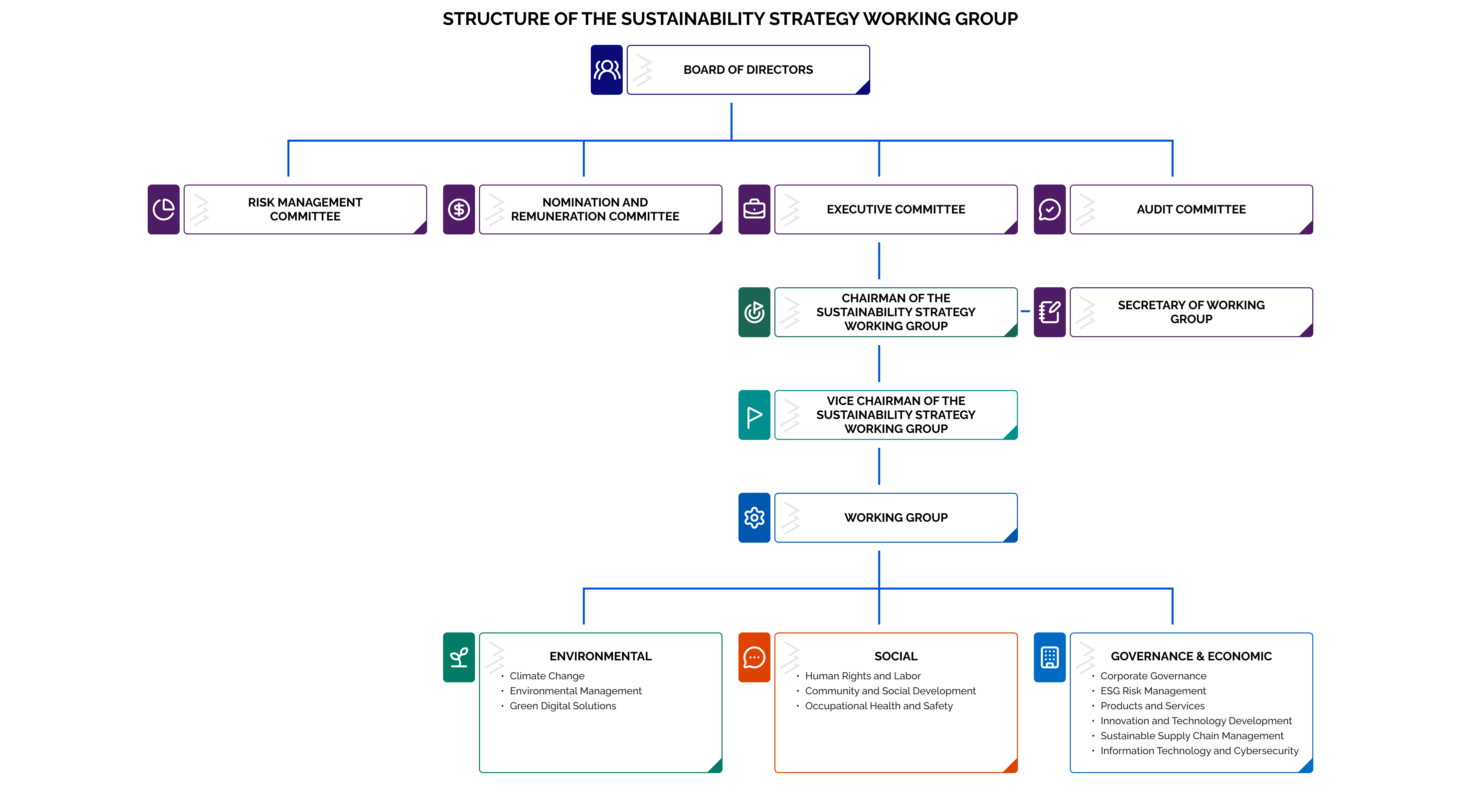
f
f
Roles, Duties, and Responsibilities of the Working Group
1. Define the organization's policies, strategies, operational framework, and sustainable development guidelines, including selecting material topics important to business sustainability and setting sustainable development goals aligned with the group's vision, mission, and business direction across economic, social, and environmental dimensions (for submission to the Board of Directors for approval).
2. Oversee, review, and monitor the progress of operations in accordance with policies, strategies, and sustainable development plans, including evaluating the success of implementation, to ensure that sustainability initiatives are effective, transparent, and aligned with established goals.
3. Promote and drive the concrete implementation of sustainability strategies in various departments by fostering participation (with internal departments and external partners such as customers, business partners, government agencies, and communities) to integrate sustainability approaches across all dimensions of operations.
4. Provide consultation, advice, and support to internal departments in terms of resources, budget, and personnel, to ensure that sustainability operations are implemented throughout the organization and are aligned with the company's core strategies.
5. The Chairman of the Working Group has the authority to appoint or assign responsible persons for key aspects of sustainable development in each area (ESG) to ensure comprehensive operations and integration with organizational goals.
6. Report sustainability performance to the Executive Committee.
7. Collect, analyze, and prepare sustainability performance reports, including the annual Sustainability Report, to present results to the Executive Committee and relevant regulatory bodies.
8. Coordinate cooperation with internal departments or other relevant working groups to ensure that the company's sustainability approach aligns with the overall organizational management system.
9. Study and monitor trends, standards, and laws related to sustainability both domestically and internationally (e.g., GRI, TCFD, ISSB, SDGs, and CGR/FTSE Russell ESG standards) to continuously apply them in developing and improving the company's operational guidelines.
The Company has prepared its sustainability disclosure in accordance with the Sustainability Reporting Guide for Listed Companies of the Stock Exchange of Thailand, to ensure that the reporting is complete, transparent, and systematically reflects economic, social, and environmental performance. The Company is committed to continuously developing its data collection and disclosure processes to elevate reporting standards and build confidence among all stakeholders.
Policy Document Link
https://investor.tbn.co.th/sustainability/sustainability
Sustainability Goals & UN SDGs
Has Sustainability Goals
Yes
Goals Description
The Company is committed to driving long-term sustainable business growth by adopting the United Nations Sustainable Development Goals (SDGs) as a foundational element of our corporate strategy. In 2025, the Company prepared its sustainability disclosures in alignment with the SET Sustainability Reporting Guide issued by the Stock Exchange of Thailand. We have concretely integrated various dimensions of the SDGs into our business activities, covering all 5Ps: People, Prosperity, Planet, Peace, and Partnership.
Furthermore, the Company has identified 13 SDGs that are most relevant to our business context and carry significant materiality. These goals serve as the primary roadmap for driving our operations through a sustainability strategy framework, categorized by ESG dimensions as follows:
f
f
f
f
Environmental Dimension | "3 REDUCE" Strategy: Efficiency for Sustainability
Focuses on reducing wasteful resource consumption and minimizing greenhouse gas emissions by focusing on enhancing energy and waste management efficiency. This is achieved through operational practices aimed at optimizing electricity and water usage, while effectively lowering operational waste and carbon dioxide (CO2) emissions. (Aligned with SDGs: 6, 11, 12, 13)Social Dimension | "4 EMPOWER" Strategy: Strong People, Strong Organization
Focuses on empowering equality, promoting well-being, strengthening capabilities, and fostering fairness to enhance quality of life and create equitable opportunities for all employees and vulnerable groups, while ensuring continuous safety and lifelong learning. (Aligned with SDGs: 1, 3, 4, 5, 10)Governance and Economic Dimension | "3 BUILD" Strategy: Transparent Governance, Sustainable Growth
Focuses on building capabilities, fostering collaboration, and establishing trust to develop labor skills, promote partnerships with allies, and strengthen transparent governance and anti-corruption efforts. (Aligned with SDGs: 8, 9, 16, 17)
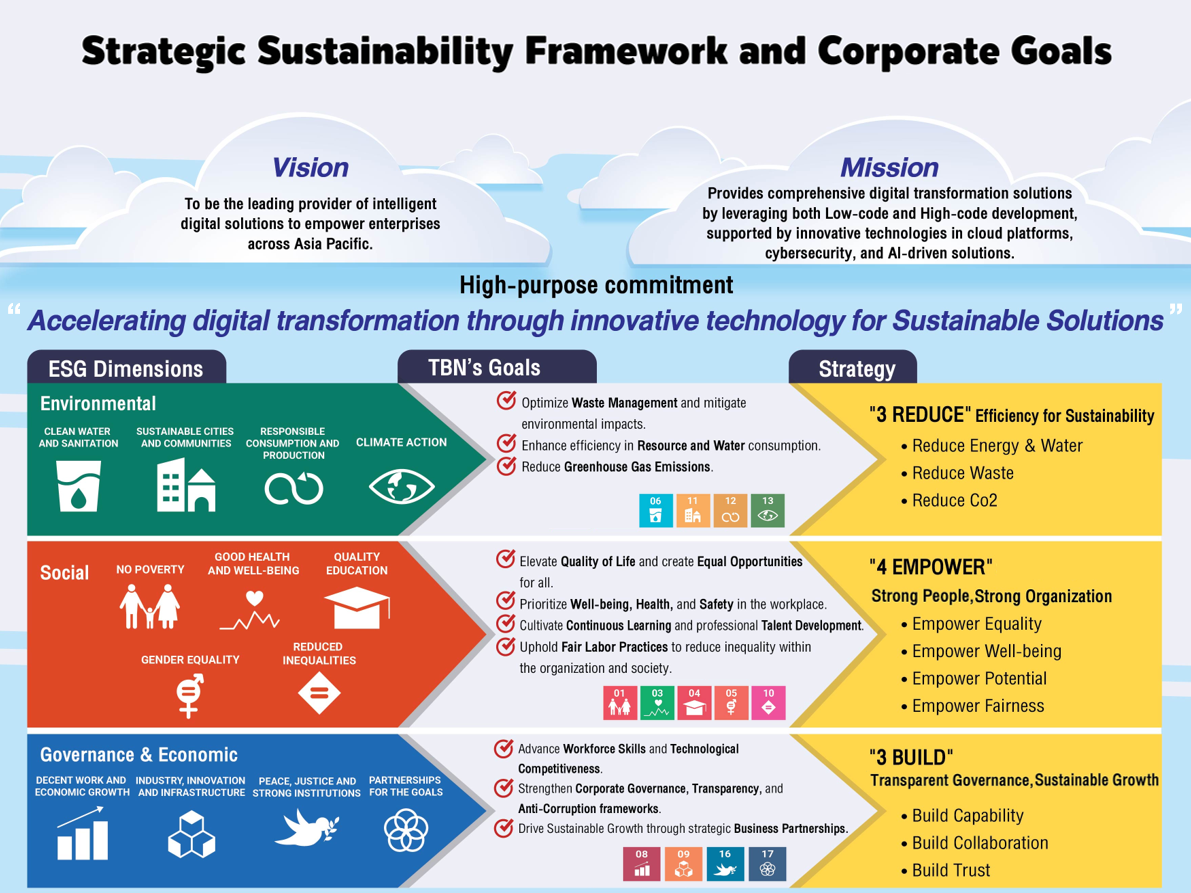
As a leader in driving digital transformation through Low-Code and AI technologies, the Company recognizes that "Human Capital" is the primary resource for competitive advantage, while "Customer & Partner Trust" is the foundation for growth. Therefore, the Company has integrated these sustainability goals into its business strategy to manage various risks, setting both short-term and long-term operational targets as follows:
1. Short to Medium-term Goals (1-3 years)
Focuses on creating an excellent work environment, enhancing customer satisfaction, managing the internal organizational environment, and preventing human rights risks at the operational level.
Employee Care and Development
Employee Engagement: Maintain overall employee satisfaction at no less than 80% through flexible work policies (Flexible Hours & WFH) and welfare benefits that address holistic well-being.
Employee Participation: Drive the operations of the "Workplace Welfare Committee" to transparently elevate welfare standards, while building organizational culture through the TBN Culture Catalyst team.
Capability Development (Upskill/Reskill): Continuously increase average training hours per person per year, especially in developing technological skills through the TBN Mendix Academy project, to ensure employees keep pace with technology and are ready to deliver quality services.
Risk Management and Governance
Zero Complaints Target: Maintain a record of zero complaints regarding human rights violations, corruption, and ethical breaches throughout business operations, through comprehensive Human Rights Due Diligence (HRDD) processes and effective Whistleblowing mechanisms.
Cybersecurity and Personal Data Security: Strictly comply 100% with the Personal Data Protection Act (PDPA) to ensure maximum confidentiality and protection of customer data.
Environmental Management
Internal Resource Management: Promoting and monitoring the reduction of electricity, water, and paper consumption within the office to minimize waste generation and Greenhouse Gas Emissions.
Waste Management based on 3Rs: Promoting waste segregation and management systems following the 3Rs principle (Reduce, Reuse, Recycle). This initiative focuses on reducing waste at the source, encouraging resource circulation, and ensuring proper disposal to mitigate environmental impacts.
Customer Management
Customer Satisfaction: Aim to increase the overall Customer Satisfaction (CSAT) rate at no less than 75% by 2026 and maintain a survey response rate to over 80%.
2. Long-term Goals (3-5 years and beyond)
Focuses on building organizational stability and a strong foundation, expanding the scope of responsibility throughout the value chain, and creating a business ecosystem that grows in parallel with society and the environment.
Becoming an Organization of Diversity, Equity & Inclusion (DEI): The Company promotes a work environment that respects diversity and is free from discrimination in all dimensions, whether gender, age, religion, or social status, and provides equal opportunities for vulnerable groups to access employment, thereby supporting innovation from diverse perspectives.
Building Tech Talent Pipeline Stability: Aims to strengthen the stability of technology personnel by reducing hidden costs associated with recruiting and developing new staff, through developing the organization into a workplace that prioritizes employee well-being in all dimensions (Holistic Well-being), to promote the Company as one of the leading organizations that technology professionals desire to work for in the long term.
Enhancing Supply Chain and Business Partnerships (Sustainable Value Chain): Extend the scope of Human Rights Due Diligence (HRDD) to partners and suppliers to ensure that the Company's entire value chain is free from child labor and forced labor, and that business operations comply with international standards such as UNGPs and UDHR.
Delivering Enterprise Solution Excellence: Focuses on knowledge sharing and co-creation of technological solutions with partners to enhance the competitiveness of the industry at large, alongside developing environmentally friendly innovations.
UN Sustainable Development Goals
| SDG Goal |
|---|
| Goal 1 No Poverty |
| Goal 3 Good Health and Well-being |
| Goal 4 Quality Education |
| Goal 5 Gender Equality |
| Goal 6 Clean Water and Sanitation |
| Goal 8 Decent Work and Economic Growth |
| Goal 9 Industry, Innovation and Infrastructure |
| Goal 10 Reduce Inequalities |
| Goal 11 Sustainable Cities and Communities |
| Goal 12 Responsible Consumption and Production |
| Goal 13 Climate Action |
| Goal 16 Peace, Justice and Strong Institutions |
| Goal 17 Partnerships for the Goals |
Policy Review
Policy Reviewed This Year
Yes
Policy Changed This Year
Yes
Review Details
The Company operates its business under a sustainable development framework, with Environmental, Social, and Governance (ESG) principles as its fundamental basis. The Company regularly reviews its sustainability management policies and goals annually to align with business growth, sustainability trends, changing laws, and international standards.
Throughout 2025, the Company achieved significant progress in refining our sustainability targets, driving strategic initiatives, and delivering impactful outcomes as follows:
1. Review and Enhancement of Sustainability Goals in Alignment with International Standards (SDGs)
To ensure our sustainability efforts comprehensively reflect the material impacts on all stakeholders, the Company reviewed its Stakeholder Engagement process and elevated its operational goals to be more clearly aligned with the United Nations Sustainable Development Goals (SDGs). In 2025, the scope of these goals was expanded as follows:
Governance & Economic Dimension: The scope has been broadened in alignment with SDG 17 (Partnerships for the Goals), focusing on fostering collaboration with business partners and developing strategic partnerships with customers to drive innovation and create sustainable economic value together.
Social Dimension: Expanding on our long-standing commitment to creating career opportunities and supporting vulnerable groups, the Company has further systematized its operations this year. We have set proactive targets in accordance with SDG 1 (No Poverty) to focus on enhancing quality of life and widening our support framework to be more comprehensive and clearly defined by international standards.
Environmental Dimension: Building upon our consistent internal environmental management, the Company has elevated its targets to align with SDG 11 (Sustainable Cities and Communities). This year, we expanded our scope toward more systematic waste management and integrated environmental impact mitigation with community engagement to foster a sustainable shared environment.
f
ff
f
f
2. Sustainability Strategic Drive and Initiatives
Establishment of the Sustainability Steering Committee: To ensure sustainability management aligns with the corporate strategic direction, the Company has appointed the "Sustainability Strategic Steering Committee." Building upon the foundations of the previous working group, this new structure clearly defines operational dimensions across Environmental, Social, and Governance (ESG) criteria. The Committee is responsible for allocating budgets and resources to support various initiatives, ensuring the delivery of concrete results.
Strategic Direction Setting: Representatives of the working group participated in the Sustainable Development Journey (SDJ) 2025 workshop organized by the Stock Exchange of Thailand, which led to the formulation of current strategies prioritizing "product and service development."
Customer Requirements Management Enhancement Project: The Company has initiated a collaborative project with partners and customers to develop tools and processes for more efficient collection and analysis of project requirements. Currently, the project is in the Design and Development phase (as of February 2026), with the final phase—comprehensive feedback collection and review—scheduled for September 2026. The Company monitors project progress on a monthly basis and provides an annual performance report to the Board of Directors.
3. Operational Performance and Awards of Achievement in 2025
As a result of the diligent policy implementation, in 2025, the Company gained recognition and achieved outstanding performance in various dimensions, as follows:
Assessment and Corporate Governance (Governance)
Received an "A" rating in the SET ESG Ratings for 2025 from 265 listed companies that met the criteria.
Selected to be included in the "Thai ESG" securities group by the Stock Exchange of Thailand.
Received an "Excellent" (5-star) Corporate Governance Report (CGR) rating for the second consecutive year and ranked in the Top Quartile among companies with a market capitalization not exceeding 1,500 million Baht.
Received a perfect score of 100 (Excellent) in the Shareholder Meeting Quality Assessment (AGM Checklist) for two consecutive years.
Certified as a member of the Thai Private Sector Collective Action Against Corruption (CAC) and strictly enforced the No Gift Policy during all festive seasons.
Social and Potential Development (Social)
Internal Personnel Development: Continuously organized upskilling activities in technology, such as Mendix, Docker Basics, and Widget Development.
External Knowledge Sharing: Organized Tech Day events throughout the year to update customers, partners, and business allies on Low-Code technology knowledge.
Participated in the mai Growth Lab activity to enhance executive vision in applying AI to support business growth.
Environmental Aspect (Environment)
Joined the Work From Home network with the Environmental Office during the PM 2.5 dust crisis to protect employee health, reduce travel, and concretely reduce carbon dioxide emissions (Carbon Footprint).
Business Value Chain
Value Chain Description
The Company is committed to creating shared value with stakeholders throughout the business Value Chain. To drive the organization toward becoming a sustainable digital innovation partner, the Company has established the "4C" Collaborative Strategy. This strategy integrates cooperation across all sectors, from upstream to downstream, encompassing four key pillars:
Collaborative Product Innovation: Focusing on working with strategic partners through a Co-creation model to research and develop software prototypes that respond rapidly to market shifts. This process is anchored by robust information security management and strict Compliance & Security standards as the foundation of development.
Collaborative Service Innovation: Enhancing service delivery through Process Innovation to elevate the Customer Experience. This is achieved by leveraging the expertise of professional teams across the entire lifecycle of design, development, testing, and system installation.
Collaborative Purpose-Driven Positioning: Operating based on a clear Brand Purpose to strengthen trust and corporate image. The Company proactively communicates and engages with stakeholders transparently, while continuously monitoring, evaluating, and improving operations to align with societal expectations.
Collaborative Sustainable Service: Prioritizing post-delivery care through continuous support, system optimization, and high availability. This includes knowledge transfer to empower clients' personnel and the implementation of Data Governance to ensure stable and sustainable mutual economic growth.
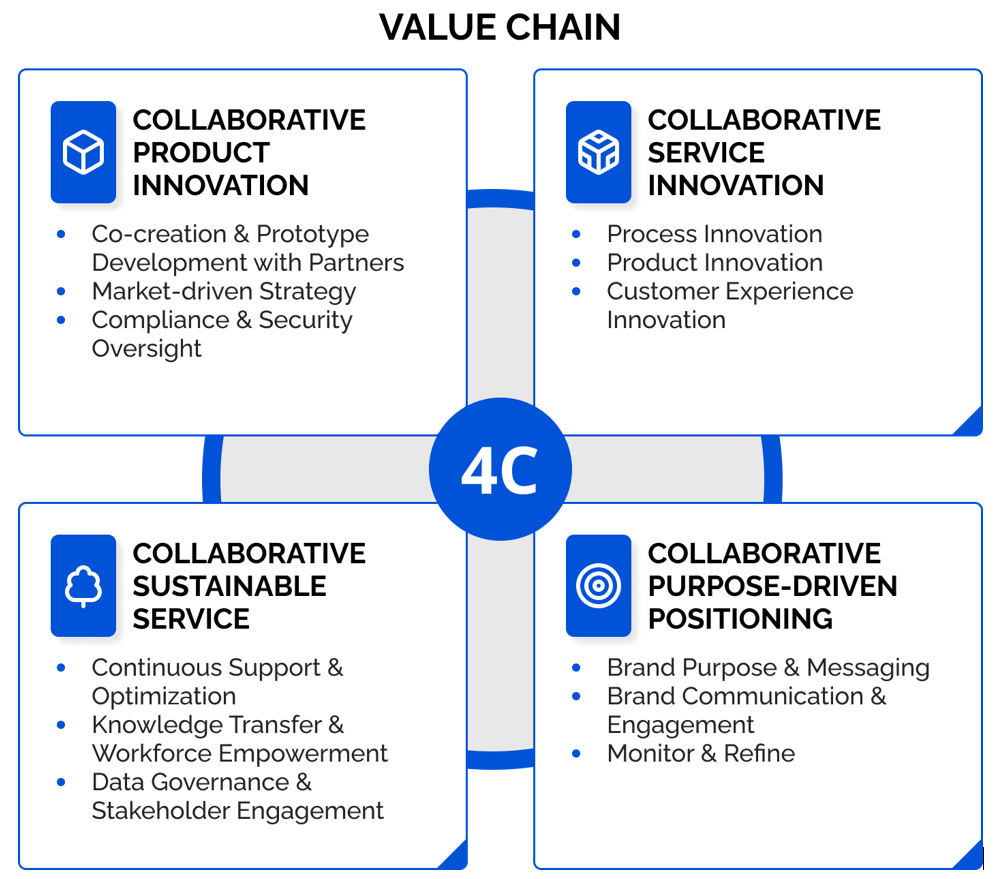
The Company remains steadfast in integrating risk management with the application of digital technologies to evolve the business, create new value, and deliver maximum efficiency to customers throughout the entire value chain.
f
f
f
f
f
f
Stakeholder Analysis
Introduction
Responding effectively to the needs of stakeholders is a fundamental basis for developing and achieving sustainable business growth. The Company has therefore identified and classified its stakeholder groups, and surveyed and gathered their needs and expectations regarding the Company’s operations. These inputs are then analyzed and consolidated into key issues, which are used to guide actions that are aligned with stakeholder needs and expectations. This process enhances the Company’s competitiveness and drives sustainable business growth.
In this regard, the Company has established three main steps for stakeholder management, as follows:
1. Identification and Prioritization of Stakeholders
For clarity in management, the Company has defined stakeholders by considering the framework of Value Chain and the scope of stakeholder engagement with the organization, including relationships, responsibilities, operational dependence, and influence on the organization. Stakeholders are thus categorized into 6 main groups. From the stakeholder analysis, which is a crucial step, each stakeholder group holds different importance depending on the operational context, management policies, and organizational strategies. The Company considers importance based on factors affecting the Company in terms of both influence (the level of influence on decision-making in any aspect of the Company) and interest (the level of interest in the Company's operations), both positive and negative. Based on the assessment, the top 3 priority stakeholders are employees and their families, customers, and business partners.
2. Engagement and Responding to Stakeholder Expectations
The Company provides opportunities for various stakeholder groups to participate in matters affecting them by establishing channels for receiving suggestions, problems, or complaints. The Company has disclosed these channels in its business ethics code and on the Company's website at www.tbn.co.th . The Company maintains the confidentiality of information provided by whistleblowers or informants and complies with legal requirements. The outcomes derived from stakeholder engagement are crucial factors in the Company's process of assessing and prioritizing key sustainability issues. This information serves to improve business strategies and operational management in line with the Company's objectives. Furthermore, the Company mandates a systematic, transparent, and verifiable review of practices and responses to stakeholders to foster the development of collaborative approaches between the Company and its stakeholders, leading to mutually beneficial, equitable, fair, and sustainable methods for all parties.
3. Monitoring and Evaluation
To monitor and evaluate operational performance in line with objectives, after implementing the stakeholder engagement process, the Company conducts follow-up and evaluation to improve the efficiency of future processes. The Company mandates the monitoring of action plans that integrate feedback and suggestions obtained from stakeholder engagement on key Company issues, as well as reporting the stakeholder engagement process to the Board of Directors and disseminating it to the public.
Materiality Assessment
The identification of material sustainability issues is a core mechanism driving the Company’s operations in clear alignment with corporate directions and predefined goals. This process enables the effective enhancement of long-term business growth potential while staying attuned to industry trends and national and international sustainability standards.
The selection of these material issues primarily centers on stakeholder perspectives. In 2025, the Company consolidated stakeholder expectations and developed response frameworks tailored to each group. These insights were analyzed to identify key sustainability themes that the Company must prioritize and manage effectively. This analysis serves as a foundation for risk management, mitigating potential threats and ensuring sustainable value creation for all stakeholders, thereby fostering robust long-term growth.
f
f
The process for assessing and prioritizing material issues consists of the following steps:
(1) Identification and Prioritization of Sustainability Issues
The identification process considers both internal and external factors relevant to business operations, as well as stakeholder expectations. Data is also gathered from international sustainability experts and frameworks, including the Global Reporting Initiative (GRI) Standards, Global Trends, and the Sustainability Accounting Standards Board (SASB), alongside material issues prevalent in the same or related industries.
The identified themes encompass the Environmental, Social, and Governance & Economic (ESG) dimensions. These issues are subsequently screened for relevance to the Company’s specific business context. Relevant departments prioritize each issue by engaging with stakeholders and evaluating impacts across the entire value chain, including partners, customers, and employees.
(2) Validation of Materiality Assessment Results
Following the identification and prioritization of sustainability issues affecting the organization and its stakeholders, the results are presented to the Board of Directors and the Chief Executive Officer (CEO) for review and formal approval.
(3) Results of the Materiality Assessment
The Company has utilized the data from identified sustainability issues that significantly impact both the organization and its stakeholders to categorize and analyze their importance across all sustainability dimensions. For the year 2025, 10 key material issues have been identified as follows:
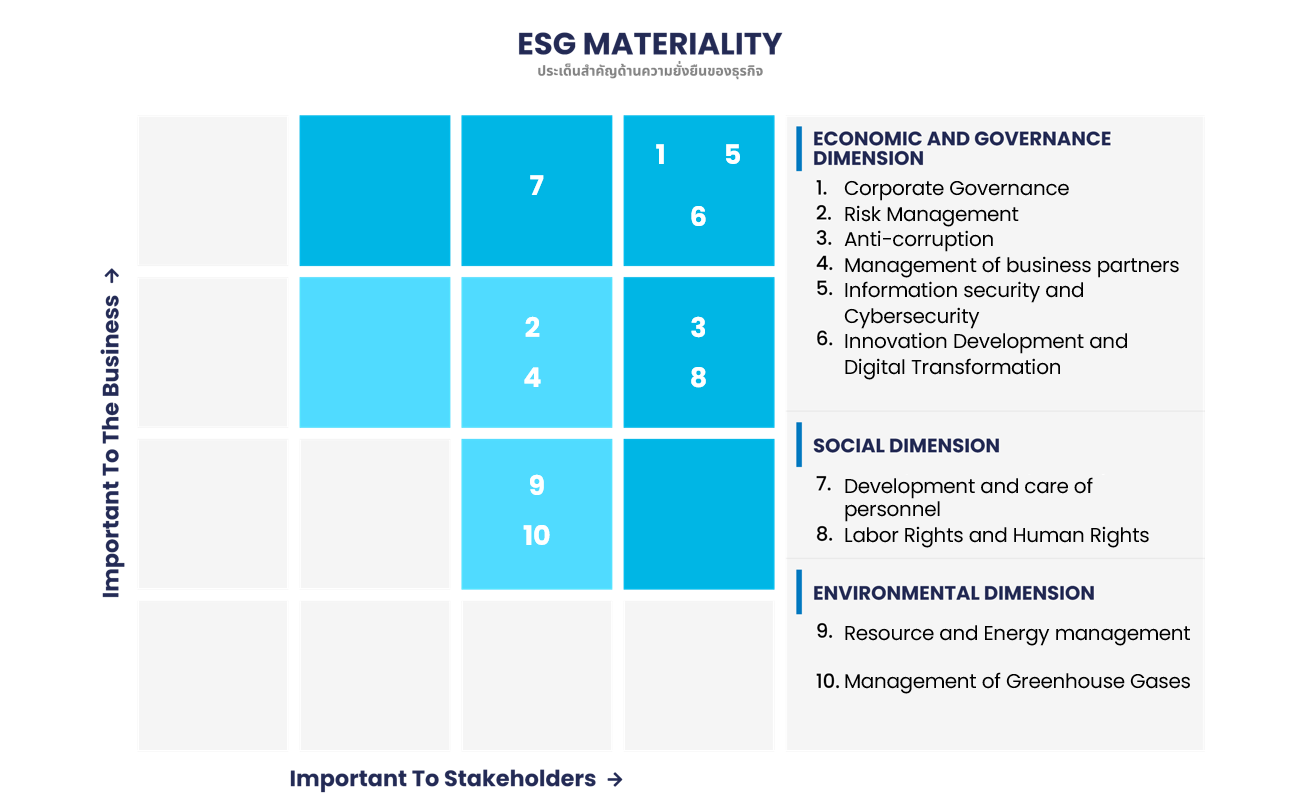
f
f
f
f
f
f
f
f
f
f
Stakeholder Analysis
| Stakeholder Type | Stakeholders | Stakeholder Expectations | Response to Expectations | Communication Activities |
|---|---|---|---|---|
| Internal stakeholders | 2921 · Description: Employees | - Job security and career advancement
- Standardized employee performance evaluation
- Appropriate and fair employee benefits, including equal treatment of employees
- Promotion and support for employee knowledge and skill development
- Positive working environment | - Establish career progression paths and support career advancement
- Define clear performance indicators
- Conduct business transparently, adhere to good corporate governance principles, combat corruption, and ensure personal data security
- Implement grievance and whistleblowing mechanisms
- Provide fair compensation and benefits to employees, considering prevailing wages in the same industry
- Promote and support employee participation in various training programs to enhance their knowledge and skills
- Prioritize occupational health and safety for workers
- Participate in climate change adaptation, contribute to environmental protection, and mitigate global warming
- Develop a comprehensive Human Rights Due Diligence process to prevent the risk of human rights violations within the company | 2940 · Description: Social Event · 2941 · Description: Online Communication · 2942 · Description: Internal Meeting · 2945 · Description: Complaint Reception · 2946 · Description: Employee Engagement Survey · 2948 · Description: Training / Seminar · 2949 · Other name: New Employee Orientation · Description: Others · 2949 · Other name: Town hall meeting · Description: Others · 2949 · Other name: Company Outing Activities · Description: Others · 2949 · Other name: Internal e-mail · Description: Others · 2949 · Other name: Dissemination of Code of Business Conduct and Good Corporate Governance Policy · Description: Others |
| External stakeholders | 2923 · Description: Customers | - Developing systems in accordance with customer needs and objectives
- Communicating and resolving customer issues quickly and accurately
- Maintaining customer security and data privacy
- Delivering work according to schedule
- Conducting business transparently, in accordance with good corporate governance principles | - Develop modern and efficient personnel services, including software. Provide after
-sales service by offering consultation and effectively and promptly responding to problem resolution, including complaints, in accordance with agreed service standards.
- Establish a policy for the protection of customer personal data and access to personal data.
| 2941 · Description: Online Communication · 2943 · Description: External Meeting · 2945 · Description: Complaint Reception · 2947 · Description: Satisfaction Survey · 2948 · Description: Training / Seminar · 2949 · Other name: Through the Sales and Marketing Department · Description: Others · 2949 · Other name: System Development Team · Description: Others · 2949 · Other name: Annual Information Report (Form 56-1 One Report) · Description: Others · 2949 · Other name: Direct contact on a case-by-case basis · Description: Others · 2949 · Other name: Hotline: 02-258-5841 · Description: Others · 2949 · Other name: Company Website: www.tbn.co.th · Description: Others · 2949 · Other name: Facebook: TBN Corporation Plc. · Description: Others · 2949 · Other name: e-mail: ir@tbn.co.th · Description: Others · 2949 · Other name: email: dpo@tbn.co.th · Description: Others |
| External stakeholders | 2899 · Description: Suppliers · 2900 · Description: Business partners | - Achieving strong and sustainable revenue growth in conjunction with the company.
- Conducting business fairly with partners.
- Adhering to agreed-upon terms with partners without exploitation.
- Respecting human rights and treating employees fairly. | - Establish efficient collaborative operational standards and fair, equitable, and non-exploitative contracts.
- Provide channels for feedback or suggestions. - Prioritize occupational health and safety for employees.
- Develop a comprehensive Human Rights Due Diligence process within the company, its managed entities, and throughout the supply chain. | 2941 · Description: Online Communication · 2943 · Description: External Meeting · 2945 · Description: Complaint Reception · 2949 · Other name: Meeting between executives and business partners · Description: Others · 2949 · Other name: 02-258-5841 · Description: Others · 2949 · Other name: Dissemination of Code of Business Conduct and Good Corporate Governance Policy · Description: Others · 2949 · Other name: www.tbn.co.th · Description: Others · 2949 · Other name: dpo@tbn.co.th · Description: Others |
| External stakeholders | 2904 · Description: Investors or investment institutions · 2913 · Description: Shareholders | - Good financial performance and sustainable business growth
- Equal, accurate, timely, and transparent disclosure of information
- Good corporate governance
- Business operations aligned with ESG principles | - Maintain strong performance and leadership in the business.
- Regularly disseminate quarterly operational results.
- Ensure transparent governance that is subject to scrutiny.
- Actively solicit feedback for operational improvement.
- Disclose material ESG-related information to build comprehensive stakeholder confidence. | 2938 · Description: Visit · 2939 · Description: Press Release · 2944 · Description: Annual General Meeting (AGM) · 2945 · Description: Complaint Reception · 2949 · Other name: Annual Information Report (Form 56-1 One Report) · Description: Others · 2949 · Other name: www.tbn.co.th · Description: Others · 2949 · Other name: 02-258-5841 · Description: Others · 2949 · Other name: Facebook: TBN Corporation Plc. · Description: Others · 2949 · Other name: Issuance of Press Releases / Press Conference · Description: Others · 2949 · Other name: ir@tbn.co.th · Description: Others · 2949 · Other name: dpo@tbn.co.th · Description: Others |
| External stakeholders | 2931 · Description: Government agencies and Regulators | Compliance with regulations, requirements, and laws - Disclosure of accurate, prompt, and timely information | Strictly comply with the regulations, requirements, and laws of government agencies or regulatory bodies. Ensure transparent, accurate, and timely disclosure of information. | 2941 · Description: Online Communication · 2943 · Description: External Meeting · 2948 · Description: Training / Seminar · 2949 · Other name: Communicate and coordinate through the Company Secretary's Office or the Compliance Officer · Description: Others · 2949 · Other name: 02-258-5841 · Description: Others · 2949 · Other name: ir@tbn.co.th · Description: Others · 2949 · Other name: www.tbn.co.th · Description: Others · 2949 · Other name: Communicate through channels provided by government agencies. · Description: Others |
| External stakeholders | 2902 · Description: Community · 2928 · Description: Society | - Respect for human rights and fair treatment of labor
- Support and develop vocational skills for the labor market, including vulnerable groups and the underprivileged
- Management to mitigate social, environmental, and safety impacts that may arise from the company's operations with due care | - Establish guidelines in accordance with sustainability management policies and goals, taking into account surrounding communities and society, for the company's sustainable growth.
- Organize training courses to disseminate knowledge in MENDIX information technology software. | 2940 · Description: Social Event · 2945 · Description: Complaint Reception · 2948 · Description: Training / Seminar · 2949 · Other name: Hotline 02-258-5841 · Description: Others · 2949 · Other name: Facebook: TBN Corporation Plc. · Description: Others · 2949 · Other name: Walk-in · Description: Others · 2949 · Other name: www.tbn.co.th · Description: Others |
Environmental Policy & Guidelines
Introduction
The Company is committed to conducting business in accordance with sustainable development guidelines, by adopting Sustainable Development Goals (SDGs) of the United Nations as the main framework to create Shared Value, covering economic, social, and environmental dimensions, as well as efficient resource management, taking into account the impact on all stakeholder groups throughout the Value Chain.
To concretely drive the sustainability strategy, the Company has established a "Sustainability Strategy Management Working Group" responsible for setting policies, laying strategic foundations, and continuously monitoring and evaluating performance. This ensures that environmental, social, and governance (ESG) management aligns with the direction of sustainable business growth.
To ensure operations cover both the organization and the supply chain, the Company has established key policies and guidelines, focusing on managing important environmental issues as follows:
1. Environmental Guidelines and Efficient Resource Utilization
-
Conduct business by avoiding activities that may cause environmental impact.
-
Strictly comply with environmental laws, regulations, and related standards of regulatory agencies.
-
Promote knowledge, understanding, and continuous compliance with relevant laws, regulations, and standards among employees at all levels.
-
Promote efficient use of energy and resources, such as conserving electricity and tap water, reducing waste, minimizing the use of paper and environmentally impactful materials, and recycling materials.
-
Support the reduction of greenhouse gas emissions and promote employee participation in environmentally friendly activities.
-
Set environmental goals and indicators, and regularly monitor and evaluate performance.
2. Sustainable Procurement Guidelines
The Company recognizes that supply chain management may have social and environmental impacts. Therefore, these issues are clearly defined as part of the procurement policy and regulations, serving as criteria for selecting new partners (New Approved Vendor) and evaluating current partners (Current Approved Vendor), alongside factors such as quality, price, and efficiency. This is to encourage partners to conduct business with social and environmental responsibility, comply with relevant laws, and align with the Company's sustainable development goals.
Has an Environmental Policy
Yes
Policy Description
Environmental Strategy "3 REDUCE: Efficiency for Sustainability”
The Company believes that sustainable business growth must be achieved in tandem with environmental stewardship and responsibility toward natural resources. Consequently, the Company has established its operational direction under the “3 Reductions” strategy to drive tangible environmental results. This is accomplished by integrating the United Nations Sustainable Development Goals (SDGs) into the Company’s five core strategic dimensions (specifically focusing on SDGs 6, 11, 12, and 13) to maximize resource efficiency and minimize environmental impact. The strategy consists of the following pillars:
1. “Reducing Electricity and Water Consumption” The Company is committed to minimizing unnecessary resource waste and fostering a culture of mindful consumption across all levels of the organization.
Energy Management: The Company promotes efficient and cost-effective electricity usage by implementing control measures within the office, such as scheduled operating hours for air conditioning systems and requesting employee cooperation to switch off electrical appliances and office equipment when not in use.
Water Management: The Company prioritizes the value of water resources by campaigning for employees to ensure faucets are completely turned off after use. Furthermore, regular inspections and maintenance of plumbing fixtures are conducted to prevent leakage and unnecessary water loss.
2. “Reducing Waste Generation” The Company integrates Circular Economy principles and the 3Rs strategy (Reduce, Reuse, Recycle) into its organizational culture and operational processes. This begins with waste reduction at the source by eliminating unnecessary resource consumption (Reduce). The Company actively encourages employees to use personal containers or dine in to reduce packaging waste. Most notably, the Company has enhanced its operations through a Digital Workflow to significantly reduce paper consumption. This is coupled with the promotion of material Reuse to extend the lifespan of assets and reduce the burden of new procurement. Additionally, a systematic waste segregation process is implemented to ensure materials enter the appropriate Recycle streams, thereby reducing the waste disposal burden and creating a sustainable resource cycle.
3. “Reducing CO2 Emissions” The Company is determined to be a proactive contributor to addressing climate change. We prioritize the reduction of carbon dioxide (CO2) and other greenhouse gas emissions associated with our business operations through systematic monitoring and data analysis of energy consumption. This data-driven approach allows for proactive management and the continuous development of environmental impact mitigation strategies. Simultaneously, the Company cultivates eco-friendly behaviors among personnel at all levels, serving as a vital mechanism in driving the organization toward long-term sustainable growth.
Policy Document Link
https://drive.google.com/file/d/1_38ESfWHQ3qo39V5uyD0STokRfXQj9JG/view
Page Number in Report
3-4, 8
Environmental Guidelines
| Guideline | Other — Please Specify |
|---|---|
| Electricity Management | |
| Water Management | |
| Waste Management | |
| Greenhouse Gas and Climate Change Management | |
| Others | Efficient Use of Resources |
Environmental Policy Review
Policy Reviewed This Year
Yes
Review Details
The Company recognizes the importance of conducting business in conjunction with environmental conservation. Although the nature of its business, providing software development and information technology services, does not significantly create direct environmental impacts compared to the manufacturing sector, the Company remains committed to being a part of mitigating climate change.
In the past year 2025, the Board of Directors reviewed the environmental policies, guidelines, and targets for 2024 to improve and elevate the 2025 targets to be clearer, more comprehensive, and more aligned with the SET Sustainability Reporting Guide. The details of the review are as follows:
f
f
f
1. Environmental Goals Review and Enhancement
In 2024, the Company established its environmental goals focusing on two primary pillars: (1) Resource Efficiency and (2) Greenhouse Gas Emission Reduction. These objectives were aligned with three United Nations Sustainable Development Goals: SDG 6 (Clean Water and Sanitation), SDG 12 (Responsible Consumption and Production), and SDG 13 (Climate Action).
Elevating 2025 Strategic Goals: Following a comprehensive performance review, the Board of Directors approved an expansion of the environmental scope to be more tangible and impactful. This led to the formalization of the "3 REDUCE" Strategy (Efficiency for Sustainability), which comprises the following sub-targets:
Reducing Resource Consumption (Electricity and Water)
Reducing Waste Generation (Waste Management)
Reducing Carbon Dioxide (CO2) Emissions
Expanding the SDG Framework: In 2025, building upon the successes of the previous year, the Company integrated SDG 11 (Sustainable Cities and Communities) into its strategic framework. This expansion broadens the operational scope to include:
Proper Waste Management: Enhancing waste segregation systems and reducing waste at the source to alleviate the burden on municipal disposal systems and the surrounding environment.
Urban Impact Mitigation: Focusing on eco-friendly initiatives within office locations to contribute to a cleaner, safer, and more sustainable urban environment.
The integration of SDG 11 reflects the Company’s unwavering commitment to being an active partner in enhancing the quality of life for the community and urban society.
2. Operational Guidelines Review to Reduce Environmental Impact
To ensure the "3 REDUCE" strategy targets are actionable, the Company has reviewed and established internal operational guidelines consistent with the nature of its technology business, as follows:
Energy Management and Greenhouse Gas Reduction Guidelines: Reviewing energy-saving measures in the office and promoting flexible working (Flexible Working/WFH), which helps reduce electricity consumption in buildings and indirectly reduces greenhouse gas emissions from employee commuting.
Waste Management Guidelines: Elevating work processes towards a paperless office by fully implementing electronic document (e-Document) systems and digital platforms developed by the Company, as well as establishing proper guidelines for electronic waste (E-Waste) segregation.
Green IT Guidelines: As a comprehensive digital service provider, the Company focuses on utilizing and offering Cloud systems, which significantly enhance operational efficiency and reduce energy consumption from traditional on-premise servers.
The review and revision of these policies reflect the Company's commitment to continuous improvement in environmental management, aiming to build a foundation for sustainable and eco-friendly growth in the technology business.
f
f
f
f
f
f
f
f
f
f
Policies & Guidelines Changed
| Change | Other — Please Specify |
|---|---|
| Electricity Management | |
| Water Management | |
| Waste Management | |
| Greenhouse Gas and Climate Change Management | |
| Other | Efficient Use of Resources |
Energy — Plan & Guidelines
Has an Energy Management Plan
Yes
Plan Description
management of electrical energy,
The Company has continuously adhered to its energy-saving policy since 2022, focusing on raising awareness and implementing internal procedures, such as setting appropriate operating hours for air conditioners, and maintaining the temperature at 25 degrees Celsius and the unplugging electrical appliances after every use. Furthermore, the Company has proactively implemented campaigns by encouraging employees to switch off air conditioners one hour before closing time on every third Friday of the month, alongside requesting employee cooperation in regularly inspecting electrical equipment and maintaining appliances to ensure they are in optimal working condition, thereby reducing unnecessary energy waste.
Energy — Electricity Consumption
Electricity Consumption
| Metric | Current Year | Previous Year | Two Years Ago |
|---|---|---|---|
| Total electricity consumption within the organization (Kilowatt-Hours) | 151,293 | 161,969 | 105,040 |
| Electricity purchased for consumption from non-renewable energy sources (Kilowatt-Hours) | 151,293 | 161,969 | 105,040 |
| Electricity purchased or generated for consumption from renewable energy sources (Kilowatt-Hours) | 0 | 0 | 0 |
Energy — Fuel Consumption
Fuel Consumption
| Metric | Current Year | Previous Year | Two Years Ago |
|---|---|---|---|
| Crude oil (Barrels) | 0 | 0 | 0 |
| Coal (Metric tonnes) | 0 | 0 | 0 |
| Jet fuel (Litres) | 0 | 0 | 0 |
| Diesel (Litres) | 7.64 | 1,697.04 | |
| Gasoline (Litres) | 9,746.69 | 7,554.62 | |
| Fuel oil (Litres) | 0 | 0 | 0 |
| Natural gas (Standard cubic feet) | 0 | 0 | 0 |
| LPG (Kilograms) | 0 | 0 | 0 |
| Steam (Metric tonnes) | 0 | 0 | 0 |
Energy — Targets
Has Set Targets
Yes
Targets
| Target | Base Year | Base Year Value | Target Year | Target Change (%) | Unit | Per Unit (Intensity) | Per Unit — Please Specify |
|---|---|---|---|---|---|---|---|
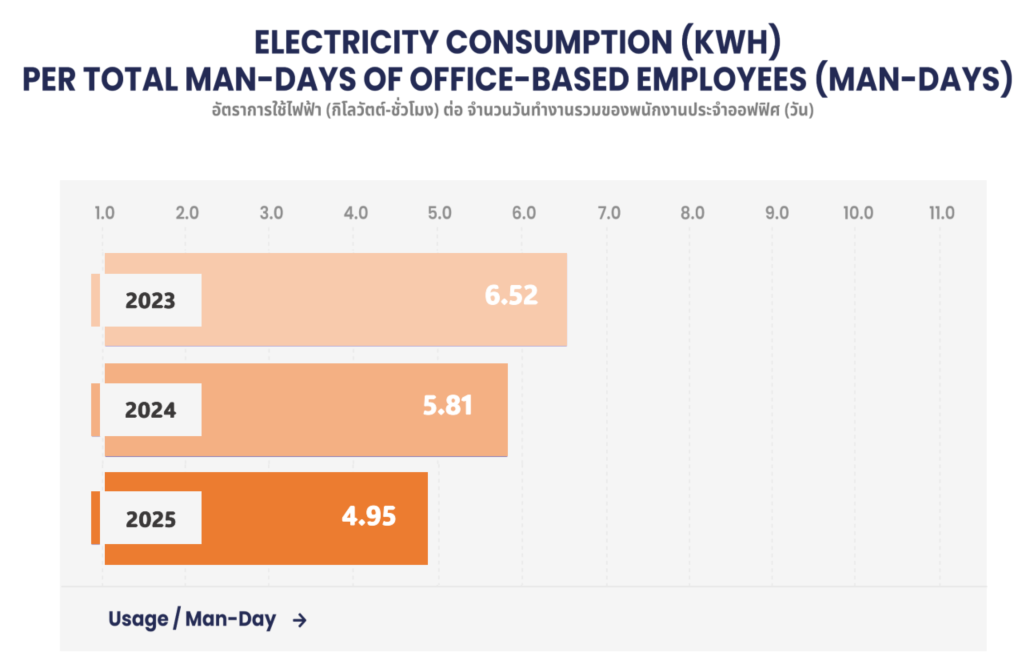
| Reduction of electricity purchased for consumption | 2,024 | 5.81 | 2,025 | 5 | Kilowatt-hour | Other | Total man-days of office-based employees |
Energy — Performance & Outcomes
Has Performance Results
Yes
Performance Description
f
f
f
f
f
f
f
f
f
f
f
f
f
f
f
Performance in 2025:
The dedicated cooperation of personnel resulted in the electricity consumption per total man-days of employees in the office decrease of 14.8 percent compared to 2024, which is considered a achieving the target set by the company (not less than 5 percent) significantly. This result not only reflects the efficiency in managing internal organizational expenses but also contributes to reducing greenhouse gas emissions from business operations. Comparative data on electricity consumption over the past 3 years is detailed in the chart below:
f
f
f
f
f
f
f
f
f
f
f
f
f
f
f
f
f
f
f
f
f
f
f
Water — Plan & Guidelines
Has a Water Management Plan
Yes
Plan Description
f
f
f
f
f
Water Management
The Company has continuously focused on raising awareness for the optimal utilization of water resources since 2022, by establishing guidelines and consistently communicating to personnel the value of water resources. This is achieved through campaigns encouraging the inspection and maintenance of faucet equipment to ensure good condition, and emphasizing the importance of completely closing faucets after use to prevent unnecessary leakage. Furthermore, the Company prioritizes hygiene by regularly maintaining central water filters to preserve the efficiency and quality of drinking water, as well as raising awareness among personnel and visitors through comprehensive public relations materials within the office premises.
Water — Withdrawal, Discharge & Consumption
Water Withdrawal, Discharge & Consumption
| Metric | Current Year | Previous Year | Two Years Ago |
|---|---|---|---|
| Total water withdrawal (Cubic meters) | 1,004 | 769 | 514 |
| Total water withdrawal by third-party water (Cubic meters) | 1,004 | 769 | 514 |
| Total water withdrawal by surface water (Cubic meters) | 0 | 0 | 0 |
| Total water withdrawal by groundwater (Cubic meters) | 0 | 0 | 0 |
| Total water withdrawal by seawater (Cubic meters) | 0 | 0 | 0 |
| Total water withdrawal by produced water (Cubic meters) | 0 | 0 | 0 |
| Percentage of wastewater treated before discharge (%) | |||
| Total water discharge (Cubic meters) | |||
| Total water discharge to third-party water (Cubic meters) | |||
| Total water discharge to surface water (Cubic meters) | |||
| Total water discharge to groundwater (Cubic meters) | |||
| Total water discharge to seawater (Cubic meters) | |||
| Total water consumption (Cubic meters) | 1,004 | 769 | 514 |
| Recycled water (Cubic meters) | 0 | 0 | 0 |
Water — Targets
Has Set Targets
Yes
Targets
| Target | Base Year | Base Year Value | Target Year | Target Change (%) | Unit | Per Unit (Intensity) | Per Unit — Please Specify |
|---|---|---|---|---|---|---|---|
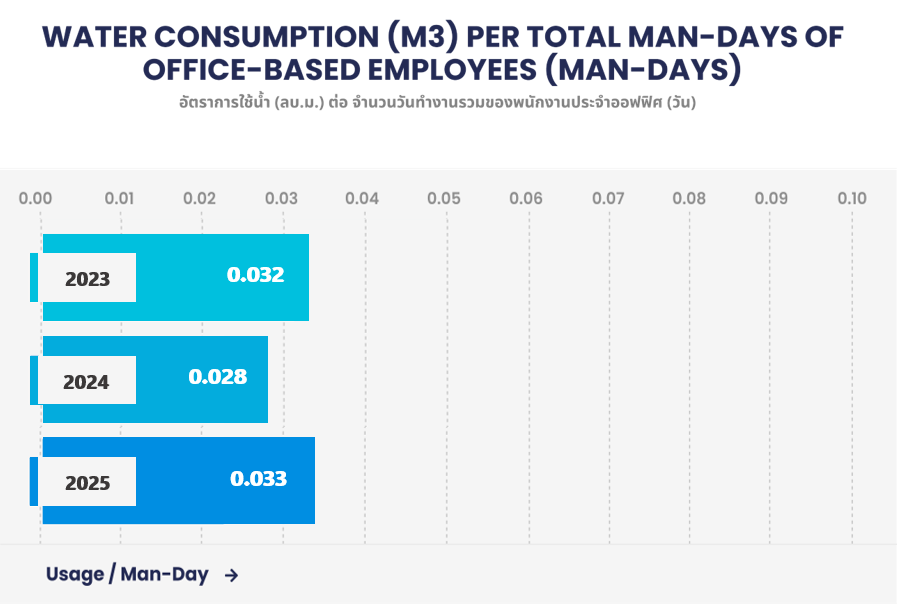
| Reduction of water withdrawal | 2,024 | 27.58 | 2,025 | 5 | Liter | Other | Total man-days of office-based employees |
Water — Performance & Outcomes
Has Performance Results
Yes
Performance Description
Performance in 2025:
Regarding the operational performance in 2025, the volume of water consumption per total man-days of employees in the office remains an issue that the company prioritizes and closely monitors. Although this year, the target of reducing consumption by 5% as stipulated could not yet be achieved, the company remains committed to conducting in-depth analysis of the causes and reviewing operational guidelines to further enhance the efficiency of water resource management processes. The company also remains steadfast in its long-term goal of continuously reducing natural resource consumption to achieve tangible results. Comparative data on water consumption rates over the past three years are detailed in the chart below:
Waste — Plan & Guidelines
Has a Waste Management Plan
Yes
Plan Description
Waste Management
The Company recognizes the importance of waste accumulation in ecosystems, which is a significant cause affecting climate change and aquatic ecosystems. Therefore, the Company focuses on waste management under the principles of 3Rs (Reduce, Reuse, Recycle) To promote optimal resource utilization and reduce the amount of waste sent to landfills (Zero Waste to Landfill).
f
f
Operational Plan for 2025
To ensure tangible results in management, the Company has implemented the following key measures:
Reduce resource consumption (Reduce): Focus on reducing the amount of consumables within the office by implementing a double-sided printing policy for internal documents and efficiently managing the procurement of office supplies.
Systematic Waste Separation (Recycle): Implement standardized waste separation bins (general waste, food waste, recyclable waste, and hazardous waste) with clear labels to encourage employees and external visitors to participate in waste sorting at the source.
Building an Organizational Culture: Communicate and campaign to employees about the impact of plastic and microplastic waste on the environment, to raise awareness and change resource consumption behavior in the long term.
Waste — Generation, Disposal & Recycling
Waste Generation, Disposal & Recycling
| Metric | Current Year | Previous Year | Two Years Ago |
|---|---|---|---|
| Total waste generated (Kilograms) | 6,853.5 | 5,946 | 5,196.86 |
| Non-hazardous waste (Kilograms) | 6,853.5 | 5,946 | 5,196.86 |
| Non-hazardous waste - Landfilling (Kilograms) | 6,853.5 | 5,946 | 5,196.86 |
| Non-hazardous waste - Incineration (with energy recovery) (Kilograms) | 0 | 0 | 0 |
| Non-hazardous waste - Incineration (without energy recovery) (Kilograms) | 0 | 0 | 0 |
| Non-hazardous waste - Other disposal operations (Kilograms) | 0 | 0 | 0 |
| Hazardous waste (Kilograms) | |||
| Hazardous waste - Landfilling (Kilograms) | |||
| Hazardous waste - Incineration (with energy recovery) (Kilograms) | |||
| Hazardous waste - Incineration (without energy recovery) (Kilograms) | |||
| Hazardous waste - Other disposal operations (Kilograms) | |||
| Total reused/recycled waste (Kilograms) | 520 | 0 | 0 |
| Reused/Recycled non-hazardous waste (Kilograms) | 520 | ||
| Reused non-hazardous waste (Kilograms) | |||
| Recycled non-hazardous waste (Kilograms) | 520 | ||
| Reused/Recycled hazardous waste (Kilograms) | 0 | 0 | 0 |
| Reused hazardous waste (Kilograms) | 0 | 0 | 0 |
| Recycled hazardous waste (Kilograms) |
Waste — Targets
Has Set Targets
Yes
Targets
| Waste Type | Disposal Approach | Target | Base Year | Base Year Value | Target Year | Target Change (%) | Unit | Per Unit (Intensity) | Per Unit — Please Specify |
|---|---|---|---|---|---|---|---|---|---|
| Non-hazardous waste | 2760 · Description: Landfilling | Reduce waste volume | 2,024 | 0.21 | 2,025 | 10 | Kilograms | Other | Total man-days of office-based employees |
Waste — Performance & Outcomes
Has Performance Results
Yes
Performance Description
Performance in 2025:
In 2025, the Company continuously monitored and evaluated the volume of waste and non-hazardous waste against the total man-days of employees in the office. Although this year's performance has not yet achieved the target of a 10% waste reduction as stipulated, the Company remains committed to its long-term goal of tangibly reducing environmental impact.
In the following year, the Company plans to intensify the implementation of measures in accordance with 3Rs Strategy (Reduce, Reuse, Recycle) more seriously, focusing on increasing the proportion of waste that can be reused through source separation processes to transform waste into valuable recyclable resources and minimize the amount of waste sent to landfills.
GHG — Plan & Guidelines
Has a GHG Management Plan
Yes
Plan Description
f
f
f
f
f
f
f
f
Reduce greenhouse gas emissions
The company prioritizes management to mitigate greenhouse gas issues by appointing a working committee responsible for implementing policies, establishing guidelines and measures, and monitoring the performance of greenhouse gas emission reduction, to prepare for potential future related legislation and to be part of addressing climate change through the preparation of the organization's carbon footprint ( Carbon Footprint for Organization) and support employees in understanding data collection methods, assessment, and monitoring of the organization's greenhouse gas emissions or removals, to continuously plan for greenhouse gas emission reduction in accordance with international standards.
f
GHG — Emissions
GHG Emissions
| Metric | Current Year | Previous Year | Two Years Ago |
|---|---|---|---|
| Total GHG emissions (Metric tonnes of carbon dioxide equivalent) | 92 | 97 | 0 |
| Total greenhouse gas emissions 1 (Metric tonnes of carbon dioxide equivalent) | 20 | 20 | |
| Total greenhouse gas emissions 2 (Metric tonnes of carbon dioxide equivalent) | 72 | 77 | |
| Total greenhouse gas emissions 3 (Metric tonnes of carbon dioxide equivalent) |
GHG — Emissions Verification
Emissions Verified by a Third Party
Yes
Verifying Body
2649
Verification Document Link
https://eonemedia.setlink.set.or.th/report/1759/2025/1773623188345.pdf
GHG — Principles & Standards
Principles & Standards Applied
| Standard |
|---|
| 2671 |
| 2672 |
| 2676 |
GHG — Targets
Has Set GHG Targets
Yes
GHG Targets — Net Zero
Net Zero Targets
| Emission Scope | Base Year | Base Year Emissions | Near-term Target Year | Near-term Target Change (%) | Long-term Target Year | Long-term Target Change (%) | Target Year | Target Change (%) | Unit |
|---|---|---|---|---|---|---|---|---|---|
| 2715 | 2,024 | 97 | 2,028 | 5 | 2,065 | 90 | 2,028 | 5 | Metric tonnes of carbon dioxide equivalent |
GHG Targets — Carbon Neutrality
Carbon Neutrality Targets
| Emission Scope | Carbon Neutrality Certified | Base Year | Base Year Emissions | Target Year | Unit |
|---|---|---|---|---|---|
| 2715 | N | 2,024 | 97 | 2,050 | Metric tonnes of carbon dioxide equivalent |
GHG Targets — Other Targets
Other GHG Targets
| Emission Scope | Base Year | Base Year Emissions | Near-term Target Year | Near-term Target Change (%) | Long-term Target Year | Long-term Target Change (%) | Target Year | Target Change (%) | Unit | Per Unit (Intensity) | Per Unit — Please Specify |
|---|---|---|---|---|---|---|---|---|---|---|---|
| 2715 | 2,024 | 0.29 | 2,026 | 2 | 2,029 | 5 | 2,026 | 2 | Metric tonnes of carbon dioxide equivalent | Other | THB million of revenue |
GHG — Performance & Outcomes
Has Performance Results
Yes
Performance Description
Performance in 2025:
In 2025, the company collected data on greenhouse gas emissions from various activities (operating period January - December 2025), covering both direct greenhouse gas emissions (Scope 1) and indirect greenhouse gas emissions from energy consumption (Scope 2) In collaboration with ISO Certification Institute, Industrial Development Foundation (SARO) which is a verification body registered with the Thailand Greenhouse Gas Management Organization (Public Organization) or TGO, conducted the verification and certified the accuracy of the data.
The verification results indicated that the activity generating the highest greenhouse gas emissions was electricity consumption from the office air conditioning system. Therefore, the company implemented proactive measures under its annual energy conservation plan, such as regular inspection of refrigerant leaks and scheduled maintenance of air conditioners, alongside campaigns to raise employee awareness and participation in energy saving by refraining from using unnecessary electricity.
As a result of this commitment, in 2025, the company was able to reduce greenhouse gas emissions (Scope 1 and 2) by 5.2 percent. compared to the base year 2024, which is a significant step towards becoming a sustainable low-carbon organization.
The company's greenhouse gas emissions from January 1, 2025, to December 31, 2025, are as follows:
Category 1 (Scope 1): Direct GHG Emissions
Calculated from activities directly controlled or owned by the organization, comprising the use of company vehicles and fugitive emissions (refrigerant leaks) from air conditioners, water chillers, and refrigerators.Total Volume: 20 tons of carbon dioxide equivalent (tCO2e)
Category 2 (Scope 2): Energy Indirect GHG Emissions
Calculated from the generation of purchased energy consumed by the Company, specifically electricity consumption.
Total Volume: 72 tons of carbon dioxide equivalent (tCO2e)
f
f
f
f
f
f
f
f
Environmental Legal Incidents
Introduction
The Company is committed to operating as a responsible member of society and the community, adhering strictly to environmental responsibility principles and compliance with relevant laws. Throughout its more than 17 years of operation, the Company has fully complied with the environmental policies, laws, and regulations of regulatory bodies and has never been sued, prosecuted, or received complaints regarding environmental issues.
In the past year, the Company has had no instances of environmental law violations, nor have there been any significant negative environmental impacts resulting from the Company's business operations.
Legal Violation Incidents
| Metric | Current Year | Previous Year | Two Years Ago |
|---|---|---|---|
| Number of cases or incidents of legal violations or negative environmental impact (cases) | 0 | 0 | 0 |
Employees — Plan & Guidelines
Has an Employee Management Plan
Yes
Plan Description
Promoting good well-being and quality of life at work.
The Company places importance on enhancing the quality of work life and creating equal opportunities for employees and vulnerable groups. It is committed to conducting business in accordance with principles that respect human dignity, diversity, race, nationality, and equality in all dimensions.
The Company has established human resource management policies and guidelines that consider the diversity of personnel to promote a safe, fair, and inclusive working environment, and to support employees in developing and growing to their full potential while maintaining a good and sustainable quality of life.
Promoting welfare, health, and safety at work.
The Company prioritizes the well-being of its employees, continuously striving to develop and improve the working environment to promote employee welfare and reduce the risk of illness or accidents that may arise from work operations.
In 2025, the Company continues to prioritize promoting effective collaboration, respecting labor rights, and treating employees fairly, as well as supporting work-life balance, while also ensuring employee health and hygiene, and maintaining appropriate workplace safety.
The Company hopes that its flexible policies and employee benefits will boost morale and increase work efficiency through the feedback mechanism of the welfare committee at the workplace, which will help reduce absenteeism and turnover, as well as strengthen employee loyalty to the organization, thereby supporting the attraction and retention of talented personnel. continuously helps elevate the Company's performance in both financial and non-financial aspects.
Supporting learning opportunities and skill development.
The Company places great emphasis on personnel development, recognizing employees as the organization's most valuable asset. We firmly believe that sustainable organizational growth relies heavily on a highly capable workforce. This is particularly crucial in the Company's core business of software development; delivering practical and effective solutions requires the profound knowledge, understanding, expertise, and experience of our development team to rapidly and successfully achieve our clients' objectives.
In addition, the Company has established an employee potential development plan in the field of digital solutions, integrated within the career path skill development framework and in conjunction with the TBN Mendix Academy project. In 2025, the Company will continue to actively implement this plan to consistently enhance the skills, knowledge, and overall capabilities of its personnel, ensuring full alignment with business directions and continuous technological advancements.
Treating labor fairly and reducing inequality within the organization.
The Company believes that human resources are the core driver of business, and therefore places importance on fair and equitable labor practices and respect for human rights. It adheres to the principles of the Universal Declaration of Human Rights (UDHR) and the United Nations Guiding Principles on Business and Human Rights (UNGPs). Furthermore, a human rights policy has been established to define business conduct that respects the rights of employees and all stakeholder groups, covering equal and non-discriminatory treatment of employees, protection of labor rights under relevant laws such as compensation, occupational safety and health, freedom of association and collective bargaining, as well as the prohibition of child labor below the legal age and forced labor, both within the Company and throughout its supply chain.
Plan Areas
| Plan Area | Other — Please Specify |
|---|---|
| Fair employee compensation | |
| Employee training and development | |
| Promoting employee relations and participation | |
| Migrant/foreign labor | |
| Child labor | |
| Occupational health and safety in workplace | |
| Others | Promoting good well-being and quality of life at work |
Employees — Workforce
Workforce Data
| Metric | Current Year | Previous Year | Two Years Ago |
|---|---|---|---|
| Total number of employees (Persons) | 183 | 185 | 168 |
| Number of male employees (Persons) | 79 | 86 | 85 |
| Number of female employees (Persons) | 104 | 99 | 83 |
| Total employment of disabled persons (people) | 2 | 2 | 1 |
| Total disabled employees (people) | 2 | 2 | 1 |
| Total male disabled employees (people) | 1 | 1 | 0 |
| Total female disabled employees (people) | 1 | 1 | 1 |
| Total disabled workers who are non-employee (people) | 0 | 0 | 0 |
| Contributions to the fund for promoting and improving the quality of life for disabled persons | 1 | 1 | 1 |
| Total number of male employees in operational level (Persons) | 70 | 77 | 82 |
| Total number of male employees in management level (Persons) | 7 | 7 | 0 |
| Total number of male employees in executive level (Persons) | 2 | 2 | 3 |
| Total number of female employees in operational level (Persons) | 96 | 91 | 80 |
| Total number of female employees in management level (Persons) | 5 | 5 | 0 |
| Total number of female employees in executive level (Persons) | 3 | 3 | 3 |
Employees — Remuneration & Provident Fund
Remuneration & Provident Fund
| Metric | Current Year | Previous Year | Two Years Ago |
|---|---|---|---|
| Total disabled employees (people) | 146,894,942.27 | 151,294,804.02 | 112,333,090.16 |
| Total male employee remuneration (Baht) | 64,551,608.65 | 71,702,481.93 | 53,965,847.26 |
| Total female employee remuneration (Baht) | 82,343,333.62 | 79,592,322.09 | 58,367,242.9 |
| Number of employees eligible to participate in PVD (persons) | 177 | 171 | 155 |
| Total number of employees joining employee provident fund (Persons) | 115 | 101 | 95 |
| Percentage of total number of employees joining employee provident fund to total number of employees (%) | 62.84 | 54.59 | 56.55 |
| Number of PVD members / Total eligible employees (%) | 64.97 | 59.06 | 61.29 |
| Total amount of provident fund contributed by the Company (Baht) | 3,727,606.59 | 3,095,154.56 | 2,708,210.27 |
| Total amount of provident fund contributed by employee (baht) | 7,115,620.99 | 5,809,184.28 | 5,467,511.67 |
Employees — Training & Development
Introduction
Employee Capability Development and Targets
The Company provides comprehensive digital solutions, with a primary focus on application development utilizing the Mendix platform. This Low-code technology significantly enhances operational efficiency and accelerates project delivery, enabling the Company to effectively meet the diverse needs of clients across various industries throughout Southeast Asia.
Consequently, the Company places the highest priority on investing in and developing its human capital (Reskilling & Upskilling). We have designed programs under the concept of "Continuous Capability Development" to systematically elevate knowledge, skills, and Mendix expertise. This ranges from establishing a strong technical foundation and providing updates on new technologies, to practical application in real-world projects. This commitment not only sharpens the Company's competitive edge but also serves as a vital driving force in building sustainable career paths for our employees.
Continuous Implementation and Capability Enhancement
The Company has actively developed its workforce through the "Keeping Pace with Mendix for Developers" training suite, with implementation phases and targets outlined as follows:
Year 2024:
The Company launched the TBN Mendix Academy project, targeting core technical roles, namely Software Engineers and DevOps Engineers. This was executed through the "Rapid" course, which comprehensively covers Low-code application development from fundamental to advanced levels. Standardized testing was implemented to measure performance, ensuring a solid foundation that empowers employees to efficiently apply their skills to real-world application development.Year 2025:
The Company built upon this foundational knowledge by focusing on deep-skill development through various activities such as TECHDAY and Mendix Version Update Reviews. A standout initiative is "TBN Cafe," which functions as a Deepen Knowledge Program conducted via Knowledge Sharing and Mini Workshop formats. This program emphasizes transferring experience from real-world case studies and sharing Best Practices in solution design.
In 2025, TBN Cafe was held 3 times with a total of 70 participants. Notably, 80% of attendees belonged to core development lines (Senior Software Engineers and Software Engineers). This reflects the curriculum's ability to directly address the needs of, and effectively develop, the personnel who act as vital cogs in software delivery. Furthermore, employees in other roles, such as Software Analysts, participated to broaden their perspectives and ensure comprehensive system design approaches.
Example of the Company's Personnel Development Courses and Targets for 2025
The Company mandates that new hires and employees within the digital solutions division must complete the "Rapid" training course and pass the specified assessment criteria to ensure a high standard of knowledge and competency. The performance outcomes are detailed below:
Topics | 2025 | 2026 |
Course Name | Rapid | Rapid |
Training Format | Onsite | Onsite |
Core Objective | Develop foundational capabilities in building applications using Low-code (Mendix) without the need for High-code. | Develop foundational capabilities in building applications using Low-code (Mendix) without the need for High-code. |
Target Audience | Software Engineers and DevOps Engineers | Software Engineers and Software Analysts |
Key Performance Indicator (KPI) | Over 80% of employees passing the training. | Over 80% of employees passing the training. |
Performance Outcome | 98.08% of participants passed the assessment. | 100% of participants passed the assessment. |
Progress Report | The Company closely tracked and supported 1 employee who did not pass, providing course review and facilitating a successful retake according to the criteria. | All employees successfully passed the assessment according to the specified criteria. |
Business Outcome | Project acquisition and client delivery increased by 45.12% year-on-year. | Project acquisition and client delivery decreased by 1.8% year-on-year.* |
Remark: *The 1.8% year-on-year decrease in project acquisition and client delivery in 2025 was primarily attributed to a lower volume of new incoming projects, combined with the strategic reallocation of internal development teams to focus on developing the Company's proprietary Lending Solution.
Training Data
| Metric | Current Year | Previous Year | Two Years Ago |
|---|---|---|---|
| Average employee training hours (Hours / Person / Year) | 15.71 | 13.5 | 2.08 |
| Employee development and training expenses (baht) | 1,432,610 | 539,502.51 | 28,448 |
Employees — Occupational Health & Safety
Occupational Health & Safety Data
| Metric | Current Year | Previous Year | Two Years Ago |
|---|---|---|---|
| Total number of lost time injury incidents by employees (Cases) | 0 | 0 | 0 |
Employees — Labour Relations
Labour Relations Data
| Metric | Current Year | Previous Year | Two Years Ago |
|---|---|---|---|
| Total voluntary resignations (Persons) | 41 | 41 | 32 |
| Male employees who voluntary resigned (Persons) | 22 | 23 | 14 |
| Female employees who voluntary resigned (Persons) | 19 | 18 | 18 |
| Percentage of employee turnover leaving the Company voluntarily (%) | 22.4 | 22.16 | 19.05 |
| Evaluation result of employee engagement | 1 | 1 | 1 |
Employees — Employee Representation
Introduction
The Company is committed to conducting business under the principles of good governance and responsibility towards its workforce, by strictly adhering to the Labor Protection Act and relevant laws.
In 2025, the Company established a welfare committee within the establishment to elevate welfare standards and promote employee participation in systematically and concretely proposing welfare development guidelines in conjunction with the Company, in addition to the feedback channels through the annual employee survey.
The establishment of the said committee was approved by the Board of Directors at Meeting No. 6/2025
on December 22, 2025, with the human resource management policy being revised to align with this approach. Subsequently, at the Executive Committee Meeting No. 1/2026 on January 27, 2026, a resolution was passed to officially establish the welfare committee, to promote transparent employee welfare and
well-being, with a clear governance structure and mechanisms, and in compliance with legal requirements.
Employees Are Represented Collectively
Yes
Forms of Representation
| Form |
|---|
| Welfare committee |
Employees — Targets
Has Set Employee Targets
Yes
Targets
| Indicator | Target Areas | Base Year | Base Year — Description | Target Year | Target Year — Description |
|---|---|---|---|---|---|
| Average Employee Satisfaction Score | 2983 · Description: Fair employee compensation · 2985 · Description: Promoting employee relations and participation · 2989 · Description: Non-discrimination · 2990 · Other name: Leadership and Organizational Direction · Description: Others | 2,024 | Not less than 65 percent of the total score | 2,025 | Not less than 80 percent of the total score |
| Success Rate for Mendix Rapid Developer Certification Examination | 2984 · Description: Employee training and development | 2,024 | More than 80 percent of employees who attended the training received certification. | 2,025 | More than 80 percent of employees who attended the training received certification. |
| Total Recordable Injury Rate (covering both employees and contractors working on company premises) | 2988 · Description: Safety and occupational health at work | 2,024 | Zero Accident | 2,025 | Zero Accident |
| Lost Time Injury Rate (covering both employees and contractors working on the company's premises) | 2988 · Description: Safety and occupational health at work | 2,024 | Zero LTI (Zero Lost Time Injury) | 2,025 | Zero LTI (Zero Lost Time Injury) |
| Number of significant labor disputes | 2990 · Other name: Compliance with labor laws and human rights · Description: Others | 2,023 | 0 Cases | 2,025 | 0 Cases |
Employees — Performance & Outcomes
Has Performance Results
Yes
Performance Description
1. Supporting work-life balance
The Company emphasizes supporting employees in maintaining work-life balance ( Work-Life Balance) alongside enhancing the quality of working life and creating equal opportunities, considering the diversity of the workforce and differences in life roles, family responsibilities, and lifestyles of each employee group, to enable employees to perform at their full potential while maintaining a good quality of life in the long term.
The Company has established flexible working arrangements to increase equal access to work, reducing time and location constraints, while maintaining focus on operational efficiency and continuity, through the implementation of 2 types, namely:
f
f
Flexible working hours: Permanent employees can choose their working hours within the Company's specified framework, with a 1-hour break during work, and can select working hours as follows:
Time 08:00 AM - 05:00 PM
Time 09:00 AM - 06:00 PM
Work from Home: The Company supports a hybrid working model, allowing employees to agree on work arrangements with their supervisors to work from home as appropriate for their job nature and team operational plans. The core of this approach is to promote work-life balance, enabling employees to manage their time efficiently, reduce commuting fatigue, and foster job satisfaction while maintaining delivery standards.
In addition to quality of life, flexible working arrangements are also crucial measures for ensuring personnel safety and well-being. They help reduce the risk of infectious disease outbreaks, as well as air pollution issues such as fine particulate matter (PM 2.5). Considering remote work during high-risk situations is therefore a proactive mechanism that protects employees from external factors affecting health, while also supporting the Company's goal of reducing pollution from vehicle use, to sustainably enhance quality of life and safe working conditions.
Such operations reflect the Company's commitment to promoting well-being, reducing stress, and supporting employees in balancing work with personal life appropriately, as well as attracting and retaining
high-potential personnel, enabling employees to grow and sustain their careers with the organization.
2. Promoting Good Well-being and Quality of Working Life
The Company recognizes the importance of preventive employee healthcare, especially the risks associated with musculoskeletal disorders from work (Office Syndrome), which affect work efficiency and quality of life. In 2025, the Company organized health-promoting massage activities by professional therapists to help reduce stress and alleviate work-related aches and pains. These activities not only promote good well-being (Physical & Mental Well-being) but also contribute to creating a supportive work environment, resulting in high employee morale and the ability to perform at full potential while maintaining excellent health.
f
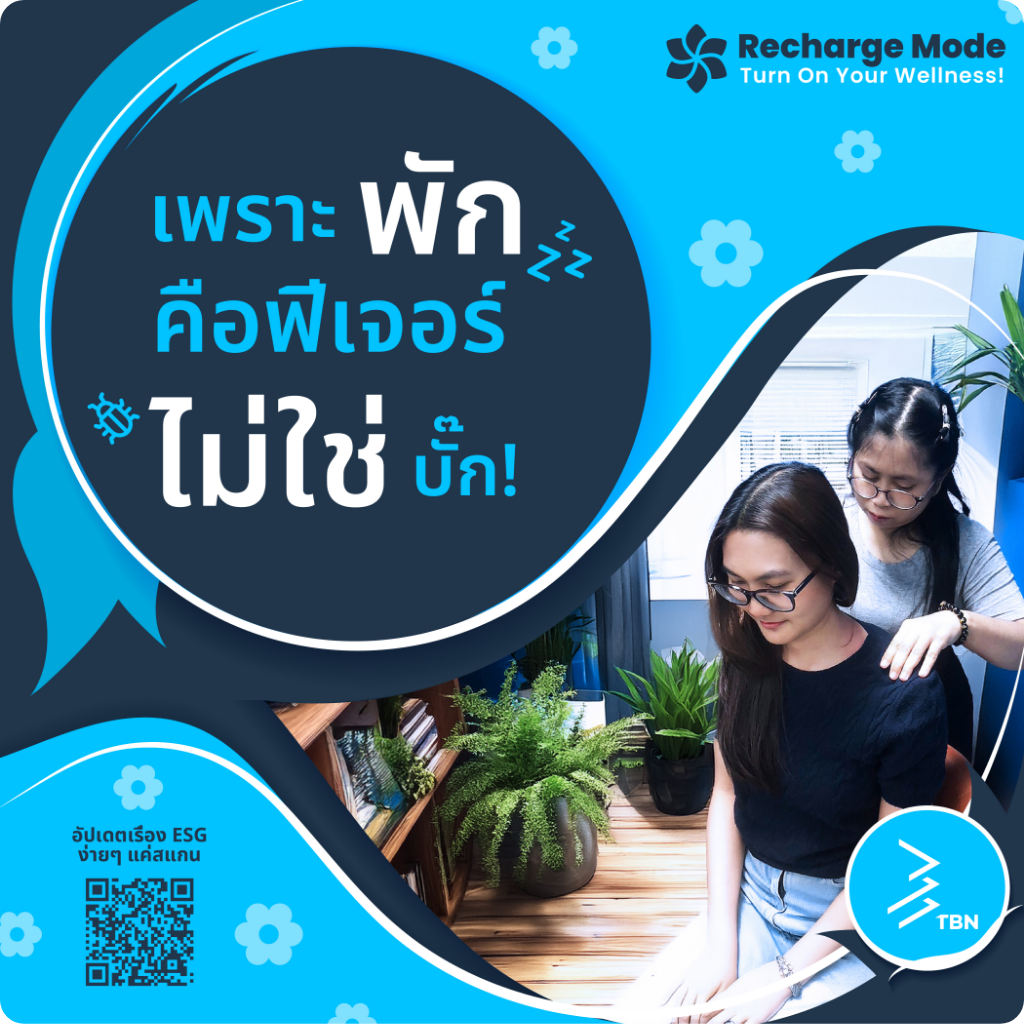
f
f
3. Fostering a Positive Environment and Enhancing Employee Engagement
In 2025, the Company continuously implemented its strategic plan and employee engagement development plan, focusing on promoting employee well-being and quality of working life to ensure employees have good physical and mental health, feel a sense of belonging to the organization, and can perform effectively in the long term.
The Company regularly organizes activities to strengthen relationships and engagement, such as the annual company trip (Outing Trip), staff engagement activities (Staff Party), internal meetings (Town Hall), Annual merit-making activities including various seasonal activities to create a work atmosphere conducive to good well-being, allowing employees to relax from work, and promoting joint activities between management and employees. Furthermore, the Company provides a Snack Bar with nutritious food selections to encourage appropriate eating habits, arranges annual health check-ups to monitor and prevent employee health risks, and regularly maintains a hygienic and safe workplace to prevent work-related illnesses and accidents.
As of December 31, 2025, the Company’s voluntary employee turnover rate was 22.40%. Based on the results of exit interviews, no resignations due to dissatisfaction with the working environment were identified. This reflects the effectiveness of the Company’s employee well-being initiatives in creating and maintaining a suitable and conducive working environment.
The Company prioritizes promoting employee well-being, quality of life, and a positive working environment. It regularly monitors and evaluates performance through annual employee satisfaction surveys, using the assessment results to inform the continuous development and enhancement of human resource management and workplace well-being measures.
The results of the 2024 annual employee satisfaction survey revealed that employees' overall satisfaction with the Company was high at 79%. The dimensions of Work-Life Balance and Job Satisfaction & Motivation scored 73% and 75% respectively. Although these scores reflect a good level of satisfaction, when compared to other topics, there is still room for further improvement and development.
In response to employee feedback and a focus on continual improvement, in 2025, the Company utilized the survey results to develop strategic key initiatives aimed at strengthening capabilities and addressing operational gaps. The goal is to enhance the quality of working life and foster stronger, more sustainable employee engagement with the organization, as follows:
Increasing Birthday Leave rights:
To support work-life balance ( Work-Life Balance) and promoting a sense of value and care from the organization, the Company has granted additional leave rights for employees' birthdays to help reduce work-related stress and increase job satisfaction.
Improvements to Personal Leave and Annual Leave rights:
The Company has expanded the scope of personal leave to cover more essential personal errands, not limited to official contact as per the traditional format, to increase flexibility in managing employees' personal lives and reduce limitations that might affect work efficiency and morale. However, for employees with more than 1 year, the Company has adjusted the calculation method for annual leave. From the second year onwards, the calculation is based on the calendar year, and for the 4th and 7th years of service, prorated calculation is not applied, to ensure fairness, reflecting the value and long-term care for employees.
Fostering Organizational Culture:
The Company established a team "TBN Culture Catalyst" to drive positive and relationship-building activities within the organization, focusing on fostering a sense of belonging through the concept of 'Better Me, Better Together, Better TBN' which covers development at individual, team, and organizational levels, to foster a culture conducive to effective collaboration and drive the organization's strong and sustainable growth together.
Strategic Human Resource Management:
The Company has undertaken to elevate its organizational structure design, coupled with developing a job evaluation and job grading system, to ensure that its reward policy and pay philosophy are fair, transparent, and competitive in the labor market. Furthermore, these human resource management guidelines have been communicated thoroughly to employees to build confidence in a management system based on good governance and aligned with the organization's long-term sustainable growth strategy.
This continuous development commitment yielded tangible results through the 2025 annual employee satisfaction survey, where The dimension of work-life balance increased to 77.58%, and job satisfaction and motivation increased to 80.58 which demonstrates the success of strategic plans in effectively meeting employee needs, resulting in Overall employee satisfaction score increased reached 82.12%. which is higher than the Company's target of 80%.
This achievement confirms the Company's genuine commitment to promoting well-being and quality of life to create an environment conducive to sustainable shared growth.
The key success factors are reflected through The dimension of Leadership & Management, which received a score of highest satisfaction 83.32%. This reflects employees' confidence in the transparency and clear vision of management, as well as the role of supervisors in being good role models and effectively guiding their teams, which is a crucial foundation for driving a strong and sustainable work culture.
4. Promoting Employee Occupational Health and Safety
The Company has established guidelines and measures for safety and occupational health to promote a safe working environment conducive to the well-being of employees and relevant stakeholders. This covers the Company's managed operations, supply chain, and assets, requiring strict adherence to relevant occupational safety and health laws, international occupational health and safety standards, and the Company's safety regulations.
In 2025, the Company continues to implement these guidelines by providing annual health check-ups, regularly maintaining a hygienic and safe workplace, and implementing measures to prevent and monitor safety and occupational health risks to prevent work-related illnesses and accidents.
Additionally, the Company continues to conduct communication activities and raise awareness among employees regarding health, occupational hygiene, and workplace safety, utilizing infographic-style public relations media that presents up-to-date content covering holistic well-being, such as:
Accident Prevention and Working Environment: Focusing on raising awareness to prevent potential office accidents (Office Safety), such as inspecting risk points in common areas, safe use guidelines for office equipment, and prioritizing tidiness in work areas (5S) to reduce risks from tripping, falling, or environmental accidents.
Promoting Mental Health: Providing knowledge to prevent stress from excessive news consumption (Headline Stress Disorder) by presenting techniques for emotional management and information filtering when exposed to emotionally impactful news.
Air Pollution Prevention: Providing practical knowledge on health care and self-protection guidelines against the PM 2.5 fine dust crisis, which is a significant air pollution problem today.
The Company disseminates such public relations media through employee computer screens and internal communication channels, with content updated monthly, to reflect the Company's commitment to comprehensively caring for and protecting employees' physical and mental well-being (Holistic Well-being).
f
f
f
The Company has set workplace safety goals, aiming for the Total Recordable Injury Rate (TRIR) [1*] and the Lost Time Injury Frequency Rate (LTIFR) [2*] to be equal to zero (Zero Accident). In 2025, the Company continues to adhere to and implement these goals through occupational safety and health measures to prevent and reduce the risk of accidents that may occur during operations. Notably, the Company successfully achieved its Zero Accident target, with both TRIR and LTIFR recorded at zero for the year.
The implementation of occupational safety and health measures reflects the Company’s commitment to promoting employee well-being, reducing health risks and work-related accidents, and creating a safe and suitable working environment on a sustainable basis.
Note: Vehicle accidents during travel, including commuting from residence to the first workplace, from the last workplace back to residence, as well as activities during non-working hours and detours for personal errands, will be considered unrelated to work.
[1*] TRIR (Total Recordable Injury Rate) or Total Recordable Injury Rate, including employees and contractors.
[2*] LTIFR (Lost Time Injury Frequency Rate) or Lost Time Injury Frequency Rate, which indicates the rate of work-related injuries resulting in 1 or more days of absence. With the calculation formula = (Number of Injuries / Total Working Hours) x 200,000 or 1,000,000 working hours
5. Supporting Learning Opportunities and Capability Development
The Company develops training plans aligned with the duties of employees at each level and position to support the sustainable growth of both personnel and the organization. The Company recognizes that personnel development is crucial for retaining high-potential employees who wish to work with the organization long-term and for building loyalty with the organization.
Employee training history data in 2025, details are shown in the table below.
Indicator | Year 2024 | Year 2025 | Change |
Total executive training and development hours | 33.00 | 90.00 | +172.73% |
Average training hours per executive per year | 6.60 | 18.60 | +181.82% |
Total employee training and development hours | 2,430.65 | 2,796. 50 | +15.05% |
Average training hours per employee per year | 13.50 | 1 5.71 | +16.37% |
TBN Mendix Academy Project: Mendix Rapid Developer Certification
The Company focuses on building a robust digital solution foundation by requiring all new developers, including Software Engineers and DevOps Engineers, to undergo training and certification for the Mendix Rapid Developer international standard. This initiative aims to enhance capabilities in application development via Low-code platforms, a core technology that improves speed and efficiency in digital solution delivery (Time-to-market). The curriculum is designed to establish a Standardized Skillset, enabling personnel to effectively apply high-level digital tools to meet client business requirements. Participants must complete the required training hours and pass the standardized certification examination.
f
f
f
f
2025 Performance Results:
Through the continuous implementation of the TBN Mendix Academy project over the past year, the Company successfully conducted a total of 14 sessions of the Rapid course. A total of 27 employees from the Digital Solutions unit participated in this skill development program. The results show that all 27 participants successfully passed the criteria and were awarded international certifications, representing a 100% success rate. This performance exceeded the Company’s established target of 80%. These results serve as a key indicator of personnel readiness to support business expansion and reflect the organization’s high standards in information technology operations.
6. Treat labor fairly, reducing inequality within the organization
In 2025, the Company continues to implement its human rights policy, emphasizing fair and equal treatment of all organizational stakeholders, including employees, customers, partners, and communities, as well as respecting the rights of all stakeholder groups in its business operations.
Additionally, the Company has implemented a comprehensive human rights due diligence process ( Human Rights Due Diligence: HRDD) continuously, from defining the scope for identifying relevant human rights issues, assessing human rights risks, establishing risk mitigation measures and prevention mechanisms to ensure acceptable impacts, as well as regularly monitoring and reviewing human rights risks, including providing mechanisms or guidelines for remedy and impact reduction in cases of human rights violations arising from business activities in which the Company may be involved.
(6.1) Promoting Equal Opportunities and Gender Diversity
The Company prioritizes and is committed to creating a positive working environment by respecting the diversity of employees and management at all levels, promoting gender equality, treating everyone fairly, and supporting human rights and non-discrimination. This is reflected in its recruitment processes, transparent, fair, and equal compensation for work of equal value, as well as the allocation of various benefits from salary structure development and operations under clear regulations, procedures, and policies. Furthermore, the Company has established measures to prevent sexual harassment and all forms of violence in the workplace, alongside maintaining gender balance at all levels of management.
As of December 31, 2025, the Company had a total of 183 employees and executives, comprising 104 females (57%) and 79 males (43%). All employees are subject to the Company's regulations, rules, and policies without exception or discrimination, and receive benefits and equal opportunities for career advancement.
(6.2) Respecting Labor Rights and Treating Labor Fairly
The Company prioritizes respecting and protecting labor rights, conducting business under relevant national and international labor laws and policies, covering employment, wages, working hours, holidays, and employee benefits. It aims to promote fair employment, treating all employees and workers, including foreign workers, equally, transparently, and without discrimination. Additionally, the Company provides a process to encourage employee participation in offering ideas, opinions, and suggestions regarding welfare through annual opinion surveys.
The Company stipulates compensation, welfare, holidays, leave, and various benefits no less than legally required, while protecting the maternity rights of pregnant employees and workers by providing maternity leave rights, including wages or compensation during maternity leave as legally mandated, and guaranteeing the right to return to their original position upon completion of maternity leave to promote job security and equality. Furthermore, the Company has established a welfare committee in the establishment to represent employees in communicating opinions, suggestions, and welfare issues, as well as promoting participation and good relations between employees and employers, thereby continuously enhancing the quality of working life and welfare, which reflects the Company's commitment to creating a fair working environment and respecting labor rights sustainably.
Additionally, the Company provides life security benefits to employees, including a provident fund and group health insurance, which covers employees and their family members. (Voluntary)
Customers — Plan & Guidelines
Has a Customer Management Plan
Yes
Plan Description
Customer Management Plan
The Company places the highest priority on delivering quality services and sustainably meeting customer needs. We are committed to being a strategic partner that drives our clients’ businesses toward full Digital Transformation. Accordingly, the Company established the following customer management plans and operational guidelines for the past fiscal year 2025:
1. Responsible Service Delivery to Customers
The company is committed to professionally developing its software and information technology service processes, prioritizing customer satisfaction and international standards. This is achieved through systematic service quality development planning, covering the entire service lifecycle, as follows:
Pre-sales & Sales Phase: Provide in-depth consultation to analyze problems and propose solutions that precisely address the customer's business structure.
System Implementation Services: Manage projects using international standards (e.g., Agile Methodology) to ensure application development is flexible, rapid, and adaptable to business situations.
Delivery and After-Sales Support: Deliver systems across both Mendix and non-Mendix platforms that have undergone rigorous Quality Assurance testing. Together with our Maintenance & Support services, we aim to build client confidence, elevate service standards, and deliver true innovation that enhances our customers' competitiveness.
Furthermore, personnel at all levels adhere to the Code of Conduct and Anti-Corruption Policy in all customer interactions. We emphasize transparency, the absence of improper benefits, and the avoidance of any conflict of interest to establish a standard of honesty and fairness in our operations.
f
f
f
2. Communication of Information and Service Impact to Customers
The company adheres to transparency and two-way communication, providing comprehensive important information to customers, including:
Product Clarity: Provide accurate and complete information regarding the features, performance, limitations, and functionality of products (Mendix and Non-Mendix Licenses).
Change Management: Provide consultation and proactively inform customers about potential impacts, changes, or system downtime that may occur during system implementation or version updates.
Training: Provide continuous User Training to enable customers to effectively use the system, plan business operations, mitigate risks, and maximize the benefits of the solutions.
3. Enhancing Customer Satisfaction and Strengthening Customer Relationships
The company regularly conducts customer satisfaction surveys to gather feedback for developing improvement measures and enhancing service quality (Customer Success Program). In the year 2025, outstanding operational results were achieved as follows:
Voice of Customer (VoC): We conduct satisfaction surveys across all service touchpoints—from sales and project delivery to post-sales support—to capture a comprehensive view of the customer experience. Our target is to maintain an Overall Customer Satisfaction (CSAT) score of over 70%. Furthermore, we encourage active participation to achieve a Response Rate of over 80%, reflecting strong engagement and collaboration between the Company and our clients.
Service Quality Enhancement: Feedback and scores are analyzed in-depth to identify pain points and systematically implement project-specific improvement measures. We consistently communicate these enhancements back to our customers to ensure confidence in our pursuit of operational excellence.
Platform Value Creation: Regarding the Mendix Platform, we focus on providing technical consultancy and sharing innovative use cases to help customers realize the full potential of their systems. The Company has set a Mendix License Satisfaction target of over 70%, encompassing platform features, performance, and future usage expansion trends to drive sustainable mutual growth.
Customer Satisfaction Development Targets for 2026:
To continuously maintain and enhance efficiency, the company has set proactive strategies with the following targets:
(1) Increase the overall Customer Satisfaction Rate (CSAT) of at least 75%.
(2) Increase satisfaction with License usage of over 70% (through introducing new features or use cases that help extend business value from existing licenses).
(3) Maintain a survey response rate of over 80%.
4. Protection of Customer Personal Data
As system implementation and platform management services involve critical business data, the company recognizes the utmost importance of maintaining customer confidentiality and personal data, and thus undertakes the following actions:
Legal Compliance and Privacy Policy: The Company strictly adheres to its Customer Confidentiality Policy and Privacy Policy, establishing a robust data management foundation fully aligned with the Personal Data Protection Act (PDPA). This ensures comprehensive protection against unauthorized access or the misuse of customer information.
Elevating Cybersecurity Standards: We integrate international information security standards into our corporate infrastructure, focusing on technical safeguards such as Data Encryption at every stage and Access Control based on the principle of least privilege. These measures are designed to ensure system stability and build unwavering customer trust in our security framework.
Cultivating an Information Security Culture: The Company prioritizes awareness among personnel at all levels through regular Cybersecurity Awareness Training. By proactively mitigating risks associated with unauthorized access or disclosure, we aim to maintain the highest level of long-term trust and reliability in our service delivery.
5. Enhancing Potential and Capabilities in Collaboration with Partners and Alliances
Strengthening the Business Ecosystem and developing capabilities in collaboration with partners are crucial strategies for the company's business expansion.
Ecosystem Enablement: Organize training and workshops to enhance in-depth knowledge and understanding of Low-Code technology and various solutions, enabling partners to effectively leverage the company's products.
Knowledge Sharing: Organize activities for experience sharing, collaborative learning, and co-creation to develop new innovations and solutions that respond to rapidly changing market demands.
Plan Areas
| Plan Area | Other — Please Specify |
|---|---|
| Responsible production and services for customers | |
| Communication of product and service impacts to customers/consumers | |
| Development of customer satisfaction and customer relationship | |
| Protection of customer personal information | |
| Others | Enhancing potential and capabilities with partners and allies |
Customers — Satisfaction Results
Customer Satisfaction Results
| Metric | Current Year | Previous Year | Two Years Ago |
|---|---|---|---|
| Evaluation results of customer satisfaction | 1 | 1 | 1 |
Customers — Targets
Has Set Customer Targets
Yes
Targets
| Indicator | Target Areas | Base Year | Base Year — Description | Target Year | Target Year — Description |
|---|---|---|---|---|---|
| Overall customer satisfaction rate | 3009 · Description: Development of customer satisfaction and customer relationship | 2,024 | 70% | 2,025 | Exceeding 70% |
| Customer Satisfaction Rate for Mendix License Usage | 3009 · Description: Development of customer satisfaction and customer relationship | 2,024 | 70% | 2,025 | Exceeding 70% |
| Questionnaire Response Rate | 3009 · Description: Development of customer satisfaction and customer relationship | 2,024 | 70% | 2,025 | Exceeding 80% |
| Overall customer satisfaction rate | 3009 · Description: Development of customer satisfaction and customer relationship | 2,025 | Exceeding 70% | 2,026 | Not less than 75% |
| Customer satisfaction rate with the use of Mendix License and Non-Mendix License | 3009 · Description: Development of customer satisfaction and customer relationship | 2,025 | Exceeding 70% | 2,026 | Exceeding 70% |
| Customer survey response rate | 3009 · Description: Development of customer satisfaction and customer relationship | 2,025 | Exceeding 80% | 2,026 | Exceeding 80% |
Customers — Performance & Outcomes
Has Performance Results
Yes
Performance Description
f
f
f
Achievements and Operational Performance (Projects and Awards)
The company is continuously committed to developing its service processes with customer satisfaction as a priority, through multi-dimensional operations and systematic service quality development planning.
This aims to build confidence in products and services, elevate standards, and maintain good relationships with partners, which are crucial foundations for sustainable growth. Key operational results are as follows:
f
1. Professional Customer Service and Quality Work Delivery
The Company is committed to enhancing service quality and delivering efficient solutions to create
long-term value for our customers. We maintain a regular customer satisfaction survey process to gather feedback for systematically developing service improvement measures. This process covers Sales, Implementation services, and satisfaction with the Mendix Platform and other solutions (Non-Mendix).
Customer Satisfaction Survey Results for 2025:
(Note: Averages are calculated based on actual scores received, excluding non-applicable items.)
Overall Customer Satisfaction Rate (CSAT): Recorded at 72.92%, exceeding the target of over 70%.
This reflects our service standards in building customer trust as planned.Survey Response Rate: Achieved 100%, surpassing the target of over 80%. This signifies a strong relationship and excellent cooperation between the Company and its customers.
Satisfaction Rate with Mendix License: is at 66% (target over 70%), divided into satisfaction with features and performance (68%) and potential for additional usage (55.56%).
The lower overall score in this segment was primarily due to the fact that most customers had already procured licenses covering their current operational needs, leading to limited immediate demand for expansion. Nevertheless, the Company remains focused on providing Strategic Consulting to recommend new solution extensions on the platform, aiming to enhance satisfaction and drive future growth. Furthermore, the Company continues to uphold high service standards in other key areas, as evidenced by the following results:
Implementation Services Satisfaction: Recorded at 76%, reflecting our expertise in delivering efficient and
high-quality projects.Platform Usability Satisfaction (Mendix & Non-Mendix): Recorded at 70%, demonstrating the stability and business-alignment of the solutions provided by the Company.
2. Business Expansion and Enterprise Solution Delivery through Strategic Partnerships
In 2025, the Company achieved significant milestones through robust collaborations with our strategic partners, enabling us to broaden our customer base and deliver impactful Enterprise Solutions. Most notably, we successfully expanded the deployment of our Volare Debt Collection system to two major national players within the financial services sector: a leading Virtual Bank and a prominent Credit Card Service Provider.
The provision of such systems to enterprise-level clients serves as a vital testament to our role in elevating industry standards for debt collection, fostering greater efficiency and transparency. This accomplishment reflects the profound trust that large-scale organizations place in our technological prowess and operational excellence. Furthermore, our close synergy with partners remains a key driver in our ability to continuously develop innovative solutions and enhance overall operational efficiency.
f
f
f
3. Awards & Recognitions
To underscore its professional customer service capabilities and success in collaborating with global partners, the company received a total of 3 prestigious awards from SIEMENS at the Asia Pacific Executive Partner Forum (APEPF) 2025, namely:
2024 Top New SaaS Business Partner (Asia Pacific)
2024 Top New SaaS Business Partner (Southeast Asia)
2024 Top SaaS Target Achievement (Thailand)
These awards concretely affirm the company's success as a leader in providing and delivering regional SaaS solutions.
Community & Social — Overview
Introduction
The Company recognizes its crucial role in driving sustainable social development. As a leader in Low-code technology, we focus on leveraging our expertise in digital innovation to create shared value for society (Creating Shared Value: CSV), emphasizing the reduction of inequality, the creation of equal opportunities, and the fair enhancement of the quality of life for all stakeholder groups.
Responding to Sustainable Development Goals (SDGs Alignment)
To ensure tangible social outcomes, the Company has integrated the United Nations Sustainable Development Goals (SDGs) into its corporate strategy across 5 key dimensions (SDGs 1, 3, 4, 5, 10) through the following practices:
Creating Equal Opportunities: Improve quality of life and create equal opportunities for access to resources for employees and vulnerable groups.
Well-being and Safety: Promote welfare, health, and safety standards for employees and all stakeholder groups in accordance with international standards.
Human Capital Development: Support learning and digital skill development to continuously enhance the potential of personnel and society.
Labor Fairness: Treat labor with respect for human rights to reduce inequality both within the organization and in wider society.
Community & Social — Plan & Guidelines
Has a Community & Social Plan
Yes
Plan Description
The Company recognizes the importance of business growth alongside sustainable social and community development, adhering to business principles that consider all stakeholder groups. The Company has established the following social management plan for 2025:
1. Employment and Career Skill Development: Aim to support the development of technological skills for Thai workers through the project TBN Mendix Academy with a plan to continuously organize the "Keeping Up with Mendix for Developers" course to enhance the potential of personnel both within and outside the organization, preparing them for changes in low-code technology and driving Thailand to become a
Low-code hub in the region.
2. Education: Establish guidelines for transferring digital technology knowledge to the public to promote lifelong learning and support the enhancement of digital technology application skills for external agencies and organizations, thereby building a strong digital knowledge base.
3. Religion and Culture: Plan to promote employee participation in traditional activities and important festivals to preserve good culture and build strong relationships within the organization, while fostering an organizational culture committed to ethics and harmonious coexistence.
4. Sports and Recreation: Plan and organize team-building activities through annual events such as TBN Family Outing To strengthen unity and teamwork, focusing on creating a relaxed work environment and fostering good relationships among personnel at all levels.
5. Occupational Health, Safety, Health, and Quality of Life: Establish standards for a safe working environment to reduce health risks, with the goal of "Zero Work Accidents." (Zero Accident) "while promoting welfare benefits that support employees' work-life balance.
6. Disadvantaged and Vulnerable Groups: Aim to support equal access to career opportunities and establish a plan to participate in improving the quality of life for vulnerable groups in society through supporting activities and contributing funds to charitable organizations.
7. Water Management and Sanitation: Implement measures to manage office areas to be clean and hygienic according to international occupational health standards, with a systematic inspection and cleaning system, for the well-being of employees and visitors, as well as to reduce environmental impact from water usage within the building.
8. Social Inequality Reduction: Adhere to a plan for treating employees and partners equally and transparently, by establishing guidelines to prevent all forms of discrimination, and overseeing the respect for labor rights according to legal and international standards, to create a society of equality.
Plan Areas
| Plan Area |
|---|
| Employment and professional skill development |
| Education |
| Religion and culture |
| Sports and recreation |
| Occupational health, safety, health, and quality of life |
| Disadvantaged and vulnerable groups |
| Water and sanitation management |
| Reducing inequality and promoting social equality |
Community & Social — Targets
Has Set Community & Social Targets
Yes
Targets
| Indicator | Target Areas | Base Year | Base Year — Description | Target Year | Target Year — Description |
|---|---|---|---|---|---|
| Number of participants in the TBN Mendix Academy program | 3036 · Description: Employment and professional skill development · 3037 · Description: Education | 2,024 | No less than 305 course participants. | 2,025 | No less than 360 course participants. |
| Pass rate of participants in the Rapid Developer Course under the TBN Mendix Academy program. | 3036 · Description: Employment and professional skill development · 3037 · Description: Education | 2,024 | Exceeding 80% | 2,025 | Exceeding 80% |
| Total Recordable Injury Rate (covering both employees and contractors working on company premises) | 3041 · Description: Occupational health, safety, health, and quality of life | 2,024 | Zero Accident | 2,025 | Zero Accident |
| Lost Time Injury Rate (covering both employees and contractors working on the company's premises) | 3041 · Description: Occupational health, safety, health, and quality of life | 2,024 | Zero LTI (Zero Lost Time Injury) | 2,025 | Zero LTI (Zero Lost Time Injury) |
| Number of significant human rights violation cases | 3045 · Other name: Respect for Human Rights and Social Governance · Description: Others | 2,023 | 0 Cases | 2,025 | 0 Cases |
| Employment of Vulnerable Groups (Persons with Disabilities) | 3036 · Description: Employment and professional skill development · 3042 · Description: Disadvantaged and vulnerable groups | 2,024 | At least 2 individuals with disabilities | 2,025 | At least 2 individuals with disabilities |
Community & Social — Performance & Outcomes
Has Performance Results
Yes
Performance Description
The company recognizes the importance of business growth alongside sustainable social and community development. Therefore, it has implemented the established management plan, with performance results in 2025 as follows:
1. Employment and Professional Skill Development
Within the Organization: The company organized TBN Cafe activities in the form of Knowledge Sharing and
Mini Workshops to develop skills and enhance work efficiency. This resulted in a total of 2,796.50 employee training hours, an increase of 15.04%, and a total of 90 executive training hours, an increase of 172.73%.External to the Organization: The company organized Review Mendix Version Updates activities for 8 partner organizations, totaling 63 people, to update technology and reduce risks from using outdated systems.
2. Education
The company organized TECHDAY events 3 times in 2025 to impart knowledge about the Mendix platform and technology trends to customers and the general public. This helps promote the application of technology in real projects and enhances digital skill readiness among personnel in society.
The company promotes the sharing of digital technology knowledge with the business sector and the public through the mai Growth Lab 2025 activities, supporting the enhancement of innovation and digital technology knowledge within the industrial sector.
3. Religion and Culture
The company places importance on creating a good working environment and continuously promoting organizational culture. In 2025, the following key activities were carried out:
Promoting Buddhism and Preserving Culture: On August 14, 2025, the company held its Annual Merit-making Ceremony for auspiciousness, inviting monks from "Wat Dhammamongkol" to perform Buddhist chanting and offer food. This activity was organized to emphasize conducting business alongside supporting Buddhism and applying Buddhist principles as a spiritual anchor in work, as well as to enhance auspiciousness and morale for all executives and employees.
Building Employee Engagement: The company focuses on fostering unity through various activities throughout the year, such as the TBN Family Outing 2025, Staff Party, Town Hall, and festive seasonal events, to strengthen good relationships between personnel and the management team.
As a result of continuous activities to build relationships and promote employee well-being, it has led to The results of the 2025 Employee Satisfaction Survey were 82.12%. which is higher than the set target (80%), reflecting success in human resource management and building a strong organizational culture.
4. Sports and Recreation
The Company places importance on fostering a strong organizational culture and employee engagement. Therefore, the “TBN Family Outing” is organized annually to strengthen relationships outside the workplace through team-building activities that emphasize cross-functional collaboration. Group-based missions are used as a tool to break down barriers and enhance communication among departments, complemented by recreational activities that create a relaxed atmosphere, reduce work-related fatigue, and promote well-being among employees at all levels. The event also provides an opportunity for executives and employees to engage in informal discussions and exchange ideas, helping to reduce hierarchical gaps and foster mutual understanding across the organization.
Outcomes of the Initiative
Organizational Engagement: Employees demonstrate a stronger sense of unity and increased engagement with the organization.
Operational Efficiency: Stronger teamwork enhances cross-departmental coordination, resulting in greater agility and reduced workplace conflicts.
Employee Well-being: A more relaxed working atmosphere contributes positively to employees’ mental health and motivation.
Internal Sustainability: A supportive and relationship-driven environment helps retain high-potential employees over the long term.
As a result, the overall employee satisfaction score reached 82.12%, exceeding the Company’s target of 80%. This achievement reflects the Company’s strong commitment to fostering a positive organizational culture and a work environment that supports sustainable, shared growth.
f
f
f
f
5. Occupational Health, Safety, and Quality of Life
The Company successfully achieved its goal of Zero Accidents and recorded zero lost-time injuries, covering both employees and contractors operating on the Company's premises.
Additionally, the Company provides annual health check-ups and continuously focuses on holistic well-being by communicating and raising awareness about health, occupational hygiene, and safety among employees. Up-to-date infographic materials are distributed monthly through internal channels, covering essential topics such as office safety, promoting mental wellness to prevent Headline Stress Disorder, and self-protection guidelines against PM 2.5 air pollution.
Furthermore, the Company strongly supports a healthy work-life balance through Flexible Working Hours and a Work from Home policy (1–3 days per week). These initiatives clearly reflect the Company's steadfast commitment to systematically safeguarding the physical health and mental well-being of all personnel.
6. Underprivileged and Vulnerable Groups
Empowering Career Development and Equal Opportunity:
The Company is committed to reducing inequality and fostering social equity through meaningful employment. In 2025, the Company employed two certified massage therapists with disabilities, in full compliance with the Empowerment of Persons with Disabilities Act, B.E. 2550 (2007). This initiative extends beyond legal compliance; it directly supports sustainable career paths and stable income for persons with disabilities, reduces economic vulnerability, and upholds human dignity by fostering an inclusive and diverse organizational culture.
Promoting Quality of Life and Access to Public Healthcare:
In the year 2025 The company donated money to 2 foundations totaling 30,000 Baht namely Umphang Hospital Foundation under the "Patient and Relative Food Project" for the amount of 15,000 Baht to support the provision of food for patients and their relatives, thereby promoting the quality of medical care and enhancing the quality of life for patients and the public. and Ramathibodi Foundation under the "Ramathibodi Hospital Medical Equipment Project" for 15,000 Baht. to support the procurement of modern medical instruments and equipment for public hospitals, enhance the readiness of medical personnel, and elevate the capacity for patient care under the basic rights of low-income and vulnerable groups. This ensures equal access to standard medical services and treatment technologies, reduces inequality in access to public health services within the state hospital system, and lowers healthcare expenses, as well as mitigating the risk of falling into poverty due to medical costs, thereby benefiting society in the long term and aligning with sustainable development goals. of the company.
f
f
f
f
7. Water Management and Sanitation
As the company set a target for the reduction of water withdrawal within the office in 2025, the water consumption rate was 27.58 liters per total working days of office-based employees. To be reduced by 5% compared to the base year (2024).
To support this goal, the company has adopted a flexible work model, allowing employees to choose to work from home (Work from Home) for 1-3 days per week. This combination of remote work not only helps reduce the density of office space utilization but also serves as a significant factor in concretely reducing water consumption and shared building resources.
8. Reducing Social Inequality
The company establishes a fair compensation structure, welfare benefits, holidays, and leave, including protecting maternity rights by granting paid maternity leave and guaranteeing the right to return to the original position. Additionally, it has established Welfare Committee in the workplace to serve as a mechanism for joint discussion and allocation of provident funds, including group health insurance (where employees can apply to cover their families), to enhance the life stability of employees.
f
f
f
f
f
f
f
f
f
f
f
f
f
f
f
f
f
f
f
f
f
f
f
f
f
f
f
f
f
f
f
f
Other Social Management
Introduction
Sustainability Management in Dimensions Economy and Governance
Policies and Practices
Governance and Economy Strategy: “3 BUILD: Transparent Governance, Sustainable Growth”
The Company is committed to conducting business in accordance with Good Corporate Governance principles, coupled with efficient, transparent, and accountable economic management. We strictly adhere to ethics, equality, and responsibility toward all stakeholders to create long-term business value and foster tangible sustainability for all related sectors. This commitment is driven through the “3 BUILD” strategy, which aligns with the United Nations Sustainable Development Goals (SDGs 8, 9, 16, and 17) as follows:
“Building Capacity” The Company focuses on developing human capital and future-ready labor skills to enhance technological competitiveness and adapt to digital transformation. We establish robust foundations for risk management and internal control to cultivate an organizational culture of integrity and ensure strict adherence to our Business Code of Conduct.
“Building Collaboration” The Company promotes cooperation with business partners based on mutual trust and respect for rights to foster inclusive and sustainable economic growth. By integrating economic development goals with stakeholder responsibility, we aim to create Shared Value throughout the entire value chain.
“Building Trust & Integrity” The Company upholds governance principles through transparent operations and a comprehensive Anti-Corruption policy. We implement rigorous oversight mechanisms, regular performance evaluations, and fair whistleblowing channels with protection systems. These measures ensure stakeholder confidence that the Company’s operations remain transparent and accountable according to international standards.
The Company firmly believes that driving business within an efficient economic framework and a strong governance foundation is a vital factor in leading both the organization and society toward true sustainability.
f
Plan & Outcomes — Description
Economic and Governance Performance
1. Develop Workforce Skills and Technological Competitive Potential
(1.1) Educational support for domestic personnel through the project TBN Mendix Academy
In 2025, the Company established a digital skill enhancement project through courses “Keeping Pace with Mendix for Developers” To comprehensively enhance Low-code technology capabilities across the entire organizational ecosystem (Internal & External Ecosystem) by integrating three main activity types with specific strategic objectives, as follows:
f
TECHDAY: Raising Awareness and Transferring Digital Knowledge (Digital Literacy)
Activities focused on transferring knowledge about the Mendix platform and modern technology trends to clients and the general public, aiming to enhance the digital capabilities of external organizations while reinforcing the Company's image as a Low-code technology expert. In 2025, the Company organized a total of 3 such activities, which received excellent feedback from various organizations, reflecting the continuous increase in interest in the Mendix platform. These activities not only enable participants to apply their knowledge to develop applications that genuinely improve business efficiency but also serve as a crucial mechanism for creating business opportunities and supporting the Company's long-term sustainable growth strategy.
f
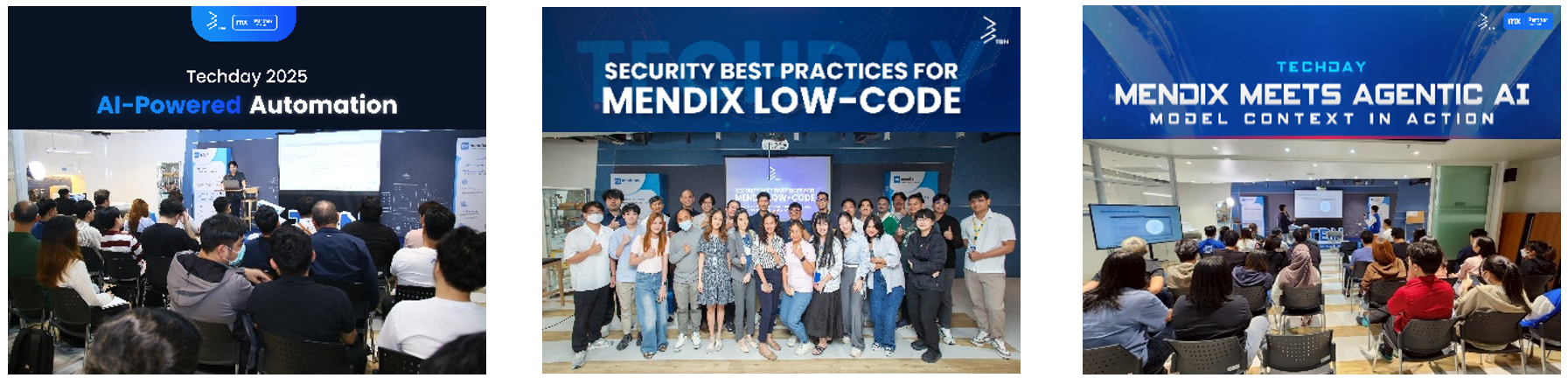
f
f
f
f
f
f
f
f
f
f
f
Review Mendix Version Updates: Technical Support and Latest Innovations (Technical Updates)
Activities focused on communicating version updates and new features of the Mendix platform to existing clients, enabling them to effectively apply the latest innovations and comply with technological standards.
In 2025, representatives from 8 leading partner organizations, totaling 63 individuals, participated in the knowledge transfer, reflecting confidence and the need for continuous system development to keep pace with changes. The outcomes of these activities not only help reduce risks from using outdated software versions but also enhance application development capabilities and support the long-term success of various projects, alongside strengthening strategic relationships between the Company and its clients.
f

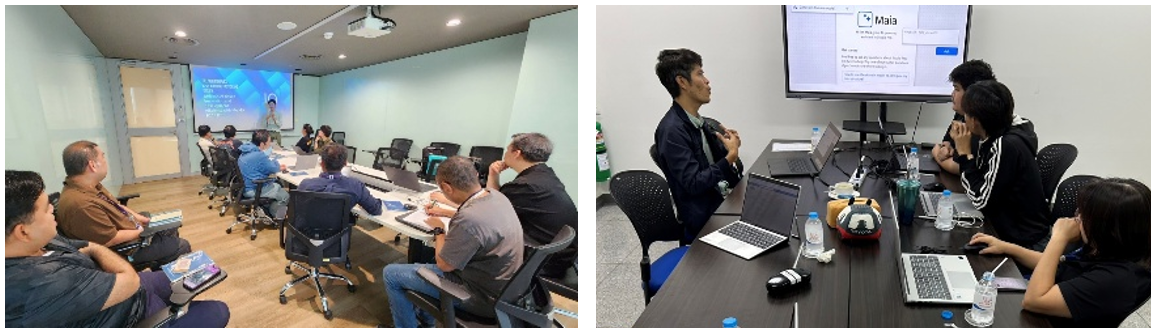
f
TBN Cafe: A platform for knowledge exchange and in-depth expertise development (Knowledge Sharing & Advanced Skills)
Internal organizational learning activities designed as knowledge sharing (Knowledge Sharing) and small workshops (Mini Workshop), focusing on sharing case studies from real project experiences and best practices (Best Practices) in terms of solution design, workflow development (Workflow) and efficient application management.
Employees participating in the activities can immediately apply the knowledge gained to their work, leading to a tangible enhancement of technical skills and systemic understanding, as well as building confidence in developing quality software and systematically resolving technical issues. Concurrently, the Company benefits from increased operational efficiency, reduced project development time, and consistent maintenance of software quality standards, which are crucial factors in strengthening competitive capabilities and sustainable career growth for personnel.
f
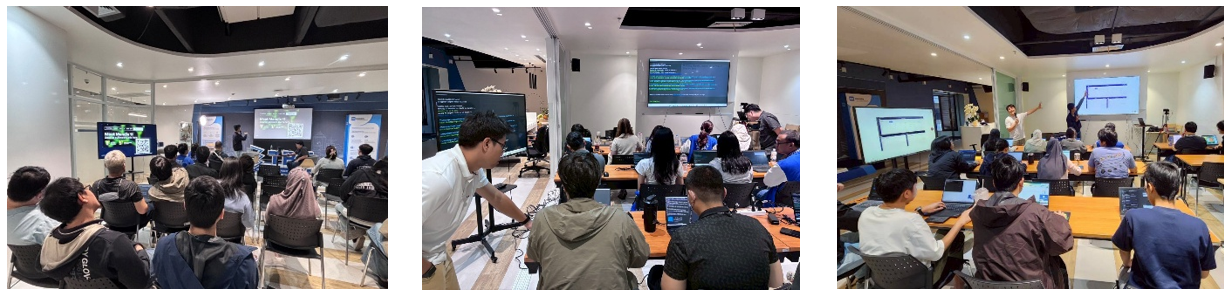
f
f
This integrated curriculum structure reflects the Company's commitment to establishing a comprehensive digital skill development system, from broad awareness creation to enhancing specialized capabilities, which is a crucial mechanism for driving the country's digital industry sustainably.
In the dimension of Economic and Governance Aspects The Company is committed to strengthening the business ecosystem through the TBN Mendix Academy project and the "Keeping Pace with Mendix for Developers" course series. The objective is to reduce the Tech Talent Gap and enhance business competitiveness with Low-code technology, which helps reduce time-to-market for innovations and creates cost-effectiveness in software development.
Meanwhile, in the dimension of Social Aspect The Company continues to promote the capabilities of both internal and external personnel through TECHDAY, Review Mendix Version Updates, and TBN Cafe activities to create equal access to technology careers with international standards. This operation not only helps improve the quality of life for the workforce at a macro level but also reinforces the Company's role as a leader with good governance, focusing on growing with society and supporting Thailand's concrete advancement towards becoming a Low-code hub in the region.
f
(1.2) The Developing Mendix Low-code Personnel and Enhancing Brand Awareness through TBN Mendix Academy
The Company systematically implements a personnel development policy to accommodate changes in digital technology, with TBN Mendix Academy serving as the primary mechanism for continuous Low-code skill development since 2022. Its main objective is to enhance workforce potential to align with market demands and the significantly expanding volume of software usage. Furthermore, the Company has continued its academic collaboration with Digital Economy Promotion Agency (depa) to drive sustainable personnel development at the industry level.
In 2025, the Company enhanced its capability development through a series of courses “Keeping Pace with Mendix for Developers” focusing on upskilling through specialized activities such as TECHDAY, Review Mendix Version Updates, and TBN Cafe, with a total of 439 participants (counting seats across all courses). These operations reflect the Company's role as a leader in specialized Low-code knowledge and promote international recognition of the organization's expertise.
In terms of learning standards, the Company prioritizes the quality of outcomes over the quantity of training attendance. Based on the performance in the Mendix Rapid Developer Certification, it was found that 98.8% (81 out of 82 participants) passed the examination in accordance with the required standards. This result clearly demonstrates the effectiveness of the courses and the Company’s knowledge transfer standards.
For future operational plans, the Company maintains its goal of expanding the trainee base both internally and externally, while also keeping digital skill development up-to-date with current situations to mitigate the developer shortage problem (Tech Talent Gap) and strengthen macroeconomic competitiveness, as well as support the region's advancement towards becoming a Low-code technology hub as per the stated objectives.
For additional training information, the Company has disclosed details in Part 1 Business Operations and Performance, Sub-topic: Competitive Strategy, Item 6. Developing MENDIX Low Code Personnel and Increasing Brand Awareness with TBN MENDIX Academy.
f
f
f
f
f
2. Promote Collaboration with Business Partners for Sustainable Growth
(2.1) Collaborative Initiative for Value Chain Sustainability and Process Enhancement
The Company emphasizes sustainable business development throughout its value chain, aiming to foster robust collaboration between the Company and its clients to enhance work process efficiency and build systematic mutual understanding. To achieve this, the Company has established a project to develop a standardized, clear, and practically applicable process for collecting and managing customer requirements, titled the "TBN Partner Collaborative Initiative for Customer Requirement Process Development."
The Company has developed concrete project plans and operational procedures covering all phases. This includes the design and development of templates and tools in collaboration with partners, the preparation of operational manuals, and the organization of workshops and training sessions for both employees and partners. Additionally, checkpoints and feedback mechanisms from actual users have been established to enable continuous process improvement. Currently, the project is being actively implemented according to the defined plan.
The implementation of this project reflects the Company's unwavering commitment to empowering clients through knowledge transfer, skill development, and the elevation of collaboration standards. Ultimately, this initiative will lead to increased business value, reduced operational redundancies and risks, and mutual long-term sustainable growth.
(2.2) Strong Growth with Siemens Mendix
The Company is a leader in designing, developing, and providing the Mendix Low-code platform as a Siemens Gold Partner and a highly specialized service provider in Thailand. It focuses on delivering comprehensive solutions, covering everything from consulting, system design, and development to continuous maintenance and support.
Collaboration with Siemens Mendix plays a crucial role in strengthening the Company's technological competitive capabilities. The Mendix Low-code platform enables client organizations to develop applications and digital systems rapidly, flexibly, and in response to continuously changing business needs.
The Company continues to focus on developing personnel capabilities and expanding knowledge in Mendix Low-code to support clients' Digital Transformation initiatives and foster sustainable long-term business growth.
(2.3) Strengthening Strategic Collaboration with Enterprise Technology Partners
The Company has dev developed strategic collaborations with technology partners, namely WatchTowr and ReN3, to expand its capabilities in offering solutions that address organizational management in the digital era, covering both cybersecurity and business decision support systems.
In 2025, the Company organized an Executive Dinner for organizational executives to enhance awareness and understanding of the aforementioned solutions. The event focused on presenting approaches to applying technology in organizational management, risk management, and supporting long-term growth through strategic perspective exchange at the executive level.
These operations reflect the Company's role as a Trusted Digital Solutions Partner, aiming to connect technology with organizational strategic goals to create added value and business sustainability.
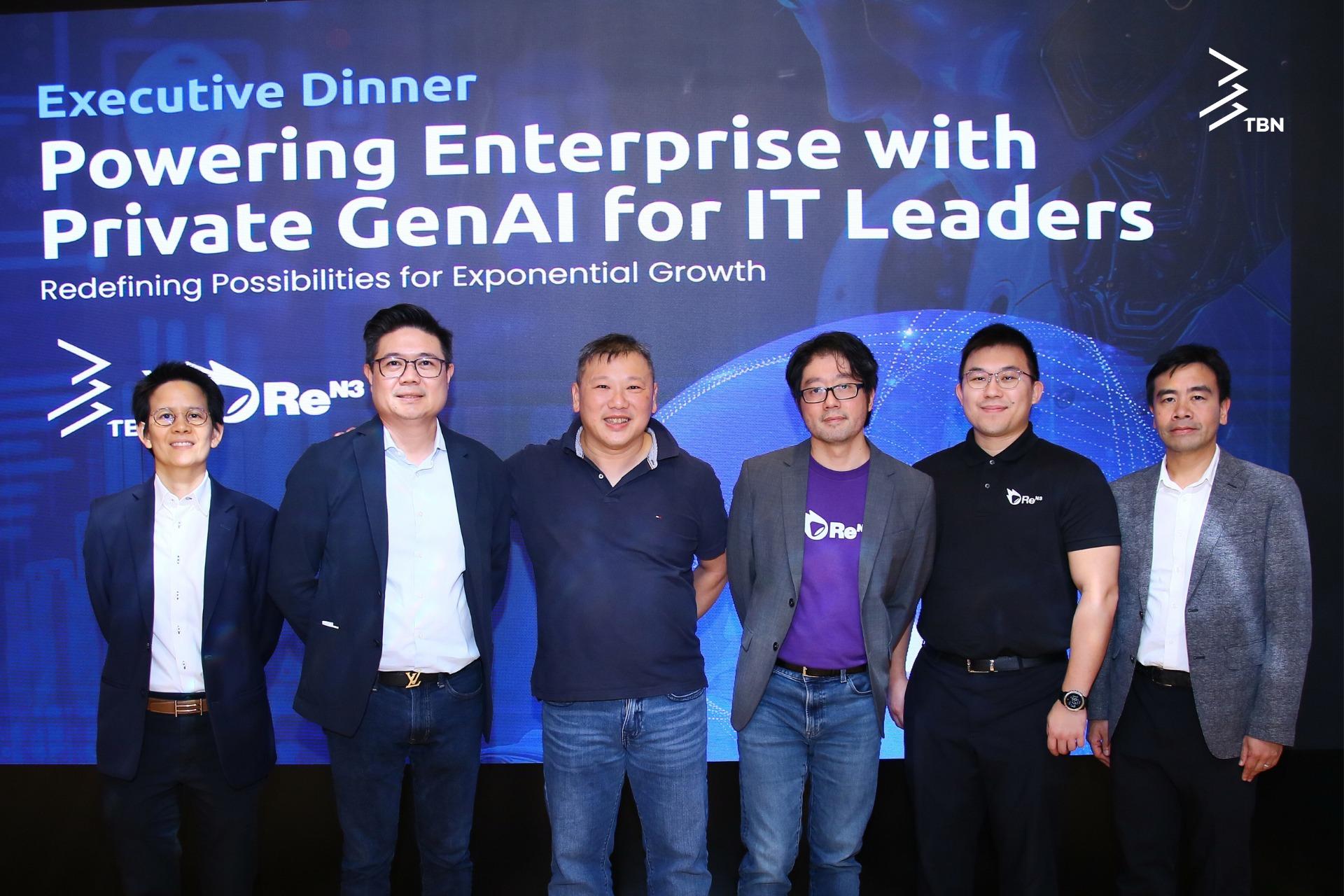
f
f
f
(2.4) The development of personnel capabilities and technological networking through TECHDAY activities.
The Company continuously organizes TECHDAY activities to develop technological skills for users and IT professionals, alongside promoting community building for knowledge and experience exchange at the organizational level. The focus is on applying technology effectively and creating long-term value.
Key topics of the activities include:
AI-Powered Automation
Guidelines for applying artificial intelligence with automation to enhance work process efficiency, reduce redundant tasks, and improve organizational effectiveness.f
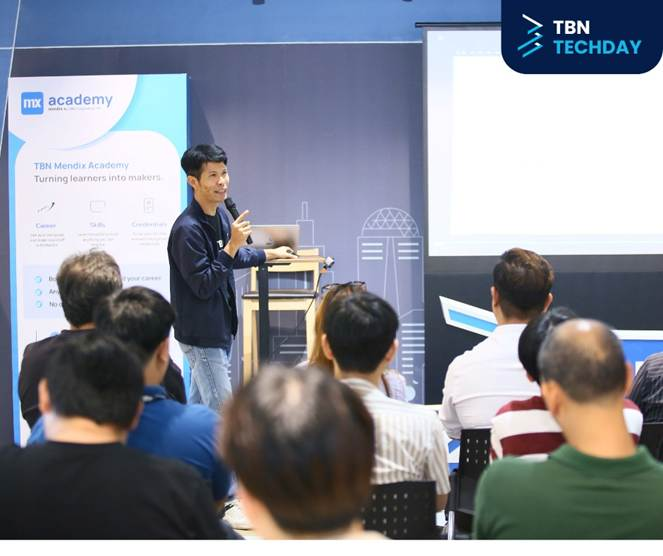
f
Security Best Practices for Mendix Low-code
Guidelines for Low-code application development that considers security, covering system design, development, and management in accordance with organizational standards.f
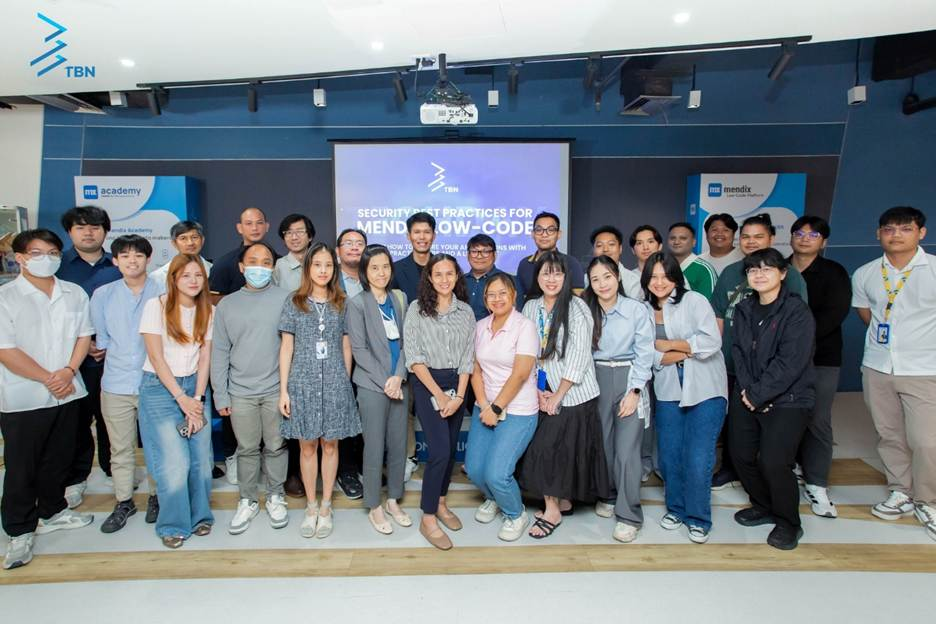
f
f
f
f
Agentic AI Model Context
Concepts for developing and applying Agentic AI to support business decision-making and the development of intelligent systems that can adapt to organizational contexts.f
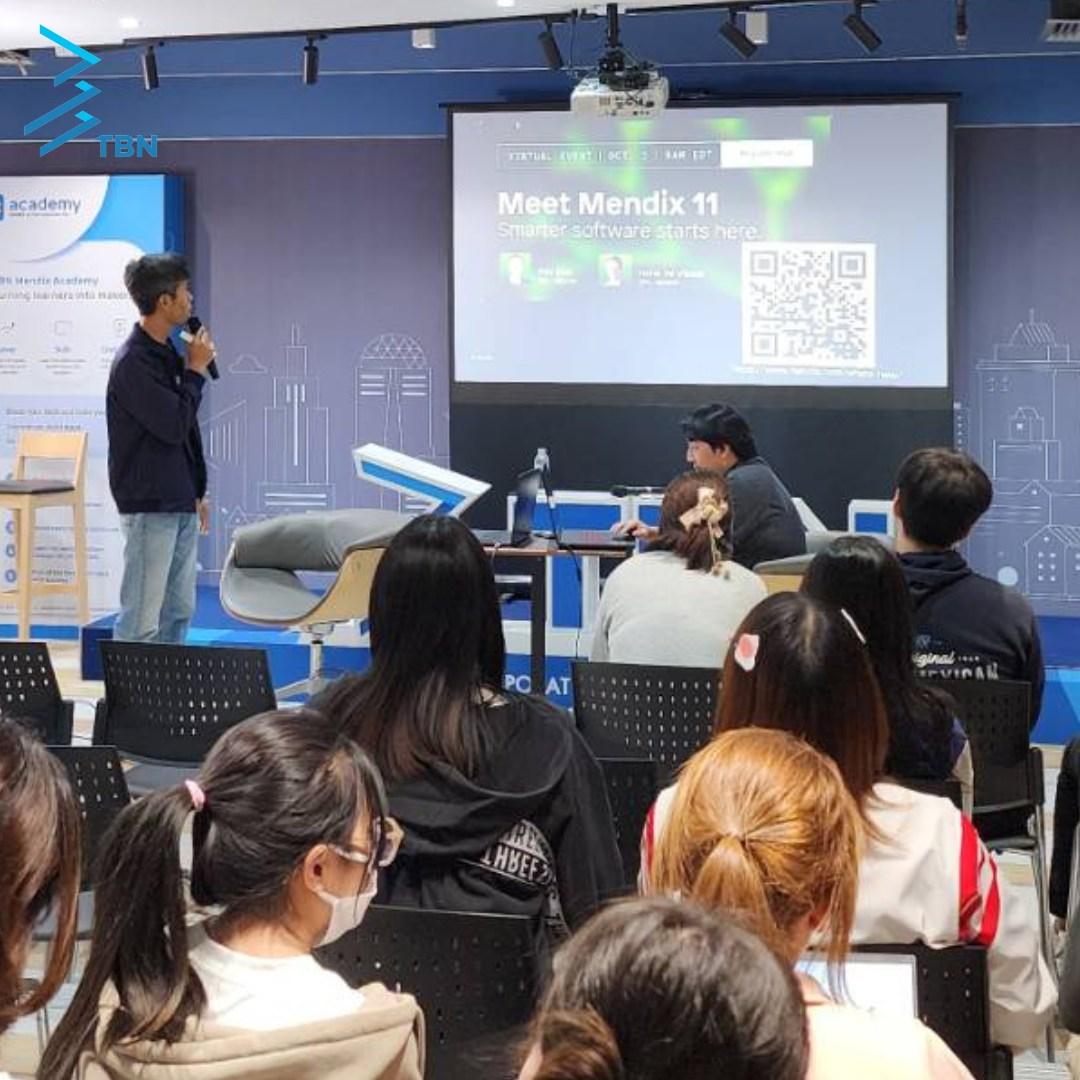
These activities reflect the Company's role in promoting learning and developing technological skills, as well as supporting the creation of a robust digital ecosystem to accommodate digital transformation and sustainable growth for client organizations.
f
(2.5) Enhancing Capabilities and Technology Leadership Image through Techsauce Participation
In 2025, TBN Corporation Public Company Limited participated in Techsauce Global Summit 2025 to enhance brand awareness and reinforce its role as a leader in enterprise digital technology, aiming to showcase the potential of solutions that support digital transformation and long-term business growth.
At the event, the Company presented the application of key technologies, including Low-code, Generative AI, Cybersecurity, and Cloud, to enhance operational agility, improve management efficiency, and support adaptation to changes in the digital era.
One of the key solutions is the Mendix Low-code Platform, which integrates Generative AI capabilities to help reduce the complexity and time required for application development, fostering rapid and flexible innovation.
Furthermore, the Company introduced the WatchTowr platform for real-time cyber threat monitoring and analysis to support risk management and enhance confidence in data and system security.
Participation in the event reflects the Company's role as a Trusted Digital Solutions Partner, connecting technology with organizational strategies and supporting the appropriate application of technology across various industries.
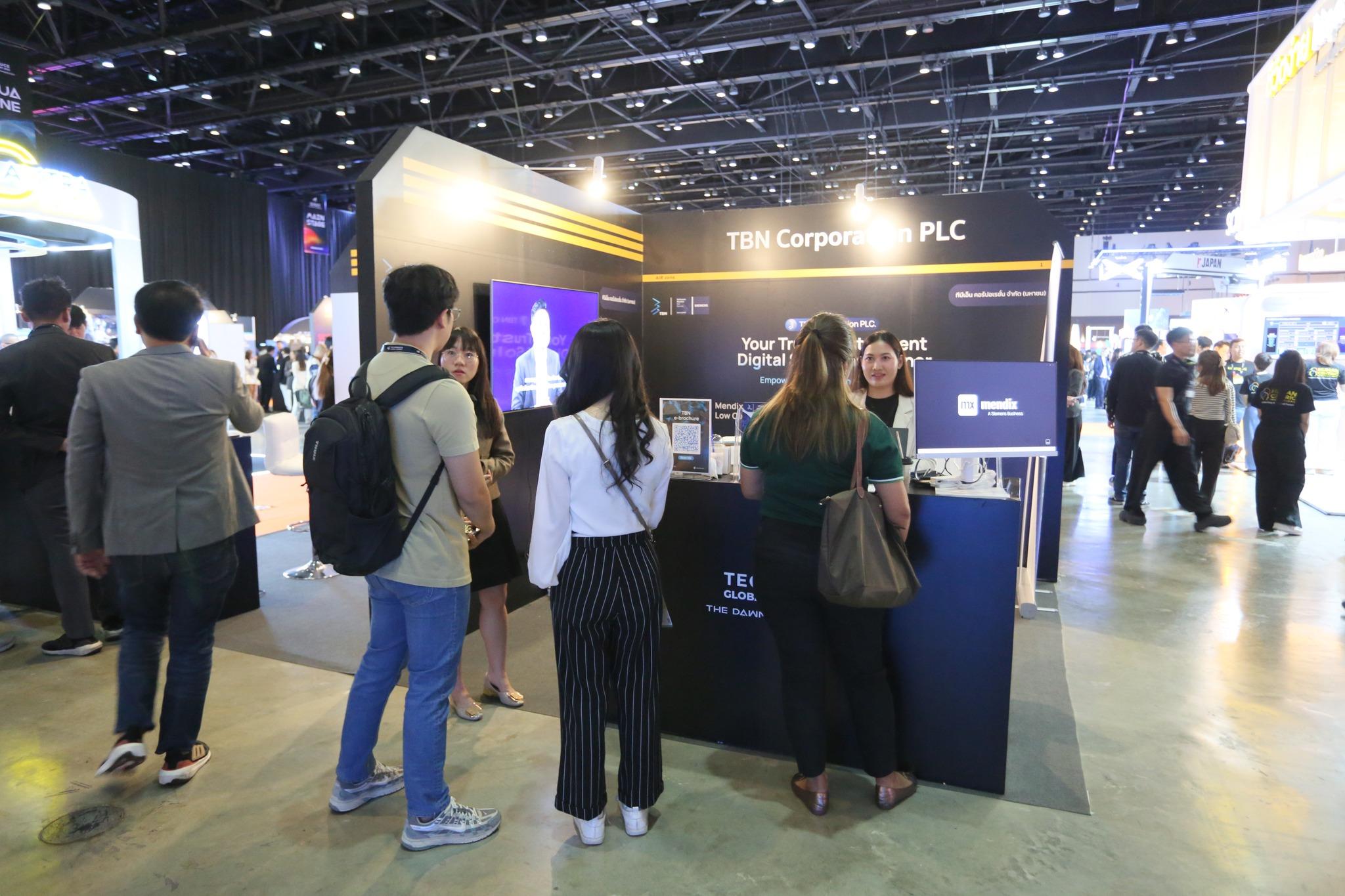
f
f
(2.6) Knowledge Dissemination through the mai Growth Lab 2025 Project
The Company participated in the mai Growth Lab 2025 activities to promote the dissemination of digital technology knowledge to executives and listed companies in the mai and SET markets. The focus was on applying digital solutions to enhance operational efficiency, strengthen competitive capabilities, and support sustainable business growth.
f
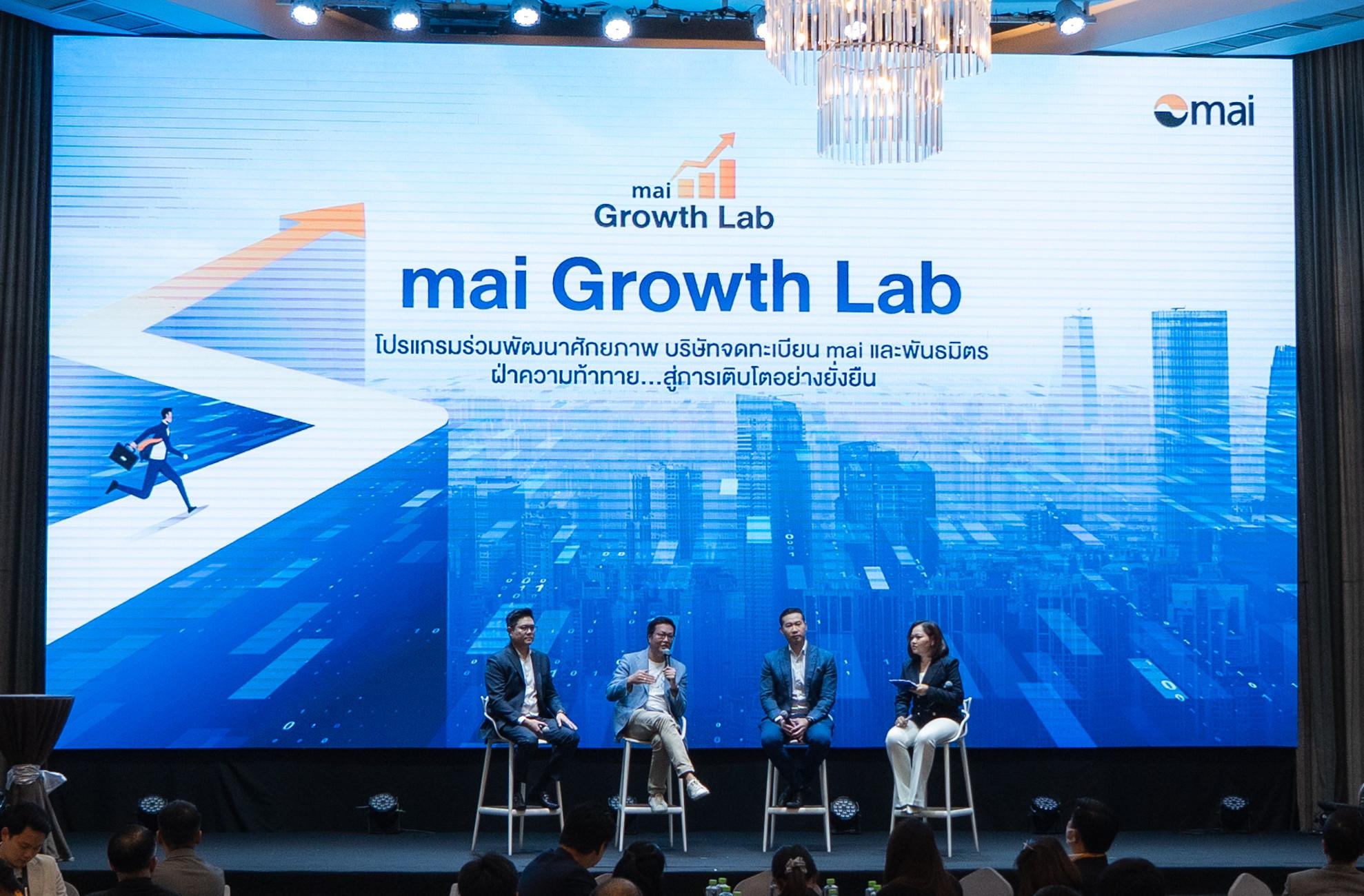
f
3. Enhance Good Governance, Transparency, and Anti-Corruption
(3.1) Maintain Cybersecurity
The Company prioritizes information technology security and cybersecurity ( Cybersecurity) to protect the data of the Company, customers, partners, and stakeholders. This involves establishing an Information Technology Security Policy and control measures that cover confidentiality, data integrity, and information system availability, as well as preventing cyber threats, unauthorized access, cyberattacks, and data leakage incidents. Technical and management measures are also implemented, such as access control, risk management, and security incident monitoring and response.
The Company has clearly defined responsibilities and roles for information security. Personnel in relevant departments are developed to possess the knowledge and skills to handle cyber threats or respond promptly to unexpected incidents. Additionally, tools are continuously procured and systems developed to prevent cyber threats, protecting sensitive data from unauthorized access and preventing business disruptions resulting from undesirable network activities. Furthermore, continuous training is provided to employees to foster a culture of cybersecurity and enhance confidence in conducting business securely and sustainably.
In the year In 2025, the Company continuously worked to raise awareness and enhance cybersecurity measures by organizing online training for all employees on fundamental cybersecurity topics. This aimed to build knowledge and understanding of Cybersecurity Objectives, such as data confidentiality, data integrity, system availability, as well as issues related to cyber threats, data breaches, personal data protection, malware (Malicious Code), social engineering attacks, and password phishing or attacks.
f
From monitoring and evaluating performance during the year None Information Security Breach Incidents or any other cybersecurity incidents, nor were there any instances of personal data leakage, theft, or loss. Furthermore, no cases were found where employees were fined or penalized due to violations of cybersecurity measures or personal data protection.
Furthermore, the Company has not received any complaints related to the violation of customer personal data, which reflects the effectiveness of the Company's data security control and management measures.
Operational Plan for the Next Year :
To continuously enhance cybersecurity measures, the Company has outlined additional operational plans for the next year, including adding the topic "Data Management and Prevention of Data Disclosure" for all employees, making it one of the new employee orientation topics, and conducting training on the topic " Phishing Awareness" for all employees, as well as conducting Information System Security Penetration Testing (PenTest) by external experts to assess vulnerabilities, risks, and the level of protection against unauthorized system access. The Company aims to conduct such tests regularly on an annual basis.
f
(3.2) Corporate Governance
The Company adheres to conducting business under the principles of Good Corporate Governance, focusing on strictly fulfilling duties according to the Board of Directors' Charter, Corporate Governance Policy, and Business Ethics. It also emphasizes balancing financial performance with the care of stakeholders, society, and the environment, within the framework of sustainable organizational development (ESG) and universal governance principles.
In 2025, the Board of Directors, management, and all employees collectively drove the organization to achieve its defined objectives and main goals, focusing on fostering a transparent and auditable organizational culture. Additionally, the Company has established a mechanism for receiving complaints and whistleblowing (Whistleblowing Policy) as a tool for monitoring and preventing all forms of ethical misconduct, legal violations, and human rights abuses. Stakeholders can report information through the following channels:
Email: whistleblowing@tbn.co.th
Website: https://tbn.co.th
Responsible Department: Audit Committee Audit, Internal Audit Department, Company Secretary, and Human Resources Department.
By Refer to details in Part Corporate Governance Policy" and Topic 8 "Report on Key Corporate Governance Performance"
Business Operations Affecting the Company's Governance
The Company conducts its business with responsibility towards all stakeholder groups, including shareholders/investors, employees, customers, partners, competitors, as well as society, communities, and the environment, adhering to principles of transparency, fairness, equality, and opposing all forms of corruption.
The Company has set a target for complaints on all issues to zero. and mandates monitoring of compliance with business ethics. which is the duty and responsibility of all directors, executives, and employees to acknowledge, understand, and strictly adhere to, including self-assessment of performance on business ethics topics as defined by the Company. Since its establishment until now, the Company None Governance complaints or business ethics violations occurred.
However, to prevent the risk of business ethics violations, the Company has established continuous monitoring and evaluation, and has defined corrective measures if business ethics violations are found.
This includes establishing a process for operational review to rectify and prevent repeated violations, thereby maintaining governance standards and transparency in business operations. business sustainably.
For additional information Refer to details in Part 2 Corporate Governance, Topic 8.1.4 Monitoring Compliance with Corporate Governance Policies and Practices, Sub-topic: Whistleblowing
Law Violation Incidents
Introduction
The Company places the highest importance on conducting business ethically, coupled with respecting the human rights of all stakeholder groups, under the close supervision of the Management and the Board of Directors. Based on past operations, the Company has no history of violating laws or regulations concerning social issues and human rights. In 2025 and throughout the Company's business operations to date, there have been no community complaints regarding social issues, no labor disputes, and no incidents constituting human rights violations in the Company's business operations.
However, to enhance prudent risk management and prevent potential issues in the value chain, the Company has clearly established proactive guidelines and measures. The Company is open to receiving complaints from all stakeholder groups through designated channels and is committed to considering and investigating these complaints with transparency, fairness, and seriousness. If the investigation reveals actions that constitute human rights violations, the Company will implement appropriate measures commensurate with the severity of the offense. This may range from disciplinary action and termination of employment to legal prosecution, as well as providing appropriate and timely remedies and mitigation measures to those who have suffered damages.
In addition to the aforementioned complaint management mechanism, the Company also prioritizes long-term prevention by implementing a comprehensive Human Rights Due Diligence (HRDD) process and continuously monitoring compliance with relevant policies. Furthermore, operational results and complaint statistics are reported to the Audit Committee and the Board of Directors quarterly to build confidence among all stakeholders that the Company has transparent and efficient governance mechanisms and is committed to conducting business with sustainable social responsibility.
Law Violation Incidents
| Metric | Current Year | Previous Year | Two Years Ago |
|---|---|---|---|
| The total number of cases or incidents of significant violations of laws or regulations regarding social and human rights (Cases) | 0 | 0 | 0 |
| The total number of cases or incidents that cause significant labor disputes (Cases) | 0 | 0 | 0 |
| The total number of cases or complaints related to consumer rights violations (Cases) | 0 | 0 | 0 |
| The total number of cases or complaints related to partner rights violations (Cases) | 0 | 0 | 0 |
| The total number of cases or incidents that cause disputes with the community/society (Cases) | 0 | 0 | 0 |
| The total number of cases or incidents related to cyber security or customer data breaches (Cases) | 0 | 0 | 0 |
| The total number of cases or incidents related to safety and occupational health at work (Cases) | 0 | 0 | 0 |