CG Policy · 2025
In this section7 topics
Corporate Governance Policy
Has a Corporate Governance Policy
Yes
Policy Description
The Board of Directors places importance on and is committed to conducting business in accordance with the principles of good corporate governance and business ethics, with transparency, integrity, ethics, and responsibility towards society, the environment, and all stakeholder groups. This includes supporting anti-corruption efforts in all forms to create long-term value and strong performance, and to build confidence and trust among shareholders, investors, and all stakeholder groups, which will lead to sustainable growth.
To enable the Company to achieve its goal of sustainable growth under the principles of good corporate governance, the Company has established written policies to serve as a guide for conducting business in accordance with corporate governance and business ethics principles. These policies are based on the criteria of the Stock Exchange of Thailand, including revisions to align with the principles of good corporate governance for listed companies in 2017, issued by the Securities and Exchange Commission ("SEC").
In 2025, the Company remains committed to conducting business in accordance with the principles of good corporate governance and business ethics, with transparency and accountability. The Company has reviewed and updated its corporate governance and business ethics policies to align with current operations, stipulating annual reviews under the principles of good corporate governance. Furthermore, it consistently monitors the performance of the Board of Directors, executives, and employees at all levels according to best practices, including evaluating policy compliance and reviewing practices.
The Board of Directors has assigned sub-committees to monitor, support, and promote the Company's operations within their delegated authority and responsibilities under the sub-committee charters. This is to ensure compliance with corporate governance and business ethics policies and practices, as well as to review, revise, and develop policies to suit the Company's current operations. This aims to define the Company's short-term and long-term directions and goals, and to comply with the criteria, conditions, and regulations of regulatory bodies, including the Securities and Exchange Commission ("SEC") and the Stock Exchange of Thailand ("SET").
Policy Document Link
https://drive.google.com/file/d/1_FQ0XR9O4sMATpjj-r9QwpZKcbAv8Tbh/view
Policy & Practices — Board of Directors
Has Policy & Guidelines for the Board
Yes
Board Guidelines
| Guideline | Other — Please Specify | Detail | Document Link | Page Number in Report |
|---|---|---|---|---|
| Nomination of Directors | Nomination and Appointment of Company Directors and Sub-Committee Directors Criteria, Process for Nomination, and Appointment of Directors The Nomination and Remuneration Committee is responsible for establishing criteria and policies for the nomination and the process for selecting suitable individuals to serve as directors. This involves selecting qualified individuals, taking into account Board Diversity in terms of knowledge, expertise, skills, and experience beneficial to the company's business operations and consistent with the company's business strategies (Board Skill Matrix), without limitation based on gender, nationality, religion, age, or other specific characteristics. And they must be individuals who are prepared to fully dedicate their time to performing their duties as directors, and who do not possess prohibited characteristics as stipulated by law and good corporate governance principles. When a company director position becomes vacant, the Nomination and Remuneration Committee will screen suitable individuals for nomination as directors and submit their recommendations to the Board of Directors and/or the shareholders' meeting for consideration and approval of the appointment of such individuals as directors. Furthermore, opportunities are provided for minority shareholders to nominate individuals for consideration and election as directors at the Annual General Meeting of Shareholders. The criteria for consideration shall be in accordance with the company's policies, articles of association, charter, and relevant laws. This includes utilizing a Director Pool database for the consideration of new director nominations. To protect the rights of minority shareholders, the company will arrange for the individual appointment of directors to be voted upon at the company's shareholders' meeting. Qualifications of Directors 1. Be an individual with knowledge, skills, expertise, abilities, education, both female and male, and experience that will benefit the business operations and contribute to the diversity of the Board's structure. Possess integrity, business ethics, and sufficient time to fully dedicate their knowledge, abilities, and duties to the company. Furthermore, they must possess qualifications consistent with the company's business strategies. 2. Possesses full qualifications and is free from prohibited characteristics as stipulated by the Public Limited Companies Act, the Securities and Exchange Act, and other relevant laws. This also includes not exhibiting characteristics indicating a lack of suitability to be entrusted with managing a public company, as prescribed by the Office of the Securities and Exchange Commission (" Office of the SEC ") 3. Does not engage in business of the same nature that competes with the company's business, or become a partner or director of another legal entity of the same nature that competes with the company's business, whether for their own benefit or the benefit of others, unless the shareholders' meeting is informed prior to the resolution for appointment. 4. A company director must promptly notify the company if they have a direct or indirect interest in any contract made by the company, or if their shareholding in the company or its affiliates increases or decreases. 5. Independent directors must possess qualifications regarding independence as prescribed by the Capital Market Supervisory Board. They must be able to equally protect the interests of all shareholders and prevent conflicts of interest. Furthermore, they must be able to attend Board of Directors meetings and provide independent opinions. 6. Must not be a director in more than 5 (five) other listed companies. Additional Qualifications of Independent Directors In addition to the aforementioned qualifications for directors, independent directors must fully meet the qualifications prescribed by the company and comply with the notifications of the Capital Market Supervisory Board, as follows: 1. Holds shares not exceeding 1% of the total voting shares of the company, its parent company, subsidiaries, associated companies, major shareholders, or controlling persons of the company. This includes shares held by persons related to that independent director. 2. Is not or has never been an executive director, employee, staff, salaried advisor, or controlling person of the company, its parent company, subsidiaries, same-level subsidiaries, major shareholders, or controlling persons of the company, unless such characteristics have ceased to exist for at least 2 years prior to the date of appointment. 3. Is not a person related by blood or legal registration as a father, mother, spouse, sibling, or child, including the spouse of a child, of other directors, executives, major shareholders, controlling persons, or individuals proposed to be directors, executives, or controlling persons of the company or its subsidiaries. 4. Has no or has never had a business relationship with the company, its parent company, subsidiaries, associated companies, major shareholders, or controlling persons of the company in a manner that could impede their independent judgment. This also includes not being or having been a significant shareholder or controlling person of any entity having a business relationship with the company, its parent company, subsidiaries, associated companies, major shareholders, or controlling persons of the company, unless such characteristics have ceased to exist for at least 2 years prior to the date of appointment. A business relationship as per paragraph one includes normal commercial transactions conducted for business operations, the lease or rental of real estate, transactions related to assets or services, or the provision or receipt of financial assistance through borrowing or lending, guarantees, or the pledging of assets as collateral for debts, including other similar circumstances, which result in the company or counterparty having a debt obligation to the other party amounting to 3% or more of the company's net tangible assets, or 20 million baht or more, whichever amount is lower. The calculation of such debt obligations shall be in accordance with the method for calculating the value of connected transactions as stipulated in the Capital Market Supervisory Board's notification regarding rules for connected transactions, by analogy. However, when considering such debt obligations, debts incurred within 1 year prior to the date of the business relationship with the same person shall be included. 5. Is not or has never been an auditor of the company, its parent company, subsidiaries, associated companies, major shareholders, or controlling persons of the company, and is not a significant shareholder, controlling person, or partner of an audit firm where an auditor of the company, its parent company, subsidiaries, associated companies, major shareholders, or controlling persons of the company is affiliated, unless such characteristics have ceased to exist for at least 2 years prior to the date of appointment. 6. Is not or has never been a professional service provider, including legal or financial advisor, who has received service fees exceeding 2 million baht per year from the company, its parent company, subsidiaries, associated companies, major shareholders, or controlling persons of the company, and is not a significant shareholder, controlling person, or partner of such professional service provider, unless such characteristics have ceased to exist for at least 2 years prior to the date of appointment. 7. Is not a director appointed as a representative of the company's directors, major shareholders, or shareholders related to major shareholders. 8 . Does not engage in business of the same nature that significantly competes with the business of the company or its subsidiaries, or is not a significant partner in a partnership, or is an executive director, employee, staff, salaried advisor, or holds more than 1% of the total voting shares of another company that engages in business of the same nature and significantly competes with the business of the company or its subsidiaries. 9. Possesses no other characteristics that would prevent the independent expression of opinions regarding the company's operations. 10. Independent directors may serve for a maximum of 3 consecutive terms (not exceeding 9 years). Appointment of Directors, Term of Office, and Vacation of Office of the Board of Directors 1. The appointment of company directors shall comply with the company's articles of association and relevant laws. There must be transparency and clarity in the director selection process. Furthermore, the educational background and professional experience of such individuals, as well as their qualifications and absence of prohibited characteristics, must be considered with sufficient supporting details. The Nomination and Remuneration Committee shall propose individuals who meet all qualifications specified in this charter to the Board of Directors and shareholders for further consideration and election. 2. Company directors shall hold office for a term of 3 years from the date of appointment, or according to the term of office for company directors. Directors who vacate office upon term expiration may be nominated and re-appointed for another term. 3. At every Annual General Meeting, at least one-third (1/3) of the company directors shall vacate their positions. If the number of directors cannot be divided exactly into three parts, the number closest to one-third (1/3) shall vacate. 4. In addition to vacating office upon term expiration, a company director shall vacate office when: (a) Deceased (b) Resignation (c) Lacks qualifications or possesses prohibited characteristics under the Public Limited Companies Act and/or the Securities and Exchange Act, and /or exhibits characteristics indicating a lack of suitability to be entrusted with managing a public company, as prescribed by the SEC. (d) The shareholders' meeting resolves to remove with a vote of not less than three-fourths ( 3/4) of the total number of shareholders attending and having the right to vote, and holding shares totaling not less than one-half of the shares held by the shareholders attending and having the right to vote. (e) Court order for removal 5. Any director wishing to resign from their position before the expiration of their term shall submit a letter of resignation to the company. The resignation shall be effective from the date the letter of resignation reaches the company. The resigning director may also inform the Registrar of Public Limited Companies of their resignation. However, a director intending to resign should notify the company in writing at least 1 month in advance, stating the reasons, to allow the Board of Directors or the shareholders' meeting to consider appointing a qualified individual as a replacement. And the company shall notify the Stock Exchange of Thailand of the resignation. 6. In the event that the entire Board of Directors vacates their positions, the outgoing Board of Directors shall remain in an acting capacity to continue the company's operations only as necessary until the new Board of Directors assumes office (unless otherwise ordered by the court in cases where the Board of Directors vacates their positions due to a court order for removal). The outgoing Board of Directors must arrange a shareholders' meeting to elect a new Board of Directors within 1 month from the date of vacating their positions, by sending a notice of the meeting to shareholders at least 14 days before the meeting date. 7. In the event that a company director position becomes vacant for reasons other than the expiration of their term, the Board of Directors shall select an individual who possesses the qualifications and is free from prohibited characteristics as stipulated by the Public Limited Companies Act and the Securities and Exchange Act, and who does not exhibit characteristics indicating a lack of suitability to be entrusted with managing a public company as prescribed by the SEC. This individual shall be appointed as a replacement director at the next Board of Directors meeting, unless the remaining term of the said director is less than 2 months. An individual appointed as a replacement director in such a case shall hold office only for the remaining term of the director who vacated the position. | https://drive.google.com/file/d/1PzoVAdnCVEXDmcDnZxYX71Mudsxx7lYf/view | 1-2 | |
| Determination of Director Remuneration | The Company establishes a policy for director remuneration, taking into account fairness and appropriateness. This policy reflects their roles, duties, and responsibilities, the success of their performance linked to the Company's operating results, and other relevant environmental factors. Furthermore, it considers comparisons with remuneration rates of other companies in the same or similar industries. | https://drive.google.com/file/d/1PzoVAdnCVEXDmcDnZxYX71Mudsxx7lYf/view | 3 | |
| Independence of the Board of Directors from the Management | The Company has clearly stipulated that the positions of Chairman of the Board and Chief Executive Officer are held by different individuals. The Chairman of the Board is Mr. Soontorn Dentham, who serves as an independent director, and the Chief Executive Officer is Mr. Panayu Sirikrachangsri. The Company has systematically separated the roles, duties, and responsibilities of these two positions to prevent the concentration of power in management and decision-making. This governance structure helps establish an appropriate mechanism for checks and balances between the Board of Directors and the management, promoting transparency, accountability, and good corporate governance. It also supports organizational decisions that prioritize the best interests of the Company, shareholders, and all stakeholders. Furthermore, the Company has assigned the Chairman of the Board the duty and responsibility to oversee the effective performance of the Board of Directors, independently of management, and in alignment with the organization's primary objectives and goals. This is to ensure that the Company's operations are transparent, adhere to good governance principles, and are sustainable in the long term. | https://drive.google.com/file/d/1_FQ0XR9O4sMATpjj-r9QwpZKcbAv8Tbh/view | 4 | |
| Director Development | New Director Orientation The Company places great importance on the orientation of new directors to prepare individuals appointed as new directors each time. The orientation will focus on providing essential information and knowledge for directors to perform their duties effectively. The Company has established a Board Orientation Guideline, presenting important documents and information beneficial for new directors' performance of duties. Furthermore, the Company also emphasizes providing knowledge and understanding of the business and operational processes in various dimensions to enhance the readiness of new directors in effectively supporting the Company's operations. Continuous Development of Directors' Knowledge The Company places importance on the continuous development of directors' knowledge and skills to enhance their performance of duties. This is achieved by supporting directors to attend seminars and training from various relevant organizations, such as the Thai Institute of Directors Association, the Stock Exchange of Thailand, the Securities and Exchange Commission (SEC), as well as courses from other institutions and associations related to corporate governance and the roles and duties of directors. These developments will help enrich directors' knowledge and experience, enabling them to effectively manage and develop the Company's operations, as well as to cope with various challenges and opportunities arising in the markets and industries in which the Company operates. | https://drive.google.com/file/d/1PzoVAdnCVEXDmcDnZxYX71Mudsxx7lYf/view | 2 | |
| Board Performance Evaluation | Overall evaluation criteria for the Board of Directors and sub-committees In accordance with good corporate governance principles for listed companies, it is recommended that the Board of Directors and sub-committees of listed companies conduct self-performance evaluations at least once a year. This allows the Board to collectively review performance and make improvements. The essence of the evaluation focuses on qualifications and suitability for directorship, roles, duties, and responsibilities, relationships among board members, work efficiency, and the comprehensive fulfillment of directors' duties. The Board of Directors has assigned the Nomination and Remuneration Committee to establish criteria and evaluate the performance of the entire Board annually. The Company Secretary is to submit the evaluation forms to the Board at the end of each year, at least once a year, and summarize the evaluation results, including reporting them to the Board of Directors' meeting for acknowledgment and collective discussion regarding comments, suggestions, and matters of interest to each director. The annual evaluation of the Board of Directors' performance aims to enhance the Board's efficiency and identify ways to improve the Board's performance for the following year. Overall evaluation process for the Board of Directors and sub-committees The performance evaluation form for the Board of Directors and sub-committees serves only as a guideline for evaluation. It may be adjusted and modified to align with the nature or size of the business, as well as situations and issues deemed important by the Board. It is divided as follows: 1. Board of Directors' Collective Self-Performance Evaluation Form: This form reflects each director's opinion on the overall performance of the entire Board of Directors, not an individual director evaluation, and the scores are weighted averages. 2. Sub-Committee Collective Self-Performance Evaluation Form: The sub-committee evaluates the overall performance of the entire sub-committee, and the scores are weighted averages. 3. Individual Director Self-Performance Evaluation Form: This form reflects each director's opinion on their overall performance, serving as an individual director evaluation, with the evaluation scores being weighted averages. The aforementioned Board of Directors' performance evaluation form, which has been screened and approved by the Nomination and Remuneration Committee, and approved by the Board of Directors' meeting, has an evaluation process covering 3 categories as follows: 1. Structure and Qualifications of the Board of Directors 2. Board Meetings 3. Roles, Duties, and Responsibilities of the Board of Directors Score levels are divided into 5 levels, namely: 1 means Very Low (Strongly disagree or very little action has been taken on the matter) 2 means Low (Disagree or little action has been taken on the matter) 3 means Fair (Agree or adequate action has been taken on the matter) 4 means Good (Quite agree or good action has been taken on the matter) 5 means Excellent (Strongly agree or excellent action has been taken on the matter) The total scores obtained are then calculated as a percentage of the full score, with the criteria defined as follows: Equal to or greater than 90% = Excellent Equal to or greater than 80% = Very Good Equal to or greater than 70% = Good Equal to or greater than 60% = Fair Less than 60% = Needs Improvement Following the evaluation, the Board of Directors will collectively review and discuss the results to develop and enhance the efficiency of the Board's performance, thereby supporting the company's long-term sustainable operations. | https://drive.google.com/file/d/1PzoVAdnCVEXDmcDnZxYX71Mudsxx7lYf/view | 3-4 | |
| Corporate Governance of Subsidiaries and Associated Companies | The Company has a policy to invest in companies with business objectives similar to the company's core business, or in businesses of a similar nature, including businesses that support the company's operations, which will result in increased performance or profits for the company, or to invest in businesses that provide benefits ( Synergy) for the Company, thereby supporting the Company's core business operations to be more comprehensive and enhancing the Company's competitiveness. However, the Board may consider investing in other businesses beyond the Company's core business or other businesses if the Board deems such businesses to have potential and such investments to be beneficial to the Company and its shareholders as a whole. The investment must be consistent and appropriate with the business conditions, policies, goals, business growth direction, and strategic plans of the Company. The Company will consider the investment proportion, expected profits, potential risks, and the Company's financial status, with appropriate investment analysis procedures, before deciding to invest in various projects. Such investment decisions must be approved by the Board of Directors meeting or the shareholders' meeting (as the case may be), and the request for approval of such investments must comply with the announcements of the Capital Market Supervisory Board, the Securities and Exchange Commission, and the Stock Exchange of Thailand. Mechanisms for overseeing subsidiaries and associates The Company establishes a policy for the oversight and management of subsidiaries and associates with the objective of defining direct and indirect measures and mechanisms to enable the Company to effectively oversee and manage the operations of its subsidiaries and associates, including setting guidelines for subsidiaries and associates in accordance with the established measures and mechanisms, as if they were integral units of the Company, to comply with the Company's policies, as well as the Civil and Commercial Code, Public Limited Company Act, Securities Act, and various related announcements, regulations, and criteria of the Capital Market Supervisory Board, the Securities and Exchange Commission, and the Stock Exchange of Thailand, summarized as follows: 1. The appointment of company representatives as directors in subsidiaries and associates. The Board of Directors will consider appointing Company representatives with appropriate qualifications and experience for the businesses of the subsidiaries and associates to serve as directors in those subsidiaries and associates. Such representatives may include the Chairman of the Board, Chief Executive Officer, directors, senior executives, or any personnel of the Company who have no conflict of interest with the business of those subsidiaries and associates. This is to enable the Company to control and oversee the operations and management of its subsidiaries and associates as if they were an integral part of the Company. Therefore, stipulating that the Company's representatives must manage the businesses of subsidiaries and associates in the best interest of the Company and ensure compliance with laws related to the operations of those subsidiaries and associates. 2. Establishment of internal control systems, risk management systems, and anti-corruption systems, as well as defining measures for monitoring the performance of subsidiaries and associates. The Board of Directors is responsible for ensuring that subsidiaries and associates have internal control systems. risk management systems, and anti-corruption systems. as well as defining measures for monitoring the performance of subsidiaries and associates. effectively, consistently, and sufficiently stringent to ensure that all operations of the subsidiaries and associates comply with the Company's plans, budgets, policies, as well as laws and announcements regarding good corporate governance for listed companies, including relevant announcements, regulations, and criteria of the Capital Market Supervisory Board, the Securities and Exchange Commission, and the Stock Exchange of Thailand, truly and continuously.
3. Matters requiring approval from the Company's Board of Directors meeting or the Company's shareholders' meeting (as the case may be). In the event of Any significant transaction or operation that affects the financial position and performance of subsidiaries and associates must be approved by the Company's Board of Directors meeting or the Company's shareholders' meeting (as the case may be). The Chairman of the Board is responsible for arranging a meeting of the Company's Board of Directors and/or the Company's shareholders' meeting (as the case may be) to consider and approve such matters before the subsidiaries and associates hold their own Board of Directors and/or shareholders' meetings to consider and approve the transaction or operation. In this regard, The Company shall disclose information and comply with the criteria, conditions, procedures, and methods related to the matter requiring approval as stipulated in the Civil and Commercial Code, Public Limited Company Act, Securities Act, as well as various announcements, regulations, and criteria of the Capital Market Supervisory Board, the Securities and Exchange Commission, and the Stock Exchange of Thailand, by analogy (to the extent not contradictory or conflicting), completely and accurately. | https://drive.google.com/file/d/15W2F2yCyEZoAy6zyrmdLwbfcPZoQ2_sy/view | ||
| Other guidelines regarding the board of directors | Recruitment and Appointment of Chief Executive Officer and Senior Management | Criteria for Recruiting Top Executives and Succession Plan Criteria and Methods for Recruiting Top Executives 1. The Board of Directors will ensure that the recruitment of senior executives meets all qualifications in terms of knowledge, skills, experience, and necessary attributes to drive the organization towards its set goals. 2. The Nomination and Remuneration Committee shall determine the criteria and procedures for the nomination of qualified candidates for the position of Chief Executive Officer. The consideration shall be based on the knowledge, skills, and experience necessary to drive the organization at each stage of its development, including expertise relevant to the Company’s business, as well as strong communication and leadership abilities. 3. The Nomination and Remuneration Committee must collaborate with the Chief Executive Officer in considering the criteria and methods for the recruitment and appointment of senior executives, and should approve individuals proposed by the Chief Executive Officer for the highest executive positions in the organization. 4. The Board of Directors must oversee and prepare a succession plan. (Succession Plan) to prepare for the succession of senior executives in case of changes, to ensure business continuity. 5. The Board must establish policies and practices for senior executives serving as directors in other companies, specifying the types of directorships and the number of companies in which they can serve, to prevent conflicts of interest and ensure no impact on their work at the principal company. Succession Plan for Senior Executives The Company places importance on the management of To ensure business continuity, a succession plan is established ( Succession Plan) important tasks are as follows: 1. Establish a succession plan for the Chief Executive Officer, senior executives, and key positions in the Company's core functions. etc. by considering the selection and evaluation of performance, potential, and qualifications from the Company's personnel. 2. Establish criteria and methods for selecting successors ( to prepare for proposing their appointment as senior executives. 3. Provide preparation for individuals selected as successors ( by developing the necessary knowledge, abilities, skills, and experience for the position through job rotation in other relevant departments and attending additional essential training courses, to succeed in the position and be able to perform duties immediately when the position becomes vacant. 4. Oversee the consideration of promotions and provide benefits for those selected as successors ( to create appropriate incentives 5. Report the performance results of the important succession plan to the Board of Directors for acknowledgment at least once a year. | https://drive.google.com/file/d/1B98syZd50kH1yO_322BmSv9xzEMKHsFc/view | 4 |
| Other guidelines regarding the board of directors | Executive Development | Development of the Chief Executive Officer and Senior Executives The development of the Chief Executive Officer (CEO) and senior executives is considered a crucial investment in driving the organization towards long-term success. The Board of Directors therefore places importance on the development of senior executives in various areas to enhance management efficiency and strengthen skills in leading the organization towards its established goals, as follows: 1. The Company continuously establishes training and skill development plans for the CEO and senior executives, focusing on enhancing skills in organizational management, internal and external communication, risk management, and adapting to new business trends. Examples include training in good corporate governance, ESG (Environmental, Social, and Governance) training to foster sustainability, development in change management, and development of communication skills and stakeholder relationship building. 2. The development of senior executives must include a clear succession plan to ensure business continuity in the event of changes in senior executive positions. The Company has established a comprehensive succession plan, covering both the development of potential executives and the preparation of individuals who may replace them in key positions in the future. 3. The Board of Directors supports the CEO and senior executives in participating in external activities or seminars to enhance networking opportunities and to apply new concepts or knowledge to the organization. Such strategic development may be achieved through participation in relevant professional associations, executive-level conferences, or discussions and exchanges of views with external experts. 4. The Board of Directors promotes the development of the CEO and senior executives to possess knowledge and skills in sustainable management (especially in ESG, which is a crucial factor in today's business world and helps increase the organization's long-term management potential). Concurrently, business operations can be adjusted to align with considerations for social and environmental impacts. 5. The Board of Directors emphasizes the development of the CEO and senior executives continuously, to enhance their ability to manage the organization efficiently, in line with good corporate governance principles and sustainable development. To enhance knowledge and experience beneficial for operations, and to encourage participation in various training courses and seminars organized by the Thai Institute of Directors Association. the Stock Exchange of Thailand, associations, and other relevant institutions beneficial for business development. The Company has disclosed information and details regarding director and executive development training courses in Part 2. Report on Key Corporate Governance Performance, Item 8.1.1 Director Recruitment / Director Development / Performance Evaluation of Directors "Director Development in the Past Year" | https://drive.google.com/file/d/1B98syZd50kH1yO_322BmSv9xzEMKHsFc/view | 5 |
| Other guidelines regarding the board of directors | Performance Evaluation of the Chief Executive Officer | Criteria for Chief Executive Officer Performance Evaluation In accordance with good corporate governance principles, the Board of Directors, excluding executive directors, should play a role in determining the remuneration and evaluating the performance of the Chief Executive Officer to incentivize the management of the business in line with its objectives, main goals, strategies, and long-term interests. This is to promote and support the company's evaluation of the Chief Executive Officer's performance in accordance with good corporate governance principles and practices, and to ensure that the Chief Executive Officer's duties are performed more effectively, by receiving perspectives, opinions, and recommendations from the Board of Directors, and subsequently considering them to address various problems and obstacles. The Board of Directors requires that the performance of the Chief Executive Officer (CEO) be evaluated annually. The evaluation is conducted by non-executive directors to ensure transparency and fairness, and the scores are calculated based on a weighted average. Chief Executive Officer Performance Evaluation Process Evaluation of performance based on operational success indicators ( Corporate KPI) which covers current operational dimensions and long-term goals, in line with the principles of Balance Scorecard which is divided into 4 Key aspects include: 1. Financial Performance : revenue growth, net profit, reduction of operating costs, and return to shareholders ( 2. Customer Perspective: Ability to formulate and make strategic decisions, customer base expansion, customer satisfaction, long-term relationship building, and value creation for customers. 3. Internal Process: Improvement of work process efficiency, efficient resource management, risk management, and compliance with laws and ethics. 4. Learning and Growth: Development of personnel skills and capabilities, promotion of organizational culture, and creation of an environment that fosters learning and growth, including the proportion of employees who have received development. Furthermore, the performance evaluation of the CEO also covers other important dimensions, including: ESG (Environmental, Social, and Governance) such as environmental management, sustainability, promotion of social responsibility, and business operations with good governance, and economic value added ( Economic Value Added - EVA) such as sustainable economic value creation, and maximizing resource efficiency for optimal returns, among others. by The evaluation results are used to determine the Corporate Performance Index ( Corporate KPI) and serves as supporting information for the development of the potential of the CEO in the long term. The performance evaluation process is divided into 3 The main parts include: 1. Measurement of Goal Achievement: Evaluate actual financial performance results against established targets. 2. Performance Measurement: Evaluate operational capability, decision-making, internal processes, and management to measure the management efficiency of CEO, considering performance measurement criteria, divided into 12 aspects as follows: 2.1 Leadership 2.2 Strategy Formulation 2.3 Strategy Implementation 2.4 Financial Planning and Performance 2.5 Relationship with the Board of Directors 2.6 External Relationships 2.7 Management and Personnel Relationships 2.8 Succession Planning 2.9 Product and Service Knowledge 2.10 Personal Attributes 2.11 Economic Value Added: Economic Value Added (EVA) 2.12 Environmental, Social, and/or Governance: Environmental, Social, Governance (ESG) The performance evaluation score level of the CEO is divided into 5 levels: 1 means Very Low (Strongly disagree or very little action has been taken on the matter) 2 means Low (Disagree or little action has been taken on the matter) 3 means Fair (Agree or reasonable action has been taken on the matter) 4 means Good (Quite agree or good action has been taken on the matter) 5 means Very Good (Strongly agree or excellent action has been taken on the matter) N/A means no data or not applicable. The total scores obtained are then converted into a percentage of the full score, with the following criteria: equal to or greater than percentage 90 = Excellent equal to or greater than percentage 80 = Very Good equal to or greater than percentage 70 = Good equal to or greater than percentage 60 = Fair less than percentage 60 = Needs Improvement 3. the development of the potential of the CEO: Evaluate development in terms of skills, abilities, and potential to lead the organization. | https://drive.google.com/file/d/1B98syZd50kH1yO_322BmSv9xzEMKHsFc/view | 5-6 |
| Other guidelines regarding the board of directors | Duties of Company Directors | The company expects its directors to operate within the highest ethical framework and to conduct themselves or perform their duties strictly for the utmost benefit of the company and all stakeholders by establishing the following code of conduct for company directors: 1. Perform duties in accordance with laws, objectives, company regulations, and resolutions of shareholders' meetings. 2. Manage operations with responsibility, prudence, and integrity for the benefit of all stakeholders, both present and future, as well as maintaining the company's image. 3. Not to support money or any other benefits, whether directly or indirectly, to political parties, political groups, or any individuals involved in politics to gain benefits in the company's business operations or for their own and their associates' benefit, and not to be partisan or under political influence, and to maintain strict neutrality. 4. Not to accept or offer bribes in any form, whether directly or indirectly, to reciprocate favorable treatment or to seek benefits related to the company's work. 5. Not to have any interest in businesses that compete with the company, whether directly or indirectly. 6. Manage operations by avoiding conflicts of personal interest with the company's interests to ensure that operations are conducted fully and efficiently. The aforementioned benefits include: 6.1. Not to seek undue benefits from work, whether directly or indirectly. 6.2. Not to misuse the company's secrets, and after leaving the position, must not disclose confidential information or documents of the company. 6.3. Not to be a director in a company that is a competitor of the company. 6.4. Not to have any benefits or interests from the company's contracts. 6.5. Not to accept any assets or other benefits that conflict with the company's interests for personal and family gain, such as not accepting entertainment, gifts, travel tickets, vacation offers, accommodation, or various personal offers. 7. Perform duties to the best of their ability to maximize benefits for the company, including in board meetings and other committee meetings. 8. Company directors and their families must not be shareholders or receive benefits from competing companies or any businesses, including vendors/suppliers that may have conflicts of interest with the company. However, in cases where shares of such competing companies, businesses, or vendors/suppliers are securities listed on the stock exchange, the purchase of shares of companies listed on the stock exchange or investment through mutual funds or investment units is not considered a conflict of interest with the company's interests, as long as such actions do not affect their performance for the company. 9. Not to engage in any actions that involve managing or administering any other company in a manner that undermines the company's interests or provides benefits to any individual or legal entity, whether for their own benefit or that of others. 10. Not to use inside information for their own benefit or the benefit of others in buying or selling company shares, or to provide inside information to others for the benefit of buying or selling company shares. 11. Not to buy or sell company shares within 1 (one) month before the company publishes its financial statements or discloses its status, including other important information. 12. Report on the holding of securities and changes in the holding of securities of the company to inform the company according to the criteria set by the company to prevent the buying or selling of shares using inside information. | https://drive.google.com/file/d/19iTogE8rDw99MmDHcWxZHC4IIoAji8Ul/view | 5-6 |
Code of Conduct
Has a Business Code of Conduct
Yes
Code of Conduct Description
The company conducts its business under the principles of good corporate governance and anti-corruption, adhering to ethics, transparency, equality, and responsibility towards all stakeholders. This is to create sustainable business value in the long term, while also promoting excellent operational practices and strictly opposing all forms of corruption.
The Board of Directors has established a business code of conduct consistent with international standards, emphasizing principles of good corporate governance, anti-corruption, and respect for human rights. This code serves as a guideline for the operations of the Board of Directors, executives, and employees of the company. It plays a crucial role in promoting transparent, lawful, and ethical business operations, which will lead to the creation of a strong organizational culture, support the achievement of the company's strategic goals, and enhance the organization's reputation and positive image in the long term.
In 2025, the Board of Directors had no cases of serious misconduct arising from ethical issues that violated regulations, as determined by regulatory bodies. The Compliance Officer regularly collected, monitored, and reported information regarding adherence to the code of conduct, including statistics on misconduct (if any), to the Board of Directors' meetings on a quarterly basis. This information was used to support oversight, follow-up, and continuous development of the organization's governance system.
Code of Conduct Link
https://drive.google.com/file/d/19iTogE8rDw99MmDHcWxZHC4IIoAji8Ul/view
Code of Conduct Practices
| Guideline | Other — Please Specify | Detail | Document Link | Page Number in Report |
|---|---|---|---|---|
| Prevention of Misuse of Inside Information | The Company recognizes the importance of preventing conflicts of interest in its business operations, as such conflicts could impact the organization's transparency, fairness, and credibility. Therefore, the Company has clearly established a policy for preventing conflicts of interest, which directors, executives, and employees at all levels are required to strictly adhere to. This policy emphasizes operating with integrity, transparency, and accountability, serving as a crucial foundation for good corporate governance and the Company's sustainable growth. | https://drive.google.com/file/d/1Zjql_HttR7x7wQe2II-a9oPx9D5WwKuJ/view | ||
| Anti-corruption | The Company is committed to conducting business with integrity, adhering to social responsibility and all stakeholder groups in accordance with good corporate governance principles and ethics, as well as the Company's policies and guidelines for various stakeholder groups, to ensure that business decisions that may involve corruption risks are carefully considered and executed. With a commitment to conducting business transparently and fairly, the Company has a policy prohibiting directors, sub-committee members, executives, employees of the Company, and stakeholders of the Company from engaging in or accepting any form of corruption or bribery, whether directly or indirectly, to ensure that operations build confidence among the Company's stakeholders. This anti-corruption policy is established to provide clear guidelines for conducting business in compliance with good corporate governance principles, the Company's code of ethics, regulations, requirements, and relevant laws, to further develop into a sustainable organization. In 2025, the Company's Board of Directors had no cases of corruption offenses. There were no reports/cases of fines, accusations, or civil actions by regulatory bodies such as the SEC, SET, or NACC concerning corruption offenses. | https://drive.google.com/file/d/1wbBIhSNC7lB_WGyS3mIdeFtVD6R27q_b/view | ||
| Whistleblowing and Protection of Whistleblowers | The Company prioritizes conducting business with transparency, ethics, and accountability. Recognizing that providing opportunities for reporting or complaining about misconduct, violations of laws, regulations, or business ethics is a crucial mechanism for promoting good corporate governance, the Company has therefore established a whistleblowing policy. This policy aims to enable directors, executives, employees, and stakeholders to report information or complaints safely, fairly, and confidentially, while also providing protection to good faith whistleblowers from harassment or unfair treatment. This initiative will help build trust and sustainability in the Company's business operations. | https://drive.google.com/file/d/1e20Lcyue53WnhGn5arW4SPeK4LZexihZ/view | ||
| Preventing the Misuse of Inside Information | The Company places importance on conducting business fairly, transparently, and accountably. Therefore, it prioritizes the consideration of transactions that may involve conflicts of interest, connected transactions, or intercompany transactions. Guidelines, prohibitions, and various considerations have been established to ensure that the company's directors, executives, and employees understand how to comply with the conflict of interest prevention policy. 1. The Company stipulates that employees and their families must not receive benefits from or hold shares in the Company's competitors or any businesses, including vendors/suppliers with whom the Company conducts business. However, in cases where shares of the Company's competitors, businesses, or such individuals are listed on the stock exchange, the purchase of shares of a listed company or investment through mutual funds or investment units is not considered a conflict of interest, as long as it does not affect the employee's performance. 2. Employees and their families must not engage in any actions that conflict with the company's interests, whether arising from contact with the company's business associates such as partners, customers, competitors, or from using opportunities or information gained as an employee for personal gain, or from conducting business that competes with the company or performing other work outside of the company's duties that affects the employee's performance. In this regard, In the past year 2025, there have been no instances where the company, its directors, or executives were fined, accused, or subjected to civil proceedings by regulatory bodies such as the SEC or SET regarding unfair practices or exploitation of investors through the use of inside information from the company's directors, or unfair practices or exploitation of investors through the use of inside information from the company's executives. | https://drive.google.com/file/d/1Zjql_HttR7x7wQe2II-a9oPx9D5WwKuJ/view | ||
| Prevention of money laundering | The Company recognizes the importance of conducting business transparently, lawfully, and with social responsibility, as it views money laundering as an act that undermines the credibility of the economic system and good corporate governance. Therefore, the Company has established an anti-money laundering policy to prevent directors, executives, and employees at all levels from being involved in money laundering or supporting such activities, whether directly or indirectly. This policy also includes establishing appropriate guidelines and control measures in compliance with relevant laws and regulations, thereby building confidence among stakeholders and supporting the sustainable growth of the Company's business. In 2025, the Company had no transactions involving financial assistance to non-subsidiary companies. | https://drive.google.com/file/d/1N1bzYaG9rOhtiqzabe2DOZy2oOHmbRR3/view | ||
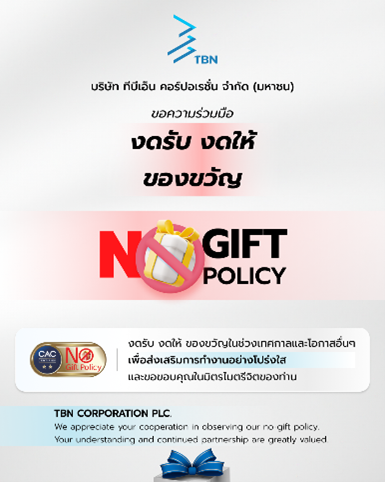
| Giving or receiving gifts, entertainment, or business entertainment | The Company recognizes the importance of conducting business with integrity, transparency, and ethics. It is observed that the giving or receiving of gifts, entertainment, or business hospitality may lead to conflicts of interest or risks of corruption. Therefore, the Company has established clear guidelines regarding the giving or receiving of gifts, entertainment, and business hospitality to ensure that directors, executives, and employees at all levels adhere to appropriate practices, in compliance with laws, regulations, and business ethics. The focus is on appropriateness, transparency, and auditability, thereby building confidence among stakeholders and supporting the Company's good corporate governance. | https://drive.google.com/file/d/1wbBIhSNC7lB_WGyS3mIdeFtVD6R27q_b/view | 4-6 | |
| Compliance with laws, rules and regulations | The Company prioritizes conducting business legally, transparently, and responsibly towards all stakeholder groups, recognizing that compliance with relevant laws, regulations, and rules is a fundamental cornerstone of good corporate governance and the creation of stable and sustainable long-term growth. Directors, executives, and employees of the Company at all levels must strictly adhere to the framework of relevant laws, regulations, and rules, and must not participate in, be aware of, support, or commit any actions that violate or breach laws, regulations, and rules, whether directly or indirectly. Furthermore, the Company encourages reporting or whistleblowing in cases where actions that may constitute a violation of laws or business ethics are found, through channels designated by the Company, while ensuring appropriate protection for whistleblowers, to promote good corporate governance and effective risk management. In the past year 2025, the Company has not committed any offenses or violated any laws leading to criminal actions, civil sanctions, or administrative actions. | https://drive.google.com/file/d/1ARxhJhy0_8pEWX2Hm2ibNg_a8Rb5Axch/view | 1 | |
| Use and maintenance of data and assets | The Company prioritizes the appropriate, responsible, and secure use and maintenance of its information and assets. Recognizing that information and assets are valuable resources crucial for business operations and organizational credibility, the Company has established guidelines for employees regarding the use, maintenance, and protection of the Company's information and assets to prevent misuse, loss, damage, or leakage of information. | https://drive.google.com/file/d/1xCS9WkrU6NKn6RRrBilibfk1YHkrl6Ny/view | ||
| Anti-competitive | The Company places importance on conducting business fairly, transparently, and in compliance with competition laws, recognizing that unfair competition not only violates the law but also impacts the trust of consumers and stakeholders. Therefore, the Company has established guidelines to combat unfair competition, ensuring that directors, executives, and employees at all levels conduct business with integrity, comply with relevant laws and regulations, and avoid actions that may lead to unfair competition, such as monopolization, inappropriate price fixing, or the use of inside information for personal gain. This approach promotes fair market practices, builds trust among stakeholders, and supports the Company's sustainable growth. | https://drive.google.com/file/d/1fGhoiE8jEtkIMEf6SUwDloNux5ZKZKV-/view | ||
| Cyber security | The Company places great importance on strictly maintaining the security of information and information systems, recognizing that information and information systems are crucial resources affecting stakeholder confidence and business continuity. Therefore, the Company has established clear guidelines for information and information system security to ensure that directors, executives, and employees at all levels adhere to measures for preventing, controlling, and maintaining the confidentiality of information, as well as preventing unauthorized access, loss, or leakage of information. This supports stable and secure business operations and compliance with good corporate governance principles. | https://drive.google.com/file/d/1xCS9WkrU6NKn6RRrBilibfk1YHkrl6Ny/view | ||
| Environmental management | The Company prioritizes conducting business with environmental responsibility, recognizing that proper environmental management is a crucial factor for the sustainability of the organization and society. Therefore, the Company has established environmental management guidelines to ensure that directors, executives, and employees at all levels adhere to measures that reduce environmental impact, such as reducing resource and energy consumption and waste management. Furthermore, the Company is committed to strictly complying with environmental laws and regulations, and continuously monitoring and improving its management approaches to support sustainable growth and create value for all stakeholders. | https://drive.google.com/file/d/1_38ESfWHQ3qo39V5uyD0STokRfXQj9JG/view | 8 | |
| Human rights | The Company recognizes the importance of respecting human rights as a fundamental basis for conducting business. Therefore, the Company has established a Human Rights Policy as a commitment to uphold, support, and promote the respect and protection of the fundamental rights and human dignity of all stakeholders in the Company's operations, in accordance with domestic laws, international human rights principles, and good business practices. This includes the Universal Declaration of Human Rights (UDHR), the United Nations Guiding Principles on Business and Human Rights (UNGPs), the Principles of the United Nations Global Compact (UNGC), and the International Labour Organization Declaration, as well as establishing measures for remediation and mitigating such impacts in all business activities in which it may be involved. The Company has established this Human Rights Policy to serve as a framework for human rights management and operational guidelines for The Company and its controlled entities, in all activities related to employees or labor, supply chain, communities, and society, intend to encourage joint ventures, business partners, suppliers, and other relevant parties in the Company's supply chain and its controlled entities, both domestically and internationally, to operate based on the principles of human rights respect, by using this policy as a guideline for practice or applying it as appropriate. This includes building relationships with all stakeholder groups for responsible and sustainable business operations. The Company is committed to continuously developing its human rights management system and operations to prevent and avoid human rights violations. | https://drive.google.com/file/d/1VVcBtx4JwtZTpgYd0XqM-6vtDq7vFE0v/view | ||
| Occupational health and safety | The company prioritizes the safety and occupational health of its employees in all operational processes. Recognizing that creating a safe and healthy working environment is a crucial factor for business continuity and sustainability, the company therefore establishes clear safety and occupational health guidelines to prevent accidents, illnesses, or risks that may arise from work. This includes providing continuous knowledge and training to employees, as well as regularly monitoring and evaluating performance. This approach promotes a safety culture, supports efficient operations, and builds confidence among employees, stakeholders, and society as a whole. | https://drive.google.com/file/d/1VVcBtx4JwtZTpgYd0XqM-6vtDq7vFE0v/view | 3 | |
| Other guidelines related to business code of conduct | Risk Assessment and Internal Control | The Company prioritizes establishing ethical guidelines that align with risk assessment and internal controls, to ensure that business operations are conducted efficiently, transparently, and auditable, and in accordance with good corporate governance principles, with a focus on preventing risks of corruption, operational errors, and potential damage to the organization. | https://drive.google.com/file/d/1Mx9yFsG9KWx_vHv3D8z5sZeoCw2f734Y/view | |
| Other guidelines related to business code of conduct | Personal Data Protection | The Company is committed to operating in personal data protection in accordance with the Personal Data Protection Act B.E. 2562 (2019). Therefore, the Company has established a Personal Data Protection Policy to ensure that the Company's operations comply with laws and international standards for personal data protection, as well as defining criteria for the protection, collection, use, and disclosure of personal data in accordance with relevant laws. | https://drive.google.com/file/d/1f67sYc8DkQEdLD2uXROe0MdSa5CuTb_A/view | |
| Other guidelines related to business code of conduct | Related Party Transactions | The Company prioritizes the transparent and fair execution of transactions and related party transactions, in accordance with good corporate governance principles, focusing on protecting the interests of all shareholders equally and preventing potential conflicts of interest arising from such transactions, to ensure that related party transactions are conducted appropriately and in compliance with laws and business ethics. In 2025, the Company had no instances where it was fined, accused, or subject to civil action by regulatory bodies such as the SEC or the SET regarding the disclosure of related party transactions and asset trading. | https://drive.google.com/file/d/1Gm5ffWnwBuyMJCpAJUwjnvjv2tSq4G49/view | |
| Other guidelines related to business code of conduct | Acquisition or Disposal of Assets Transaction | The Company prioritizes the prudent and transparent acquisition or disposal of assets, in accordance with good corporate governance principles. This approach aims to protect the best interests of the Company and all shareholders, while also managing potential risks arising from such transactions. To ensure that these operations are appropriate and comply with relevant laws and regulations, the Company has established guidelines for conducting such transactions. | https://drive.google.com/file/d/1CqDOUPlX75KyOioFfUlsYs--h6qIQUDu/view | |
| Other guidelines related to business code of conduct | Use of Inside Information and Securities Trading by Directors, Executives, Employees, and Persons with Access to the Company's Inside Information | The Company places importance on good corporate governance, committing to treat all shareholders transparently and fairly. To achieve this commitment, the Company has established a policy on the use of inside information and securities trading by directors, executives, employees, and individuals with access to the Company's inside information. This policy aims to prevent such individuals from utilizing material inside information that has not yet been disclosed to the public for their own benefit or the benefit of others, whether directly or indirectly, and regardless of whether compensation is received. This serves as a guideline for future conduct. | https://drive.google.com/file/d/1X0AyZMm3jZefppaGcDnwuJpN3yXEUFmm/view |
Promoting Compliance with the Code of Conduct
Promotes Compliance by Directors, Executives and Employees
Yes
Description
Communication and awareness building regarding business ethics.
In 2025, the Company continuously emphasizes communication and raising awareness regarding business ethics and good corporate governance. This is achieved by focusing on providing knowledge to directors, executives, and employees at all levels through internal communication, training activities, knowledge reviews, and assessments, to promote understanding and concrete adherence to business ethics, good corporate governance policies, and related practices.
The content of communication and knowledge development covers key issues, including enterprise risk management, prevention of insider trading, prevention of conflicts of interest, anti-corruption, prevention of giving or receiving bribes, as well as environmental practices, to ensure that all parties are aware, understand, and adhere to them as guidelines for correct and transparent operations.
1. For Company Directors
The Company mandates communication and knowledge transfer regarding business ethics and good corporate governance through a prepared manual, covering issues such as enterprise risk management, insider trading, conflicts of interest, anti-corruption (Anti-Corruption Policy), prevention of giving or receiving bribes, and environmental practices.
Newly appointed directors (if any) must receive orientation and training to understand the operational guidelines and adhere to them as principles in performing their duties. The Company Secretary is responsible for delivering the complete manual, arranging training, and coordinating annual knowledge reviews for all directors.
In 2025, the Company had no new directors and conducted meetings to fully review business ethics content and corporate governance policies for all directors. Achieved 100 percent as per the set target.
2. For Executives
The Company mandates communication and knowledge transfer regarding business ethics and good corporate governance to executives at all levels through manuals, training, and knowledge review activities, including assessments to evaluate understanding.
The content covers business ethics, corporate governance policies, enterprise risk management, prevention of insider trading, management of conflicts of interest, anti-corruption (Anti-Corruption Policy), prevention of giving or receiving bribes, and environmental practices, enabling executives to use them as guidelines for managing operations with good governance, transparency, and responsibility towards stakeholders.
In 2025, all Company executives participated in the review and completed the assessment. Achieved 100 percent as per the set target.
3. For Employees
The Company emphasizes raising awareness of business ethics and good corporate governance among employees at all levels by mandating communication through manuals, training, and knowledge assessments on relevant policies and practices.
The content covers anti-corruption (Anti-Corruption Policy), prevention of giving or receiving bribes, enterprise risk management, prevention of insider trading, avoidance of conflicts of interest, and environmental practices, which are considered crucial mechanisms for fostering an organizational culture committed to integrity and responsibility.
In 2025, all Company employees who participated in the training and completed the assessment passed the evaluation criteria. Achieved 100 percent as per the set target.
Continuous communication and development operations.
In 2025, the Company continuously communicated and disseminated information regarding business ethics and corporate governance policies. Additionally, assessments were conducted after training and annual reviews, covering business ethics, corporate governance policies, enterprise risk management, anti-corruption, and environmental practices, to concretely enhance understanding and adherence to the organization's guidelines.
Furthermore, the Company promotes self-learning through e-Learning training systems and disseminates all policy documents via the Company's internal system (TBN PM) to enable directors, executives, and employees to conveniently and comprehensively access information, study, and review practices.
The Company will send email notifications to employees to participate in annual knowledge reviews and will arrange assessments to evaluate their understanding. Furthermore, these practices will be used as guidelines for educating and communicating with new employees, who will also be required to undergo similar training and assessments to foster awareness from the start of their employment. Such operations are crucial in strengthening an organizational culture committed to integrity, transparency, and sustainable good governance.
Anti-Corruption Networks & Projects
Joined or Declared Intent to Join Anti-Corruption Networks
Yes
Networks & Projects Joined
| Network / Project | CAC Certified |
|---|---|
| Thai Private Sector Collective Action Against Corruption: CAC | Y |
| United Nations Global Compact (UNGC) | |
| Participation of anti-Corruption networks and initiatives |
Material Changes & Developments in CG
Introduction
The Board of Directors has continuously reviewed and improved its policies, practices, and good corporate governance system annually to enhance the efficiency of the company's governance and to elevate the company's corporate governance standards in line with the Principles of Good Corporate Governance for Listed Companies, Year 2017 (Corporate Governance Code or CG Code) of the Office of SEC.
Reviewed the CG Policy or Board Charter in the Past Year
Yes
Material Changes or Developments in the Past Year
Yes
Policy Review — Description
To ensure the Company's continuous operation under good corporate governance principles and to elevate corporate governance standards in line with the Principles of Good Corporate Governance for Listed Companies 2017 (Corporate Governance Code: CG Code), in 2025, the Board of Directors regularly reviewed, revised, and developed policies, guidelines, and corporate governance systems.
The Board of Directors has resolved to approve the review, amendment, and addition of corporate governance policies, business ethics, as well as related guidelines and principles, to align with changing business contexts, legal requirements, and international standard practices.
The aforementioned actions aim to enhance transparency, accountability, and efficiency in corporate governance, as well as to build confidence among shareholders, investors, and all stakeholders. The details of the policy review and development in 2025 are summarized as follows:
Approved by | Meeting Date | Summary of Consideration Details |
Board of Directors Meeting No. 5/2024 | November 14, 2024 |
|
Board of Directors Meeting No. 2/2025 | February 26, 2025 |
|
Board of Directors Meeting No. 3/2025 | May 12, 2025 |
|
Board of Directors Meeting No. 4/2025 | August 11, 2025 |
|
Board of Directors Meeting No. 5/2025 | November 13, 2025 |
|
Board of Directors Meeting No. 6/2025 | December 22, 2025 |
|
CG Code — Introduction
The Company has adopted the principles of good corporate governance for listed companies B.E. 2560 (2017) of the Securities and Exchange Commission ("SEC") and adapted them to suit the context and nature of the organization's business operations, in order to support stable and sustainable long-term growth. Furthermore, the Company remains committed to continuously developing and applying practices that have not yet been fully implemented, with the aim of elevating corporate governance standards in line with the guidelines of the Stock Exchange of Thailand and the SEC.
Implements the CG Code for Listed Companies
Yes
CG Code — Description
In 2025, the Board of Directors considered and found that the company has appropriately adopted and implemented the principles of good corporate governance (CG Code) as prescribed by the Securities and Exchange Commission, consistent with the criteria and guidelines of the Stock Exchange of Thailand and the SEC. It is deemed complete and capable of achieving the stated objectives.
However, from 2023 to the present year, the company has developed a development plan, established guidelines for monitoring results, and continuously improved operational processes to further enhance the effectiveness of corporate governance and align with changes in the business environment.
The company has implemented the development plan regarding the proportion of executive and non-executive directors to ensure an appropriate balance of power. Even though the company's board composition fully complies with the SEC's CG Code, the Board continues to prioritize the continuous development of the board structure, maintaining the plan to increase the proportion of independent directors to support future business expansion and enhance the effectiveness of corporate governance.
In summary, the results of adhering to good corporate governance principles in 2025 are as follows:
Guidelines | Development Plan and Monitoring Year 2023 | Development Plan and Monitoring Year 2024 | Development Plan and Monitoring Year 2025 |
1. The Board of Directors should have an appropriate balance between executive and non-executive directors to reflect a proper balance of power. | The company has a total of 7 directors, divided into executive directors and/or directors authorized to sign on behalf of the company, totaling 4 members and 3 independent directors, which is in accordance with the criteria set by the SEC. The Board of Directors is of the opinion that the current number of directors is sufficient and appropriate for the company's current business operations. However, to accommodate future business expansion, the Board recognizes the proportion of independent directors and plans to consider recruiting individuals who meet the criteria set by the SEC and the Stock Exchange to appropriately reflect the balance of power. | The Board of Directors has continuously sought individuals to serve as independent directors to support business growth and enhance the balance of power within the board structure. However, in May 2024, one independent director resigned, leading to a newly recruited individual filling the position. As a result, the number of independent directors of the company remains at 3, the same as the previous year. The Board of Directors will continue to recruit additional directors to achieve the established board structure goals. | The Board of Directors still plans to increase the proportion of independent directors to continuously enhance the appropriateness and effectiveness of the company's corporate governance. The recruitment of individuals with appropriate knowledge, abilities, and qualifications who can fill skill, experience, and expertise gaps in line with the business direction, as well as the board's structure and diversity, may require careful consideration and a thorough selection process. The Board of Directors therefore focuses on a quality recruitment process to obtain suitable individuals who can effectively and sustainably support corporate governance in the long term. Reference details Part 2 Corporate Governance Topic 7.2.1 Composition of the Board of Directors "Policy and Goals according to the Board Structure Diversity Plan" |
2. Directors' remuneration should be consistent with the company's long-term strategy and goals, experience, duties, scope of roles, and accountability and responsibility. | The company sets directors' remuneration at a fixed rate in the form of meeting allowances, paid only to non-executive directors. | The determination of directors' remuneration is in accordance with the resolution of the Annual General Meeting of Shareholders for 2024. Such remuneration is paid only to the company's independent directors. The consideration of remuneration takes into account consistency with the company's long-term strategy and goals, experience, duties, scope of roles and responsibilities, as well as the expected benefits from each director. Additionally, directors assigned additional duties, such as serving as members of sub-committees, will receive additional remuneration at an appropriate rate, determined by comparing with remuneration levels in the same industry and in accordance with the resolution of the Annual General Meeting of Shareholders for 2024. | The Board of Directors has considered and found that the remuneration of the company's directors and The determination of remuneration takes into account a level comparable to listed companies in the same industry, consistent with the company's performance, scope of authority, responsibilities, and the performance of each director. The Board of Directors therefore believes that the company has appropriately and completely implemented the remuneration policy in accordance with good corporate governance practices. |
3. The Board of Directors should encourage and support senior executives to undergo training and development to enhance knowledge and experience beneficial to their work. | Some senior executives have not yet participated in potential development training courses. To promote and support the appropriate development of knowledge and skills for executives, the Board of Directors has considered and is in the process of arranging courses that align with their roles, responsibilities, and business direction for executives to attend in the next year. | The company has continuously supported senior executives in participating in various training courses to develop their knowledge, skills, and expertise in operations, as well as encouraging them to attend courses related to good corporate governance from the Thai Institute of Directors (Thai IOD) and other courses related to organizational management. | The Board of Directors has Support all executives have continuously developed themselves by participating in various training courses and seminars, such as those on management, business strategy, and sustainability management, as well as good corporate governance training, to enhance skills, knowledge, capabilities, and deepen understanding of good corporate governance principles, relevant rules and regulations, and their roles and responsibilities in efficient management, which will benefit the company's operations and sustainable growth. Reference details Part 2 Corporate Governance Topic 8.1.1 Board Recruitment / Director Development / Director Performance Evaluation "Information on Director Development" |
Other CG Outcomes — Introduction
The Board of Directors is committed to managing the company by adhering to good corporate governance principles, to ensure that the company's operations are transparent, efficient, auditable, and accountable to all stakeholders, while strictly recognizing its roles, duties, and responsibilities in accordance with the Principles of Good Corporate Governance for Listed Companies B.E. 2560 (2017) (CG Code).
The Board of Directors has continuously reviewed and adapted these principles to align with the company's context and business characteristics, to elevate corporate governance standards to be appropriate, modern, and consistent with regulatory guidelines, as well as to support stable and sustainable long-term growth.
Other CG Performance & Outcomes
The Board of Directors is committed to managing the Company by adhering to good corporate governance principles to ensure that the Company's operations are transparent, efficient, auditable, and responsible to all stakeholders, strictly recognizing its roles, duties, and responsibilities according to the Principles of Good Corporate Governance for Listed Companies B.E. 2560 (2017) (CG Code).
The Board of Directors has continuously reviewed and adapted these principles to align with the Company's context and business characteristics, aiming to elevate corporate governance standards to be appropriate, modern, and consistent with regulatory guidelines, as well as to support stable and sustainable long-term growth.
In 2025, the Company continuously and systematically operated in accordance with good corporate governance principles, resulting in an overall appropriate level of good corporate governance performance. The key highlights are summarized as follows:
1. Participation in the Private Sector Collective Action Against Corruption (CAC)
To demonstrate its intention to combat corruption and its stance on prioritizing anti-corruption efforts, the Company submitted a declaration of intent to join the Private Sector Collective Action Against Corruption ("CAC Project"). The Company is committed to supporting and promoting its personnel to have an anti-corruption mindset in all forms.
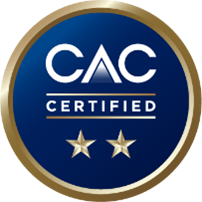
2. Certification of membership in the Private Sector Collective Action Against Corruption (CAC)
The Company prepared a self-assessment form on anti-corruption measures and submitted it to the Private Sector Collective Action against Corruption (CAC) Committee for consideration. The CAC Committee meeting resolved to certify the Company as a member of the Private Sector Collective Action against Corruption
(CAC Certified) effective from September 30, 2025, onwards, with the certification valid for 3 years.
3. Annual General Meeting of Shareholders (AGM Checklist)
The Company received a perfect score of 100 points in the assessment of the quality of its Annual General Meeting of Shareholders, achieving an "Excellent and Exemplary" level for two consecutive years from the Shareholder Meeting Quality Assessment Project (AGM Checklist) for 2025, organized by the Thai Investors Association (TIA) in collaboration with the Federation of Thai Capital Market Organizations. This reflects the transparent, fair, and good corporate governance standards of its shareholder meeting operations.

4. Corporate Governance Report of Thai Listed Companies (CGR) Survey Project
The Company received a 5-star or "Excellent" Corporate Governance Scoring from the Thai Institute of Directors (Thai IOD) for the second consecutive year in 2025 and was ranked among the Top Quartile Companies by Market Capitalization (average market capitalization not exceeding 1,500 million Baht).
This assessment was conducted by the Thai Institute of Directors (Thai IOD), with support from the Stock Exchange of Thailand and the Securities and Exchange Commission (SEC), under the Corporate Governance Report of Thai Listed Companies (CGR) Survey Project for 2025. This reflects the Company's excellent corporate governance standards and its continuous commitment to transparent, ethical, and sustainable business operations.

5. Selected for inclusion in the Thai ESG securities list
In 2025, the Company was selected for inclusion in the Thai ESG securities list (Thailand ESG Fund), which is a selection and assessment based on environmental, social, and governance criteria. This considers sustainable business operations, responsibility towards all stakeholders, and good corporate governance.
This selection reflects the Company's concrete commitment to operating its business in accordance with environmental, social, and governance (ESG) principles, and supports stable and sustainable long-term growth.
6. Assessment of Listed Companies' Sustainable Stocks (SET ESG Rating)
In 2025, the Company received a sustainable stock assessment (SET ESG Rating) at the level of "A" from the Stock Exchange of Thailand, reflecting its commitment to sustainable business operations by considering environmental, social, and good governance dimensions in a balanced and systematic manner.
This ranking demonstrates the continuous integration of ESG principles into the organizational strategy and operational processes, as well as the creation of long-term value for all stakeholders and the enhancement of confidence for investors and society as a whole.
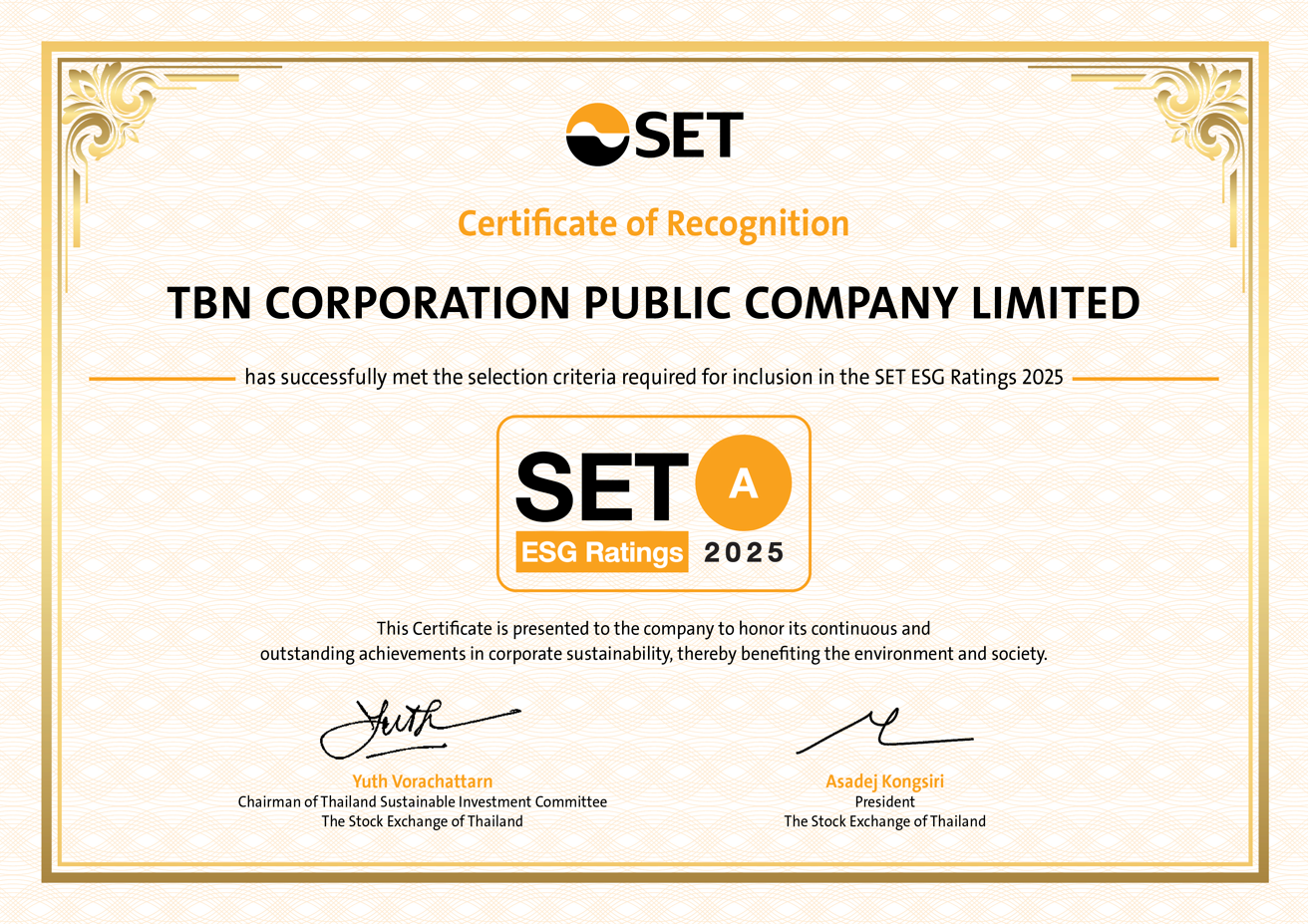
7. "No Gift Policy" Campaign during festive seasons and various occasions
The Company participated in a campaign and sought cooperation from business partners and allies to "neither give nor receive" gifts for the Company's executives and employees during festive seasons and various occasions, in order to reduce expenses and promote business operations based on principles of good governance, integrity, transparency, and fairness.
The Company has announced and emphasized the policy of No Gift Policy continuously, to foster awareness and good values in the performance of duties for executives and employees at all levels, ensuring adherence to the principle of neither giving nor receiving gifts, presents, or any other benefits during all festive seasons and special occasions.
Furthermore, the Company has publicized this policy through various communication channels, such as its website and social media (Facebook), to raise widespread awareness and promote an organizational culture committed to transparency and sustainable responsibility.